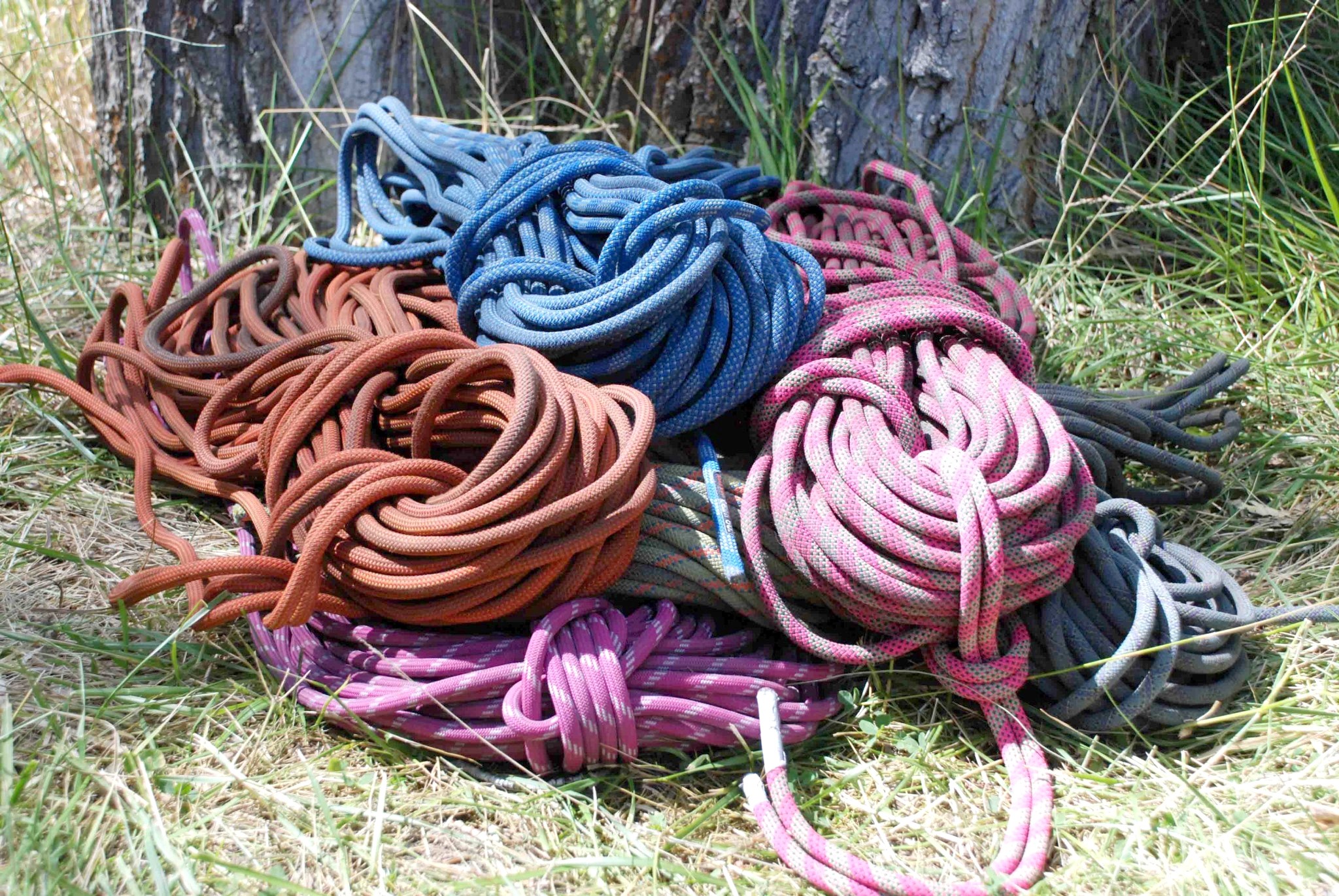
The foundation of the basic rock climbing belay system is the climbing rope, and while every climber (except for boulderers) will purchase at least one, shopping for them can be a bewildering task. There are so many manufacturers, with so many different models, including various lengths, diameters, weave patterns, and water repellent treatments — it can be hard to make sense of it all! Luckily we are here to help! Our comparative testing over the years has taught us a lot about those specific ropes, which we shared in our Climbing Rope Review. Here we'll dive deeper into some specific things to look for when selecting a climbing rope, and we'll break down the various terminologies used to help make your purchase that much easier.

Kernmantle Ropes
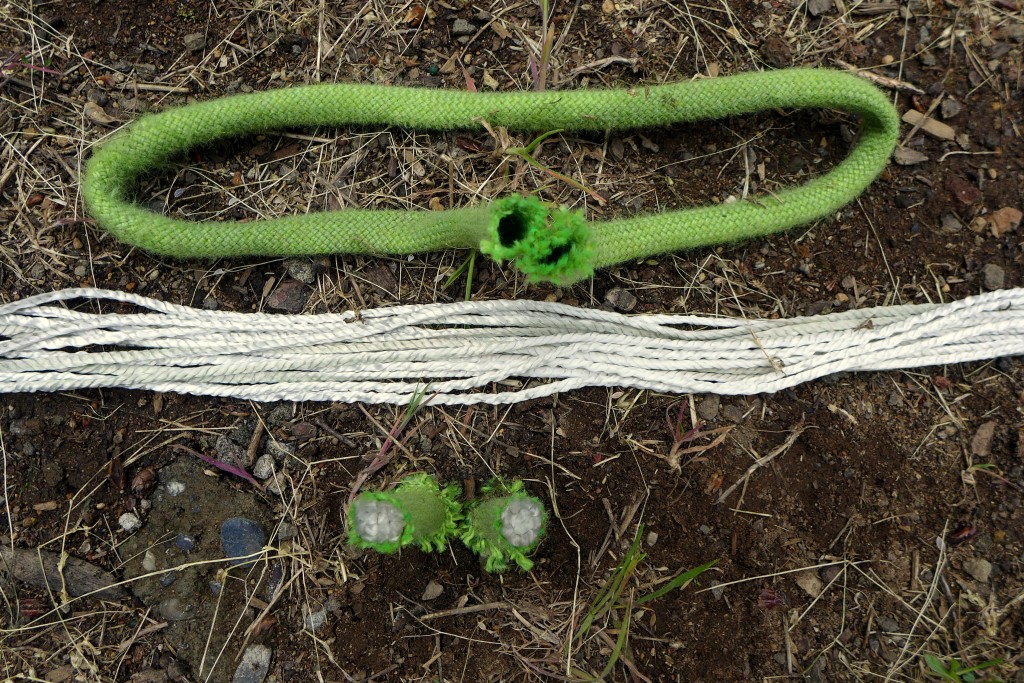
First created by Edelrid in the 1960s, the modern climbing rope consists of two layers: a strong inner core (kern) and a protective outer sheath (mantle). The strange word they create, kernmantle, basically translates to core-jacket. The core is composed of strands of nylon twisted together that provide a dynamic stretch when catching a fall. A tube of woven nylon fibers makes up the sheath that is designed to protect the core and resist abrasion. The two layers combine to produce a rope that is strong and durable, yet light and flexible. It is the proper balancing of these characteristics that produces the best climbing ropes.
Static vs. Dynamic
A rope is static if it does not stretch when subjected to a sudden load. These types of rope are popular in industrial uses, for caving and sailing, and occasionally for certain situations in rock climbing. Belayed climbing, however, necessitates the use of a dynamic rope that can stretch to provide a soft and safe catch. This rope needs to temporarily elongate under load to help reduce the force on the gear and participants during a fall, which it does by adding twists to the core fibers hidden within the sheath.
Static ropes may look or feel similar to dynamic ropes at first, but their uses are entirely different. Climbers will occasionally use static lines in situations where no stretch is desirable, such as fixing ropes or hauling heavy loads on big walls, but they should never be used for lead climbing. We only tested dynamic lines in this review, but all ropes are tested for their dynamic and static elongation, just to make things more confusing. If you're not sure if the model you are looking at is a static or dynamic line, see if the specs have a dynamic elongation rating. All UIAA certified dynamic ropes have to have it, and it's displayed prominently on the packaging.
The Three Types of Dynamic Ropes
Dynamic ropes for climbing can further be divided into three categories, each with their own strengths and intended uses: single, twin, and half.
Single RopesThe single rope system is the simplest and most common type. Each rope is rated to hold multiple falls by itself. The leader only has to tie into one rope and clip that rope into each piece of protection. Also, the second only has to manage a single line and can use a convenient assisted braking belay device, like Petzl's popular GriGri. The deficiencies of this method are increased drag on wandering pitches, no redundancy, and the need for a second rope or tagline to complete long rappels.

Twin Ropes
The simplest of the double rope systems is called twin. In this system, the leader ties into two ropes and clips both ropes into every piece of protection while they climb a pitch, treating the two ropes as if they were a single one. Neither rope is designed to hold a fall alone, but with their combined strength they can catch multiple falls. These ropes are usually very skinny, making it the lightest double rope arrangement, while also providing redundancy, and the ability to rappel a full rope length. Twins, however, are the least popular rope system because of the inconvenience of clipping both ropes and durability problems with thin diameters.

Half Ropes
More complicated than the single or twin methods is the half rope system. Like twin ropes, the leader ties into two ropes, each of which is rated to hold a fall on its own. They are skinnier than single ropes, which means they are less durable and cannot sustain repeated hard falls. In practice, the leader will be tied into both ropes and will alternate clipping each piece of protection with one of the two ropes they're tied in to. This provides a backup; should the first rope fail, they can be caught on the second. This system is more challenging to learn and creates rope management hassles, but it can significantly decrease drag if the leader is strategic about which rope they clip into particular pieces. Additionally, it can save time for a party of three by allowing two followers to climb simultaneously.
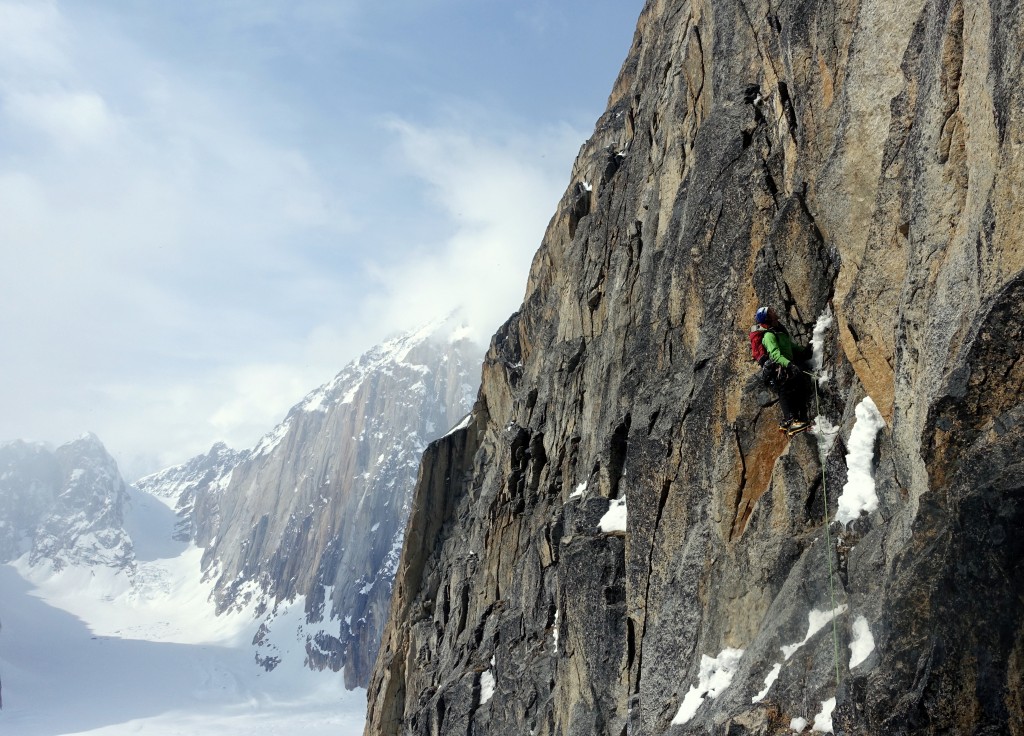
Further complicating this landscape has been the introduction of climbing ropes that are approved for all three systems. These are usually skinny single ropes by manufacturers who are willing to go through the cost and hassle of having their ropes tested for all three categories by the UIAA. The Edelrid Swift Eco Dry, Beal Joker, Petzl Volta, and Sterling Nano IX are such examples that are included in this review. We think this versatility is more of a marketing device than a practical feature. One of the greatest advantages of twin and half rope systems is the weight savings. This is sacrificed when the ropes must also be strong and heavy enough to be certified as a single rope. Two rope systems are great for particular applications like a party of three or routes with sharp edges that require a redundant system. Keep in mind that it is unsafe to combine twin and half rope techniques on any one pitch because it can cross the ropes and potentially damage them in a fall. Since twin and half ropes are specialized and not widely used systems, we chose to test only single climbing ropes in our review.
Single Ropes Examined
Single ropes are by far the most popular system and the primary focus of our review. But they are not all created equal. When shopping for a single rope, there are several factors to consider.
Diameter and Weight
Many shoppers focus on diameter when looking for a climbing rope, selecting the skinniest size their fear tolerance and wallet can handle. Manufacturers have responded to this behavior and begun to market thinner and thinner single ropes. But this trend ignores the reason why most climbers prefer a skinny rope in the first place: lower weight. Sophisticated consumers may have noticed that while rope diameters have gotten significantly smaller over the last few years, weight has only marginally decreased. This is because companies are weaving the sheaths tighter and tighter to reduce the diameter, but are still using the same amount of material to preserve the strength and durability. So the weight stays the same, while production costs and retail prices go up.
It is easy to understand why this is happening. Diameter is easier to see or feel in your hands than weight. It is also the primary metric used to advertise and discuss ropes. But, at the top of a long, pumpy pitch, extra ounces become the difference between sending and falling, not the diameter. The same is true in the mountains, where carrying a heavy rope can sap your energy long before you even get to the climbing.

Additionally, there is no standardized way of measuring diameter. It is not uncommon for climbing ropes from different companies with identical advertised diameters to look and feel dramatically different. Some are measured under slight tension, others have a slight oval-shape, but the point is that diameter by itself is not a reliable way to differentiate ropes. It is far better to combine it with the weight to get a better understanding of a rope's construction and performance. Moving past that rant, you still need to buy a rope, and ropes are still marketed primarily by diameter. Here is an overview of how ropes can be roughly classified using this as a metric. Take weight into consideration after you decide which size category is right for you.
Thick Workhorse Ropes (9.7 — 10.2 mm or >60 g/m)These are usually the most durable options and will most likely outlast the skinnier competition.
Ideal Uses: gyms, big walls/aid climbing, extended top-roping, locations with rough rock- Sterling Velocity Xeros 9.8 9.8 mm — Top Pick Workhorse
- Edelrid Boa Pro Dry 9.8 mm
- Beal Booster III 9.7 mm — Best Buy
Medium All-Around Ropes (9.4 — 9.6 mm or 55-60 g/m)
Medium diameter ropes provide the most versatility and are also the most popular.
Ideal Uses: Sport or trad climbing, multi-pitch, top roping, ice climbing, etc.… anything!- Mammut 9.5 Crag Classic 9.5 mm — Editors' Choice
- Maxim Pinnacle 9.5 mm
- Petzl Arial 9.5 mm
- Sterling Helix 9.5mm

Skinny Sending Ropes (<9.4 mm or <55 g/m)
Skinnier ropes come with a high price tag and lower longevity, but are the lightest you can buy.
Ideal Uses: Alpine climbing, hard redpoints or onsight attempts, freeing big walls- Petzl Volta 9.2mm — Top Pick
- Edelrid Swift Eco Dry 8.9mm — Top Pick
- Sterling Nano IX 9.0 mm
- Beal Joker 9.1 mm

Length
During the foundational years of climbing, a 50-meter rope was the standard. The weight of a rack then composed of oval carabiners and chrome-moly pitons limited the amount of protection that could be carried and, accordingly, the sensible length of each pitch. Modern lightweight gear has reduced this burden and allowed climbers to safely protect longer and longer pitches. For a while, 60-meter ropes became the norm. Today, these are still fairly common and can get you up and down lots of routes. But their popularity is beginning to wane as more route developers place anchors that require a 70-meter rope to lower to the ground. Furthermore, among strong sport climbers, and especially in the more famous climbing areas of Europe, longer routes are trendy, and 80, or even 100-meter ropes are gaining acceptance, and are in some cases necessary.
Our best advice to first-time shoppers is to ask your climbing partners what length is ideal for your area. Many climbing areas are not 35 meters tall, and so having a 70m rope would be overkill, and you can save money with a 60m. That said, plenty of crags, especially newer ones, are set up with a 70m rope in mind. If you like to travel to different climbing areas, we highly recommend buying a 70m rope, as it is always a bummer to not be able to do a prized pitch because your rope is too short. Also, consider the type of climbing and intended grades. Generally, difficult single-pitch cragging or bold multi-pitch linking will require a longer rope, while the easier grades or more patient parties can get by with a shorter cord. While we know some people who still buy 60m ropes due to the cost savings, we have been buying 70s for the last 10 years or so due to the added versatility of being able to lower off 99% of the sport pitches in the US, while also being able to link many more pitches on long free routes, all while using the same rope.

Middle Marks and Bi-Patterns
Another important factor affecting the price and functionality of climbing ropes is the marking of the middle. Easy identification of the middle allows you to quickly thread the rope before a single rope rappel or helps you measure whether you can safely lower a climber to the ground after a single pitch lead. There are a variety of middle marker options out there. The easiest to recognize is the bi-pattern (also known as duodess), which will never fade! This is where each half of the rope has a contrasting pattern that is easy to visually differentiate. To make a bi-pattern rope, companies have to weave the separate patterns into one rope of the desired length, which takes time and increases the price.
A more affordable way for manufacturers to mark ropes is to do it after they have woven super long lengths of one continuous pattern. Individual ropes can be cut off of this uniform spool to the desired length. The middle of each rope is then colored in some way. We like the idea, but in practice, this mark is too often a 6" long, dull black smear that wears off quickly and is nearly impossible to see on a darkly colored or dirty rope. A few companies have recognized this nuisance and are now using longer-lasting methods with brighter colors. We applaud this.
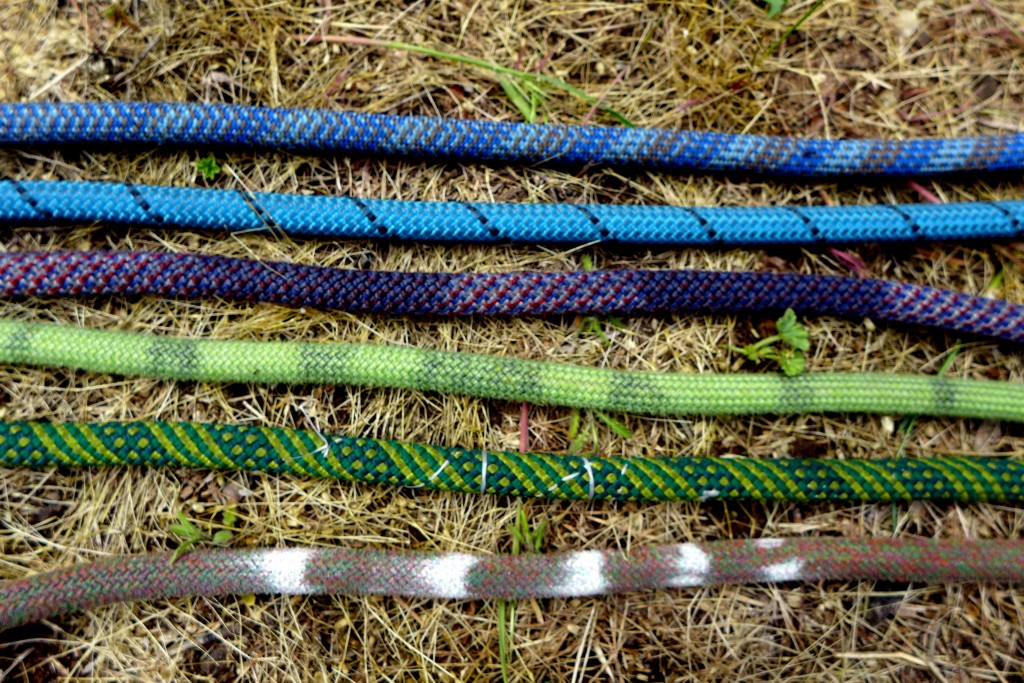
If you ever need to mark a rope yourself, be it on a cheap unmarked rope, a worn away factory smear, or an asymmetrically shortened bi-pattern, there are several effective methods. A marking pen is one of the easiest, but use one designed specifically for ropes, not any old Sharpie, which may or may not damage nylon. This coloring will eventually wear away and need to be reapplied just like a factory middle mark. Some climbers foolishly use tape. This can jam in a belay device, or worse, slide away from the middle and dangerously change the mark. A more effective mechanical technique is to sew thread through the outer fibers of the sheath. Floss works well, although, this method can unsettle partners who haven't seen it done before.

But what do you do on the top of a pinnacle after ignoring all these options when you realize you're facing ten rappels with an unmarked rope? The answer is simple, yet unknown to too many climbers: chalk. You will still have to measure the middle when threading the rope through the anchors the first time. Then mark the middle using a small pebble of the white stuff from your chalk bag. Use your fingers to really grind it in. Separate zebra stripes help make it obvious. Be sure to reapply at every other anchor or so because it will wear off. And, as you should anytime you're rappelling, always visually watch the ends of your rope and tie a knot in them.
Dry Treatments
According to the manufacturers, a wet climbing rope can lose a significant amount of dynamic strength, up to 30%. A thoroughly soaked rope also adds substantial weight. Therefore, it is definitely best to try to keep it away from water. Moisture, however, cannot always be avoided. Sudden rain showers, wet slimy seeps, or ice climbing in general, can all get your rope wet. To prevent it from absorbing moisture, a water-repellent coating can be applied to the fibers during the manufacturing process. Each company seems to have their own name for their proprietary treatment, but in our experience, they all perform about the same. A combined core and sheath coating is superior to a cheaper treatment of only a core or sheath.
Dry treating has further advantages beyond simply keeping a rope dry. These coatings also reduce friction—both on the surface and inside the fibers—which decreases rope drag and extends lifespan. Generally, a non-dry rope will be cheaper than the dry version. However, aside from exclusive use in the gym where dirt is limited, we feel the higher cost of a dry rope is justified by the performance benefits.

UIAA Specs
Any rope sold for climbing should be approved by the International Climbing and Mountaineering Federation (UIAA) and include on the packaging the scores measured for each of the few required tests. While it may be tempting to geek out on these numbers, it is most important just to know that the rope is UIAA certified. We will try to explain the tests as best we can, but for a complete explanation see the actual UIAA Safety Standards.
UIAA Fall Rating
This test uses an 80 kg (176 lbs) weight attached to a 2.6-meter length of rope. The weight is repeatedly dropped from a height of 2.3 meters and takes a 4.6-meter fall, creating a harsh, 1.77-factor fall. The final fall rating is simply the total number of these falls a rope was able to catch before failing. These falls are extremely severe and unlikely to occur often, if at all, in a real-world setting. In fact, there has yet to be a confirmed case of a UIAA approved climbing rope failing from the force of a fall alone. Therefore, as long as a rope passes the UIAA minimum five fall requirement, we believe this number is of little importance. It certainly doesn't mean that you can only take 5 “regular” falls on your rope (less than one fall factor), and if you do take a “hard” fall (1.77 factor or greater), you'll want to consider retiring that rope regardless.
Impact Force
Impact force is the amount of force exerted on the weight during the rating falls, in kilonewtons (kN). The lower the number, the lower the impact will be on you during your own falls. Additionally, a smaller impact force will also reduce the load on the top piece of gear. For clipping beefy bolts this is of little consequence, but it could be an important consideration with questionable gear or when ice climbing. In practice, though, the weight and actions of your belayer can have an even greater effect than the rope on whether a catch is “hard” or “soft.”

Stretch
The elongation of a climbing rope is measured under two different circumstances. Static is the amount a hanging rope stretches when the 80 kg weight is added. Dynamic elongation is the length of stretch when the same 80 kg weight undergoes the first UIAA test fall. For the label, both are converted to a percentage, so a 60-meter rope with 7.5% static elongation will stretch 4.5 meters (~15 ft) under an 80 kg load. This is a good spec to look at when shopping for a rope specifically for top roping or one that you will be jumaring up. In those instances, the less static elongation, the better, as you will conserve time and energy by not having to fight the stretch when belaying or jugging. Dynamic elongation appears to be closely correlated with impact force, and the same considerations for marginal protection should apply. Additionally, the more dynamic elongation, the further you'll go in a fall, which is something to consider if you have a stretchy line and there's a potential for a ground fall or hitting a ledge.

The Decision Making Process
While the information provided above should go a long ways toward helping you cull down the options when purchasing a rope, we also want to give you a quick run-down of the questions you might ask yourself before you buy, and what direction you should look depending on your answers.
Best Rope for My Needs? Or As Cheap As Possible?If you want the best rope for your needs, then you don't need to limit yourself simply by shopping by price tag. This is the route we recommend for anyone who can afford it, but point out that even the most affordable ropes are safe and usable in nearly any situation, they simply have a some drawbacks. Generally speaking, the most affordable ropes have fatter diameters, 9.7mm and above. These ropes tend to last longer as well, which is why we call them workhorses, so you get even more value for your less expensive purchase. You can save money by buying a single pattern weave, and foregoing the dry treatment. You can also save some cash by buying a 60m instead of a 70m (don't be tempted to opt for a rope as short as 50m), and will likely be happy you have a shorter rope to lug around, so it isn't as heavy.
Is This My First Climbing Rope Purchase?If this is your first climbing rope — congrats! And welcome! We recommend you buy one of the workhorse ropes listed above, for a variety of reasons. They are more affordable, which may be appreciated if you have lots of other climbing gear to buy. But they are also generally more durable, and since you haven't owned a rope before, you may not be an expert at preventing situations that will wear your rope out unduly quick. If you blow it and core shot your rope, at least you won't have spent the most you possibly can. Buy a rope bag! Finally, workhorse ropes are fatter, which means there is more friction inherent in every aspect of the system. For experienced climbers this can be exasperating, but for greenhorns it makes everything safer, especially belaying. Adding friction for safeties sake while learning the ropes is a very good idea!
Will This Be My Only Rope? Or Do I Have Many Ropes in Circulation?If you only have one rope that you use at any given time, rather than a closet full of specialty ropes to choose from for every situation, then we recommend buying a Medium Fat All-Around rope, such as our Editors' Choice winning Mammut 9.5 Crag Classic. Something in the 9.4mm-9.7mm range of ropes. These are the most versatile, and usually the best choice no matter what type of climbing you are doing. They are our go-to sport climbing ropes when we will be working projects, and are great for any sort of cragging. They last a long time if you manage to take care of them well and avoid a core shot, and are also light enough that lugging around a 70m isn't that big of a deal. They slide through the GriGri easier than a workhorse, which most experienced belayers appreciate. If you are replacing a worn out All-Around rope, we recommend getting another one of this same type.
I Already Have a 9.5mm All-Around Rope, but Want Another Rope for X PurposeIf we were to recommend buying a second rope to add to the quiver, here is what we would choose, depending on purpose:
Gym Climbing — If you must bring your own lead rope to the gym, we recommend getting one of the workhorse ropes, cause you are more than likely going to trash that thing. Most companies sell short 30m or 40m gym ropes for considerable savings, but be sure to check with your gym what length you need before you buy. Don't try to bring this rope to the crag!
Sport Climbing — If you already have a 9.5 for use on your projecting and working days, pick up a skinny 8.9 or 9.0, such as the Edelrid Swift Eco Dry or Sterling Nano IX for sending days. Consider buying an 80m, so you have the added versatility of linking into all those cool looking extensions, or so you can climb at those Spanish and Greek crags you have been hearing about. However, don't buy one of these and think you can dog all over with it, you will trash it long before you can figure out your beta. Hold it in reserve for those special moments, and make your friends climb on their own ropes.

Multi-Pitching — While a 9.5mm or similar works fine while multi-pitching, we like climbing with something lighter, such as the 9.2mm Petzl Volta. On multi-pitch routes we are far more likely to climb further than half a rope length, so the weight of the rope really begins to matter. Buy a 70m so you can link pitches if possible or desirable, and do longer single rope rappels. Get the dry treatment, which will help with longevity. This rope can also serve as your sendy sport rope, but once again, don't do any serious dogging on it if you expect it to last.

Alpine Rock Climbing — This depends on your strategy as well as preferences of your partners. One tactic is to choose a thin single line in the 8.9 to 9.2mm range, dry treated of course, used in conjunction with a 6mm or similar tag line. With the tag line you can haul the pack if desired, and it is safe to use it as the second rappel rope. This is the most common tactic amongst North American climbers for large alpine rock routes in areas such as the Bugaboos, Sierras, Wind Rivers, Rocky Mountain National Park, or the Black Canyon. Another tactic is to use half or twin ropes, although this doesn't work well if you might need to jug for any reason, or want to haul a bag, but can provide added security in areas with bad rock, like the Black Canyon, or if you might need to rappel but don't want to lug along a tag line.

Big Wall Climbing — These days the term big wall climbing could just as easily mean free climbing as aid climbing. We saw more free parties on El Cap last time we were in the meadow than aid parties, my how times have changed. We are going to assume if you are freeing big walls, you know what to buy. If you are looking to aid climb big walls, then get a thick, workhorse rope. 60m is almost always long enough, because most static haul lines are bought this length anyway. A thick workhorse is most likely more durable, but also helps allay some for the fear as you conduct lower outs and jug a single rope with thousands of feet of air beneath your feet. Even if you buy a fat rope, don't be surprised when it gets nicked and dinged all over from jugging, and consider yourself lucky if you finish the wall with a rope that is in good enough shape for another one.
Ice Climbing — For ice cragging in a place like Ouray or Vail, a normal single rope of any diameter, dry treated of course, will work. However, most ice climbs in places like the San Juans, Cody, or Hyalite are multiple pitches, and require rappelling to get off. This is where half or twin ropes can really shine. Not only do they provide the length needed to get off quickly, but also the lower fall forces and alternate clipping options that can help ice protection actually stay in the ice and catch you if you are so unlucky as to fall. If you are diligent and only use these ropes for ice climbing, then rock will not have the opportunity to wear off your dry coating, and they will stay water-resistant for much longer.
Conclusion
We hope this buying advice article has been informative and aided in your quest to buy a new rope. Most climbers will end up owning many ropes in their lifetime, so there is plenty chance to try different types or brands if something doesn't work out perfectly for you. Ask your friends or other people at the crag what brand rope they use and like, because even once you settle on a certain type of rope, different brands feel quite a bit different when using them. As always, remember to double check your knot and belay, stay safe out there, and happy climbing!