Totem Cam Review |
|
|
Overall avg rating 4.6 of 5 based on 6 reviews. Most recent review: December 6, 2011
|
|
Street Price:
$70
Pros: Decent range, cool technology, don't walk, get in tight placements.
Cons: Floppy “stem,” soft cam lobes, bulky.
Best Uses: Aid climbing in specialized applications
Recommendations: 100% of reviewers (5/5) recommend Totem Cam
Manufacturer:
Totem Cams
| Review by: Robert Beno and Chris McNamara ⋅ May 5, 2011 |
|
Overview
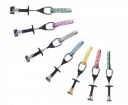
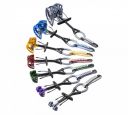
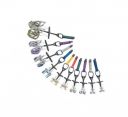
The Totem Cams are an awesome aid climbing piece that are bomber where other cams aren't. They can even work where offset cams don't. We recommend a set on your big wall climbing rack but for the bulk of our rack we still mainly carry Black Diamond Camalot C4s for the big cams and Metolius Master Cams for small cams. For free climbing, we just stick to Camalot and Master Cams because the Totem cams are bulky and less essential (you generally encounter less pins scars and weird flares when free climbing). The innovative design itself had unique pros that also led to some drawbacks. The cam design completely deviates from other cams. For starters, these cams have no solid stem but a system of cables. This provides a super flexible cam stem that is useful for horizontal placements and cutting down on walking, but actually works against you when placing the piece because the “stem” is hyper flexible and bends around at inopportune times. The “stems” of these cams are also super wide and rack in probably the most bulky way that could be imagined for cams of this design.
Check out our complete Camming Device Review to see how these compared to others.
OutdoorGearLab Editors' Hands-on Review
Likes
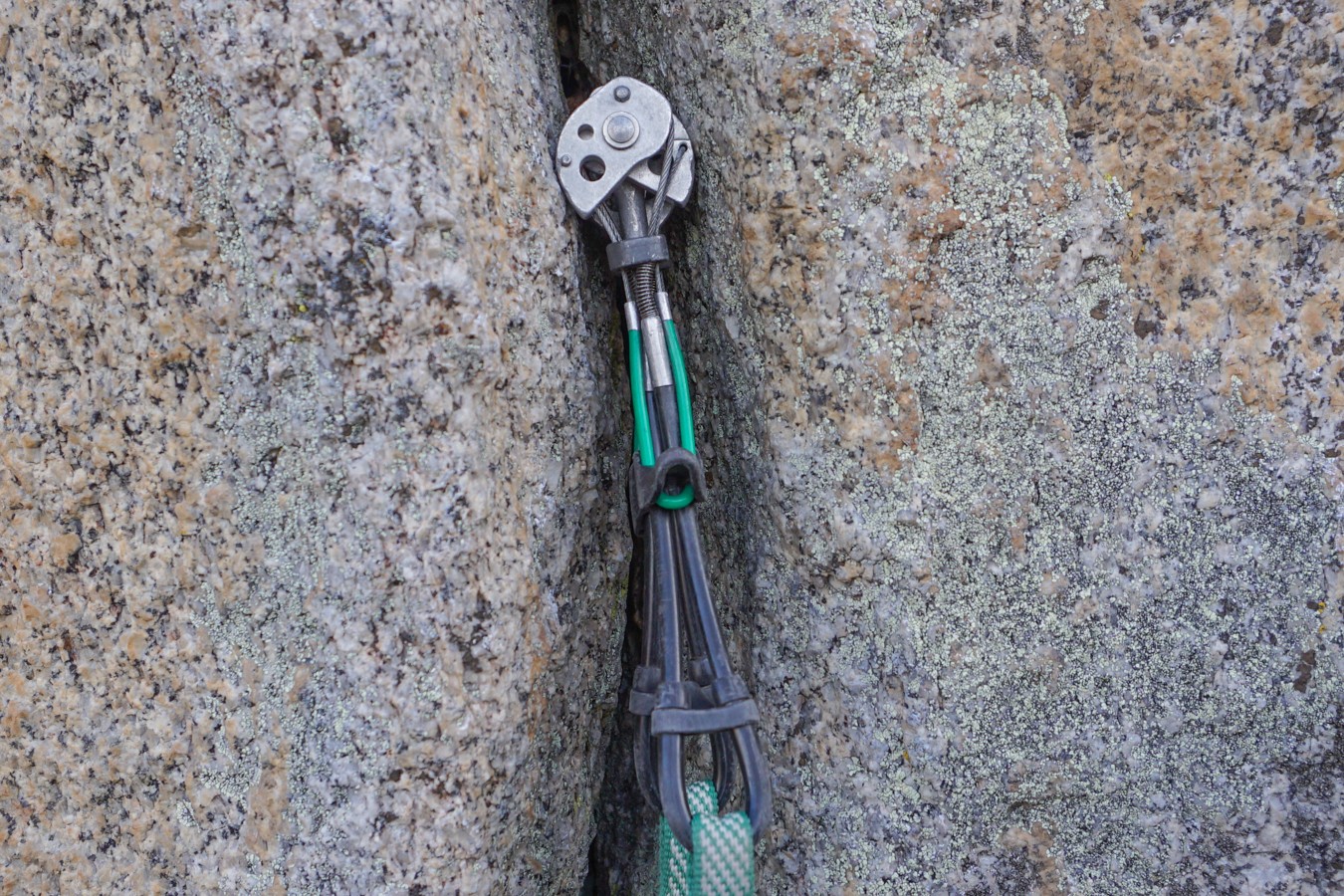
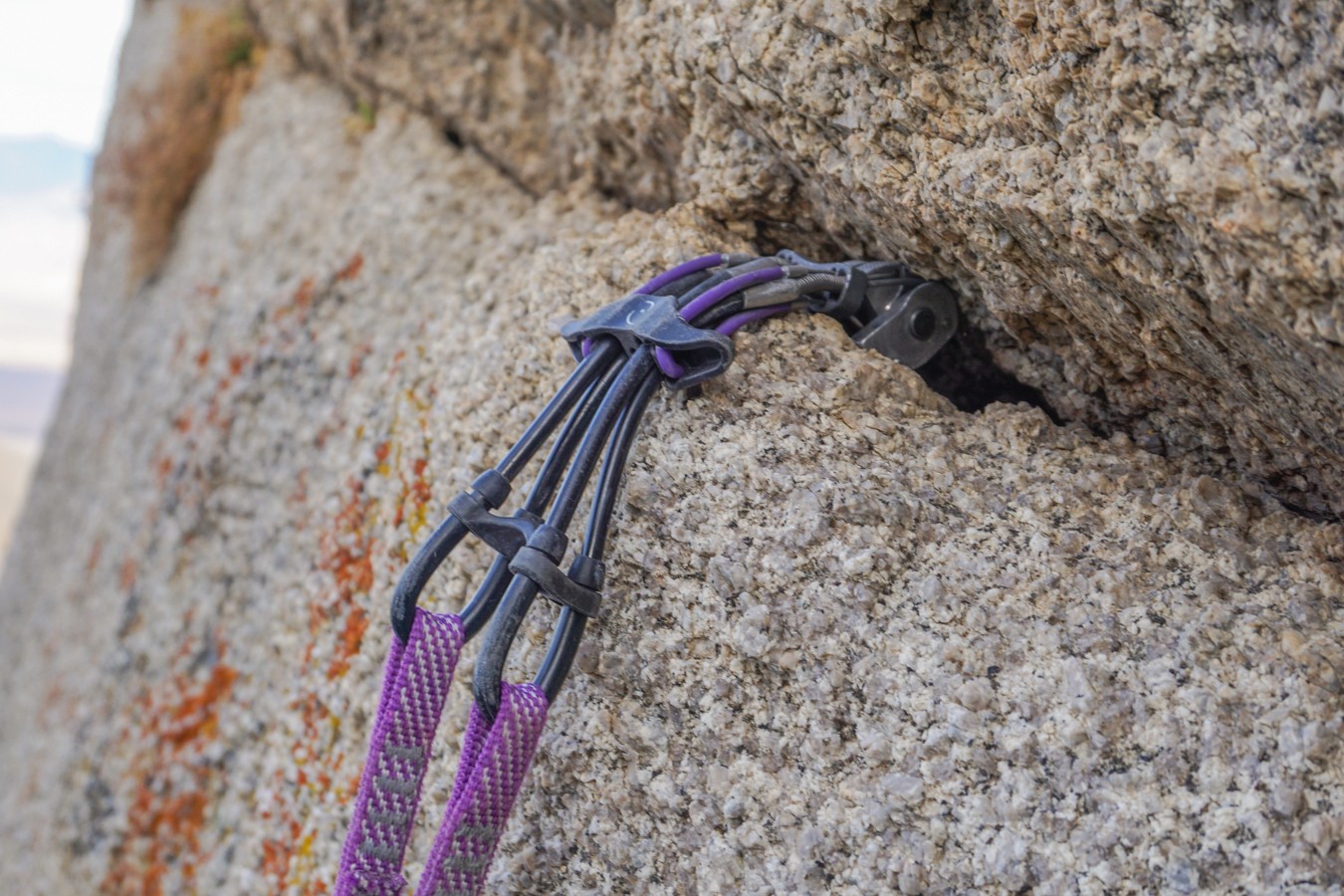
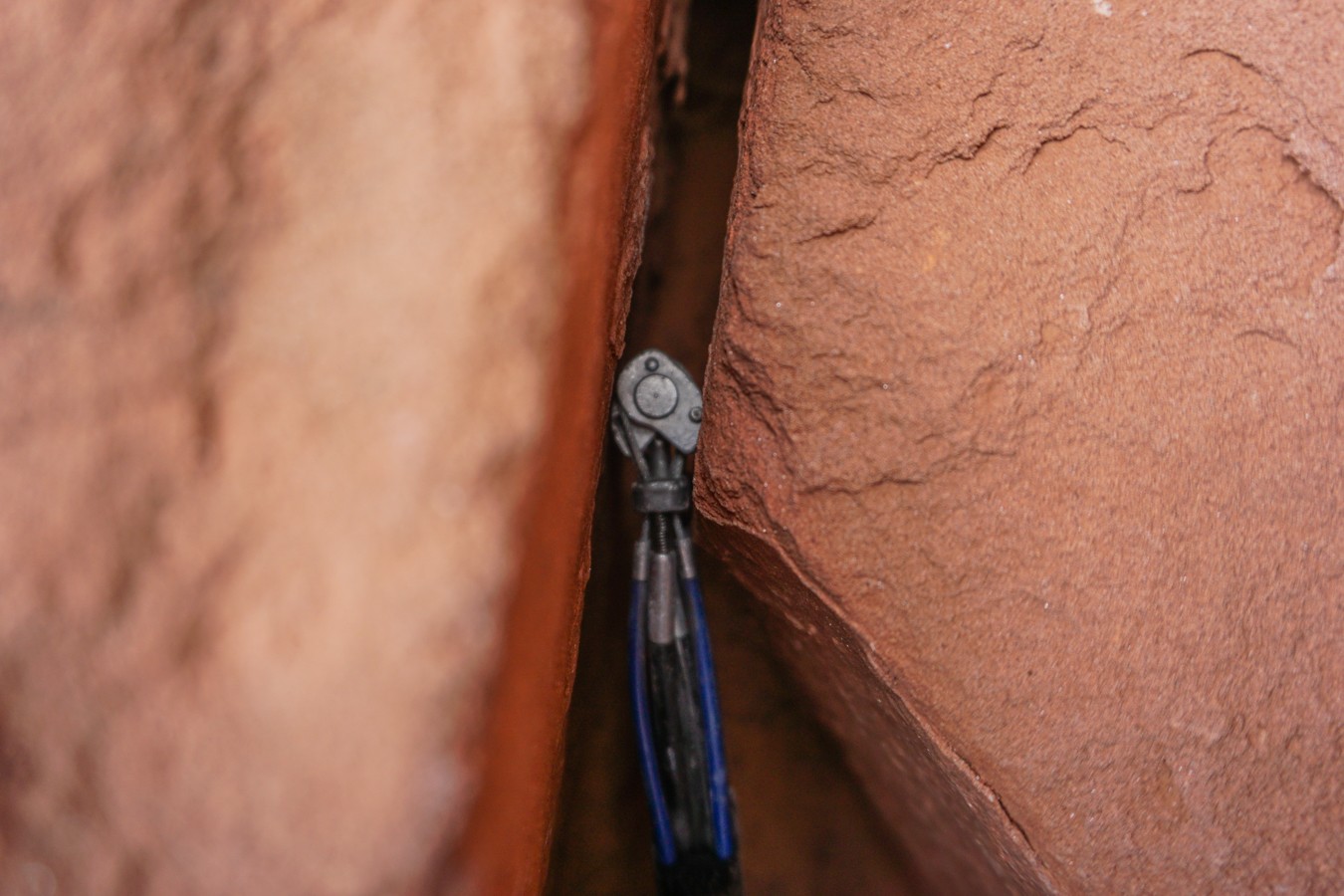
The main reason to get this cam is it will fit in awkward pods that you often encounter on big walls. You can also load the cams with only two lobes contacting the rock. This fact, coupled with their increased holding power in flaring placements, makes them an ideal specialty aid piece.
We appreciated the increased range that these cams have; although not the best range we tested, it’s pretty good.
The thing that we liked most about these is the innovative thinking that went into the design. Totem Cams make a complete departure from traditional cam design and create something that is new, exciting, and functional.
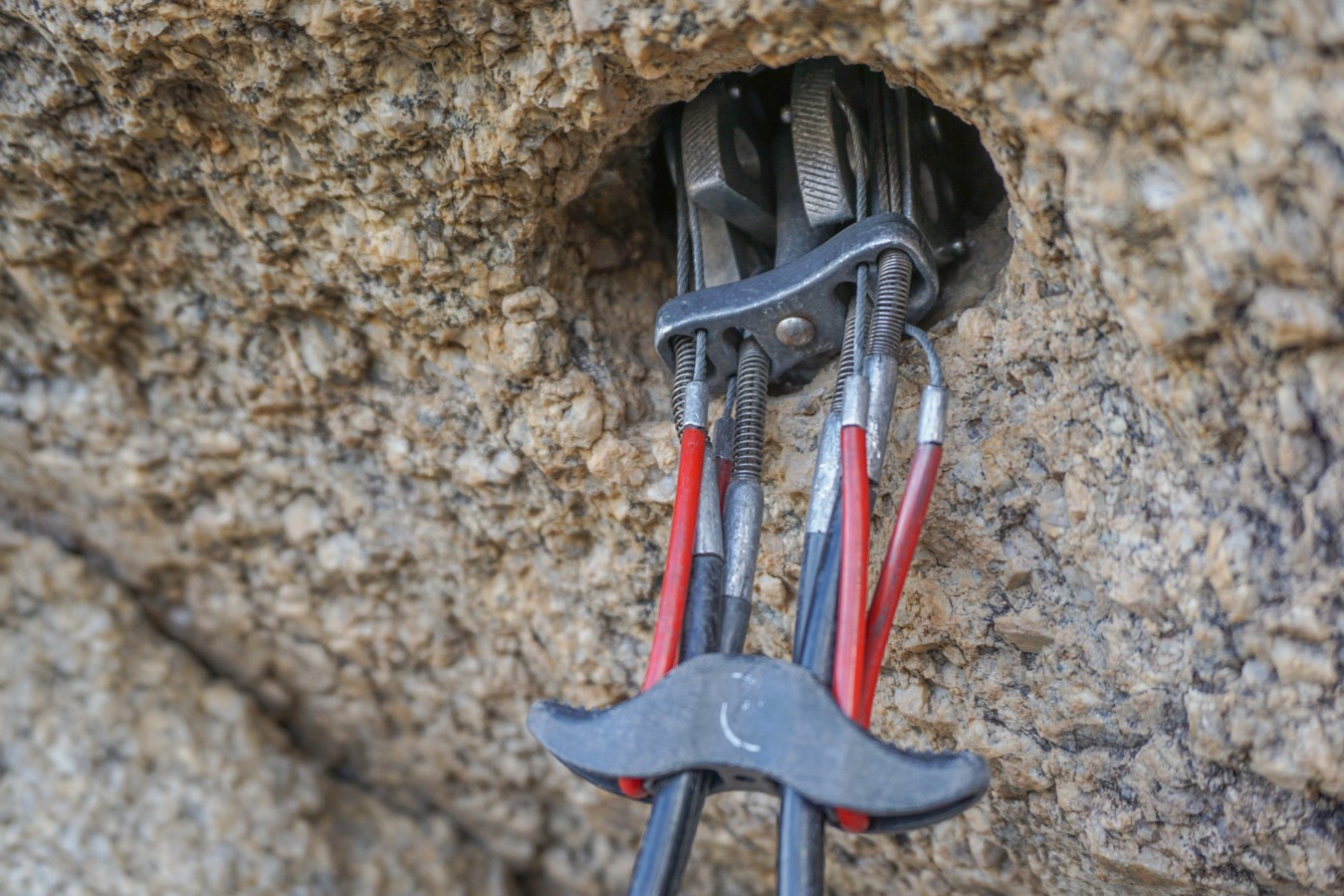
We liked the increased security in downward flared placements (up to 40 degrees according to Totem’s website). We also found the design of the cable system replacing a traditional stem to be interesting. The cables that provide the backbone of the cam, essentially replacing the stem, are attached directly to the lobe and when the unit is weighted actually pull on the lobes, generating a greater outward pull.
These cams walked less than just about any cam we tested due to their flexible body. You can free climb with fewer slings and quickdraws.
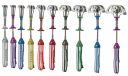
The color coding is a pretty close match to the Black Diamond Camalot C4, which makes these easy to incorporate into a Black Diamond climbing rack.
A recent review by Roberto Blasi of the Spanish Alpinism School (found here in Spanish) discusses the unique design of the "stem" on the Totem Cams and how its design was particularly advantageous in Montserrat (Barcelona, Catalunya).
Dislikes
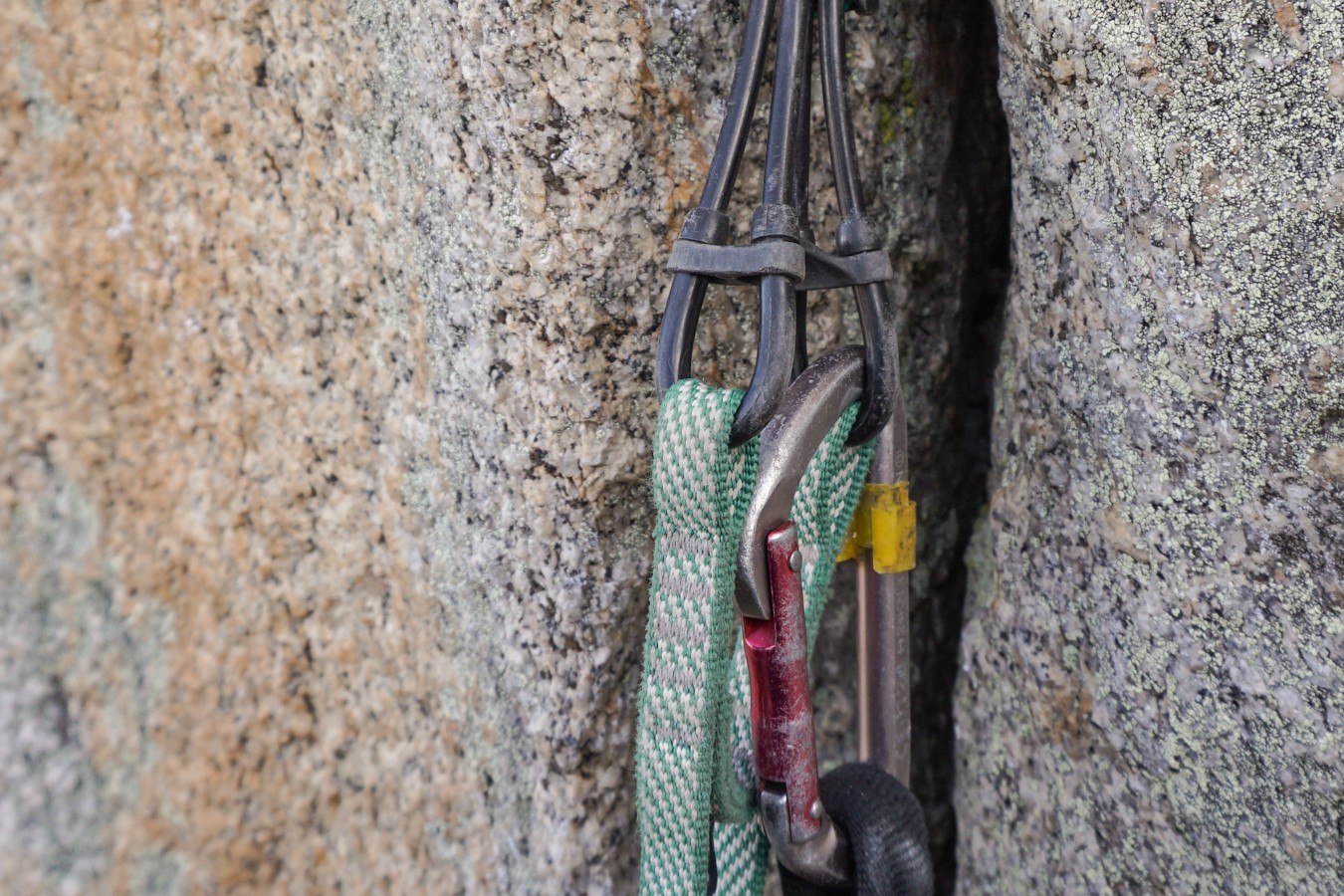
Unfortunately the innovative design features that provide some of the Totem Cams positive attributes are also the source of some of the cams' greatest drawbacks, the most notable being the lack of a traditional stem. These cams have a system of cables that attach directly to a pin in the cam lobes and serve as the load bearing portion of the cam. This feature creates a very flexible cam body that, while useful in horizontal placements and helps cut down on walking, actually makes the pieces harder to place. They have a tendency to bend and flex at inopportune times. It is also unclear, given that we only tested the cams for months and not years, whether long-term use will increase the flexibility of the cam body, leaving it essentially without structure.
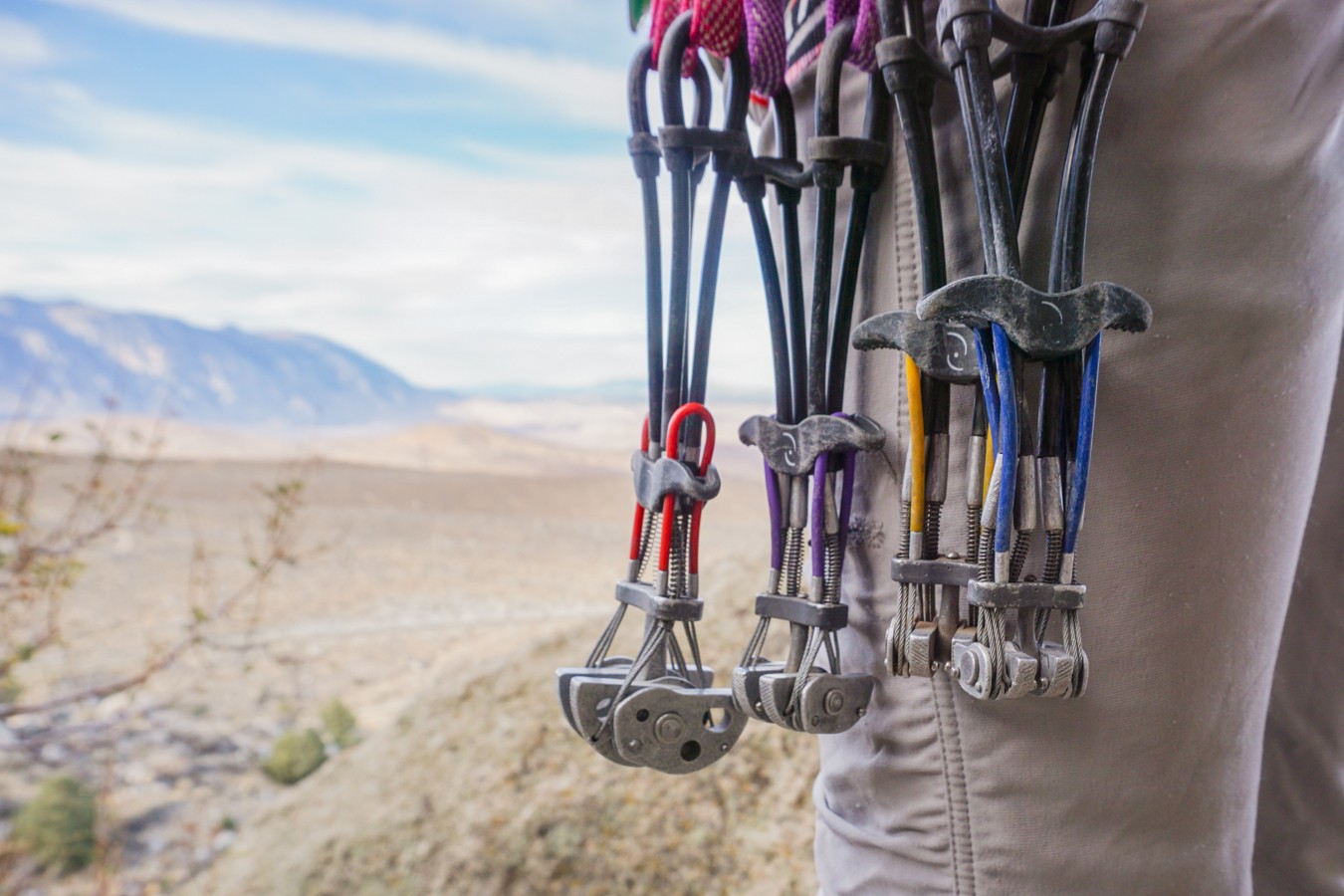
Another drawback is that these cams rack bulky. The sling is oriented in such a way that the widest parts of the cam stack up next to each other. U-stem cam designs, as in the Metolius Supercam, are slung in such a way that the width of U-stems are aligned parallel to each other and do not create a “pile-up” of wide cam stems. This is okay when free climbing with a relatively small rack. If you are aid climbing with a big rack, there is no way you could carry 3-4 sets of these without having a massive clump of gear.
These cams have a relatively small size range that don't cover the tiny sizes or the big sizes. This goes against our cam buying philosophy that the best rack uses one brand for the small sizes (up to 1.25 inches).
These widely available in Europe but very hard to find in the U.S. or at U.S. online retailers.
Personal Stories
One of our climbing partners had a lot of trouble with the Totem Cams as we tested them. Though a talented and strong climber, he tends to frantically place gear, sometimes jamming the cams in without hardly pulling the trigger…just sort of shoving it in there. He found that the floppy cam body design seriously inhibited his ability to place these pieces, and thus his ability to climb. Most people are more careful gear placers. But still, we found that we prefer a little more structure to the cam body.
Value
Expensive. At $70 a piece these cams are among the most expensive cams out there.
Other Reviews
There is a review of Totem Cams for aid climbing
—
Robert Beno and Chris McNamara
OutdoorGearLab Member Reviews of Totem Cam
Most recent review: December 6, 2011
|
 |
3 of 3 people found the following review helpful:
rgold · Climber · Poughkeepsie, NY
I've been using Totems for about a year now and am increasingly convinced about their excellence. The review raises valid issues about Totem cams, but the ratings display serious "C4 bias" and are not even consistent with the review text.
Here's how I think the ratings should have come out. When specifying ratings as ordered pairs below, the convention is (Totem score, C4 score).
Flared cracks. Review (8, 8). Corrected: (10, 8).
Comment: Totems are currently the best flared crack cam there is; it is absurd to equate them to C4's in this department. The review says, "We liked the increased security in downward flared placements (up to 40 degrees according to Totem’s website)," and later mentions "their increased holding power in flaring placements" and then gives no credit for it vis a vis C4's.
Tight placements. Review (7, 8). Corrected: (10, 8).
Comment: Totems fit all kinds of places C4's won't go because of the narrow head size, which is the same or even slightly better than comparably-sized Aliens, making Totems the best cams out there for tight placements. For those who climb primarily on rock with deep parallel-sided cracks, this may be of little interest, but for areas with shallow irregular placements, Totems provide a substantial advantage.
Walking: Review (8,8). Corrected (9,8).
Comment: The review says "These cams walked less than just about any cam we tested" and then gives them no credit for that vis a vis C4's. In addition to the stem flexibility, there is a touch of "play" in the head assembly that allows for some movement without torquing the cams.
Aid: Review (7, 9). Corrected (9,9).
Comment: The review says, "The main reason to get this cam is it will fit in awkward pods that you often encounter on big walls. You can also load the cams with only two lobes contacting the rock. This fact, coupled with their increased holding power in flaring placements, makes them an ideal specialty aid piece." It then rates them two points lower than the cams they are better than.
Compactness: Review (6, 9). Corrected (8, 9).
Comment: The Totem frame s certainly bulkier than a single-stem C4, and slightly bulkier than a U-stem cam (which is not part of this comparison). I think they look bulky but aren't all that bad on the rack, but I use them for free-climbing, where the review says the bulk is of little consequence. The comparison photos indicate that the extra width at the level of heads is about 10%. That's a one-point disadvantage on a ten-point scale so that's the correction I made.
Total Score: Review (75, 85). Corrected (85, 85).
Comment: I think this is much more like it. In view of the structures, it seems almost certain that C4's will prove more durable than Totems in the long run, (this may be exacerbated because Totems can be used in more placements than C4's and so are likely in practice to get more use).
People making decisions should also attend to the "granite-centric" perspective of the Super Topo reviews, in which an "awkward pod" is something only encountered in big-wall aid climbing. Free climbs on other types of rock can have those "awkward pods" for a majority of placements. Other rock types, such as limestone and some quartzites (e.g. Devil's Lake, Wisonsin), with lower coefficients of friction than granite, will provide more secure placements with the greater holding power afforded by Totems, a fact that has already been realized in Europe. But even on granite, greater holding power is a good thing if the the rock is gritty, wet, or muddy.
Personally, I have never experienced a placement problem related to the flexibility of Totems, and I agree that you can't wax ecstatic about the flexibility of Aliens and then knock Totems for the same quality. The example of someone who jams cams willy-nilly without even triggering them is hardly an argument against flexible cams, unless of course your placement tactics are analogously uncritical.
The one place I don't see any advantage for Totems is in desert sandstone. There is no advantage there for narrow heads, the extra holding power might just means deeper grooving of placements, and the Totem cams lobes are bit narrower than C4's leading to higher pressure at the surface.
Bottom Line: Yes, I would recommend this product to a friend.
|
|
|
| Help other readers find the most helpful reviews |
| Was this review helpful to you? |
|
|
|
|
|
|
 |
2 of 2 people found the following review helpful:
Graham · Climber · West coast, BC
"This provides a super flexible cam stem that is useful for horizontal placements and cutting down on walking, but actually works against you when placing the piece because the “stem” is hyper flexible and bends around at inopportune times."
This statement makes me question if the reviewer has even climbed with them. Considering the love on of the aliens in their review you would think they would love these as well as, in my opinion they work even better (I only free climb and don't aid). They do not bend at inappropriate times if you are using the trigger like all cams have
The fact that they are super sticky, flexible and do not walk makes me trust every placement -depending on the rock quality of course. This combined with the fact that they have a far narrower head width by far to a c4 means I am getting far more placement options and I will grab a totem over a c4 most of the time, unless it is a parrel placement; which never happens where i climb. -my 2 cents
Bottom Line: Yes, I would recommend this product to a friend.
|
|
|
| Help other readers find the most helpful reviews |
| Was this review helpful to you? |
|
|
|
|
|
|
 |
2 of 2 people found the following review helpful:
hoipolloi · Climber · A friends backyard with the neighbors wifi
Well, having used Totems extensively I really disagree with this review entirely. I have a double set of Totems, I now use them as my go to for both free climbing and aid climbing. I have climbed on these for about 10 months now and done likely a hundred or more free climbing pitches with them and done about 10 walls (8 El Cap routes this year) with them.
There are some truths here, Totem Cams are a bit bulkier than C4's, but having had Totems racked on one side of the harness and C4's on the other, I can say its not so much that it bothers me when I am climbing. Sure, the first few pitches, you notice it, but that is like everything that is new and different, once you have used them a few more times, you get used to it, and its not a problem at all. Also, they are lighter than C4's despite scoring much lower in the 'compactness - lightweight' department.
In regards to the sizes, I carry a double rack of Totems, sometimes I will carry 1 red Totem and 1 red Camalot, above that I use Camalots (there are no Totems in the larger sizes, nor would they excel in those sizes). The smallest Totem, the blue, is very similar in size to a yellow Alien or a .3 or .4 C4, so I often carry C3's to red. Depending on the route I often use Basic cams (similar to Aliens) in the 'tips' size.
In regards to placing Totems, they have more range than other cams, with the unique shape of the lobes they maintain their strength when under-cammed far more than C4's.
For aid climbing, these are an incredible tool, no way would I rate them a 7 while C4's a 9. I wrote an extensive review on aid climbing with Totems here:
Totem Cams: Aid Review
Josh Higgins wrote a free climbing review here:
Pullharder Totem Cam Review
I would recommend getting your hands on these and trying them, I don't really feel this review paints a fair and clear picture. C4's are, without a doubt, the 'standard' for cams, but it doesn't mean there aren't other fantastic products out there. Like everything new and different, you have to give these a fair chance, allow yourself to become comfortable with them, learn the sizes and the intricacies. If you give them that, which I don't know if this review did, I believe you will be pleasantly surprised.
-David Allfrey
Bottom Line: Yes, I would recommend this product to a friend.
|
|
|
| Help other readers find the most helpful reviews |
| Was this review helpful to you? |
|
|
|
|
|
|
 |
1 of 1 people found the following review helpful:
Its hard for me to believe that anyone can rate the Black Diamond cams higher then the Totem cams in ANY situation if they have actually tried them. Both sides of the Totem cams work independently of each other, so that you can literally aid off one side. This results in greatly increased holding power since the cam doesn't move or walk. All you need to do is place a BD cam and a Totem cam in the same placements and figure out for yourself which cam locks off and will hold better, its very obvious. I have a triple rack of almost new BD cams, but after using the Totems, I bought a rack and am slowly switching over to the Totems. The Totem cams placements are way more bomber, and therefore far safer and great peace of mind free climbing, and far outshine the BD cams in aid climbing. I do not notice any "increased bulkiness" when I use them, and they place so quicly and the flexy nature of the stem gives them a Alien-like feel, which I loved. The gear protection of the future is here now. Totems rock!
Bottom Line: Yes, I would recommend this product to a friend.
|
|
|
| Help other readers find the most helpful reviews |
| Was this review helpful to you? |
|
|
|
|
|
|
 |
There are several solid reviews already on this thread, all glowing and positive. I totally agree with Rgold, Studly, Graham and Holipoi on how good these lil guys are and as I was an early adopter and have climbed extensively with mine on multiple rock types, I will add this to their capable words: in touching and feeling the unit in a gear store, there appears little to recommend it to you. In fact if there is a price tag hanging on it that is one more thing to steer you away from it as this may be the most expensive cam currently on the market. However, once you start running laps on rock and getting in some mileage, that perception changes. I have both experienced this myself, and have seen it repeatedly with multiple climbing partners.
Totem Cams have a greater range than Camalots, and they clearly outperform Camalots in holding power. That is not to say I will toss my Camalots (or Metolius and Wire Bliss 4 cam units) in the trash, Camalots, Metolius Powercams and Wire Bliss 4 cam units are all great products at an affordable price. My Totems supplement the other pieces on my rack although I might choose a Totem over any other cam if it was an either/or choice.
In locations like Red Rocks, where you can encounter horizontal banding and pockets in the Sandstone, they place like no other cam. The original review above has some significant personal bias I disagree with, but concede the point that this cam does take up more real estate on the rack. The only point I have not seen raised that is fairly significant given the price point is this: this cam, when crammed in super tight, doesn't get easily stuck like some cams, and seems smoother to remove than most.
The gear lab review currently lists this as 3 out of 5 stars, I might have started out with 3 of 5 stars when I first got my Totems, but that perception has changed as I've gotten to know them better. These are a 5 star product. Note that there is a reason some highly experienced folks (38 years here) are all giving them 5 out of 5 stars.
This cam is a solid performer that will keep your ass off the deck better than the rest of the pack. Period.
Bottom Line: Yes, I would recommend this product to a friend.
|
|
|
| Help other readers find the most helpful reviews |
| Was this review helpful to you? |
|
|
|
|
|
Have you used the Totem Cam? Don't hold back. Share your viewpoint by posting a review with your thoughts...
|
|
 |
 Credit: www.totemcams.com
Related Best-in-Class Review
Get More OutdoorGearLab
Follow us on Twitter, be a fan on Facebook!
Recent Best-in-Class Reviews
|