We buy all the products we test — no freebies from companies. If you purchase through our links, we may earn a commission, which helps support our testing.
We tested backpacking water filters and treatment systems from Platypus, Sawyer, Katadyn, LifeStraw, and others to find the best option for your adventures
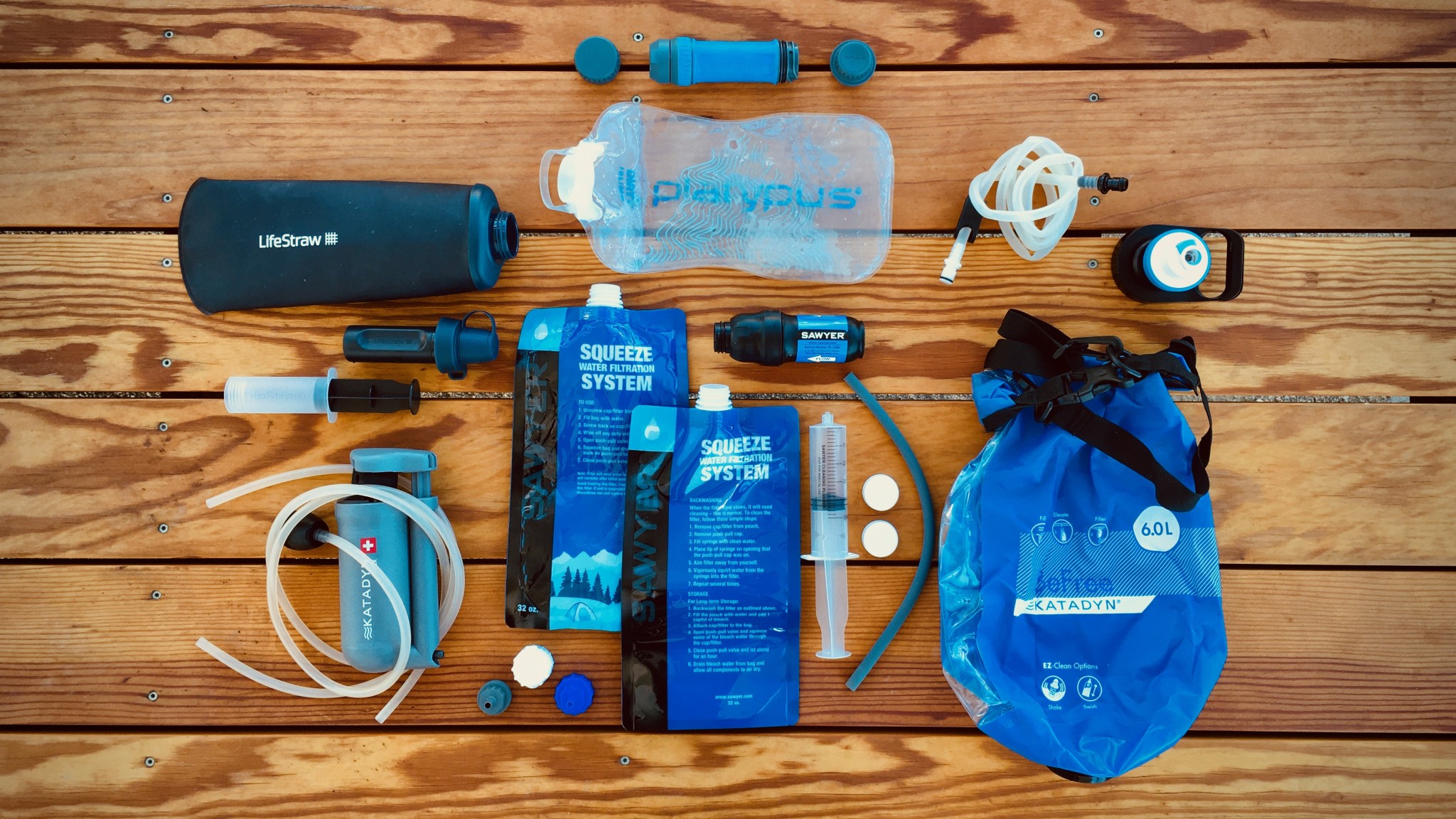
Our filtration gurus have bought and tested 44 of the best backpacking water filters over the last 12 years. This updated review covers 24 filters and treatment systems. We tested these filters extensively on various adventures, from climbing trips in Peru to running expeditions across the USA to fastpacking adventures in Iceland. We evaluate portability and ease of maintenance in the field while also investigating critical aspects such as what each model removes from the water and how long it takes to process one potable liter of water. We confidently offer backcountry travelers our insights and recommendations based on our comprehensive field and objective in-house testing.
Effective Against: Particulates, bacteria, protozoa | Weight: 5.7 oz
REASONS TO BUY
Fast flow
Versatile and adaptable
Packable and lightweight
Budget-friendly
REASONS TO AVOID
Squeeze bags break
Parts are easy to lose
Need to consistently backwash to maintain flow rate
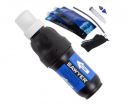
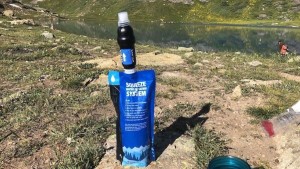
The Sawyer Squeeze is a time-tested, on-the-go filtration system. This lightweight option is wonderful for personal use, providing great functionality on multi-day excursions and daily adventures in the backcountry. Of the multiple Sawyer Squeeze systems, this one offers the fastest flow rate, filtering one liter of water in just 40 seconds in our tests. It's also very packable and easily fits into a running vest or pocket. You can use it as a squeeze filter with accompanying bags or in line with a hydration bladder. You can even attach it to the top of a compatible water bottle or drink directly from puddles with its complementary straw. Few contenders offer this level of versatility and portability, making it our favorite for personal use.
Unfortunately, over our four years of experience testing the Sawyer Squeeze, we've noticed a durability issue with the provided filtration bags. After just three or four trips in the backcountry, we found these bags needed to be replaced. We recommend buying a hydration bladder as a substitute that will outlast the Sawyer bags. We also recommend bringing the syringe for cleaning to ensure an efficient flow rate; otherwise, the filter will clog, and the flow rate will decrease after just a few filtrations. Despite these drawbacks, the Sawyer Squeeze is a great lightweight option for day trips and personal use so long as you don't forget all its moving parts.
Effective Against: Particulates, bacteria, protozoa | Weight: 11.5 oz
REASONS TO BUY
Speedy treatment time
Easy to use and maintain in the field
Relatively lightweight
Can treat and store up to 8L
REASONS TO AVOID
Zip top could be easier to close
Hard to collect water from shallow sources
Questionable hanging attachments
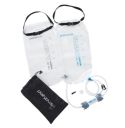
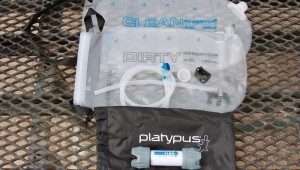
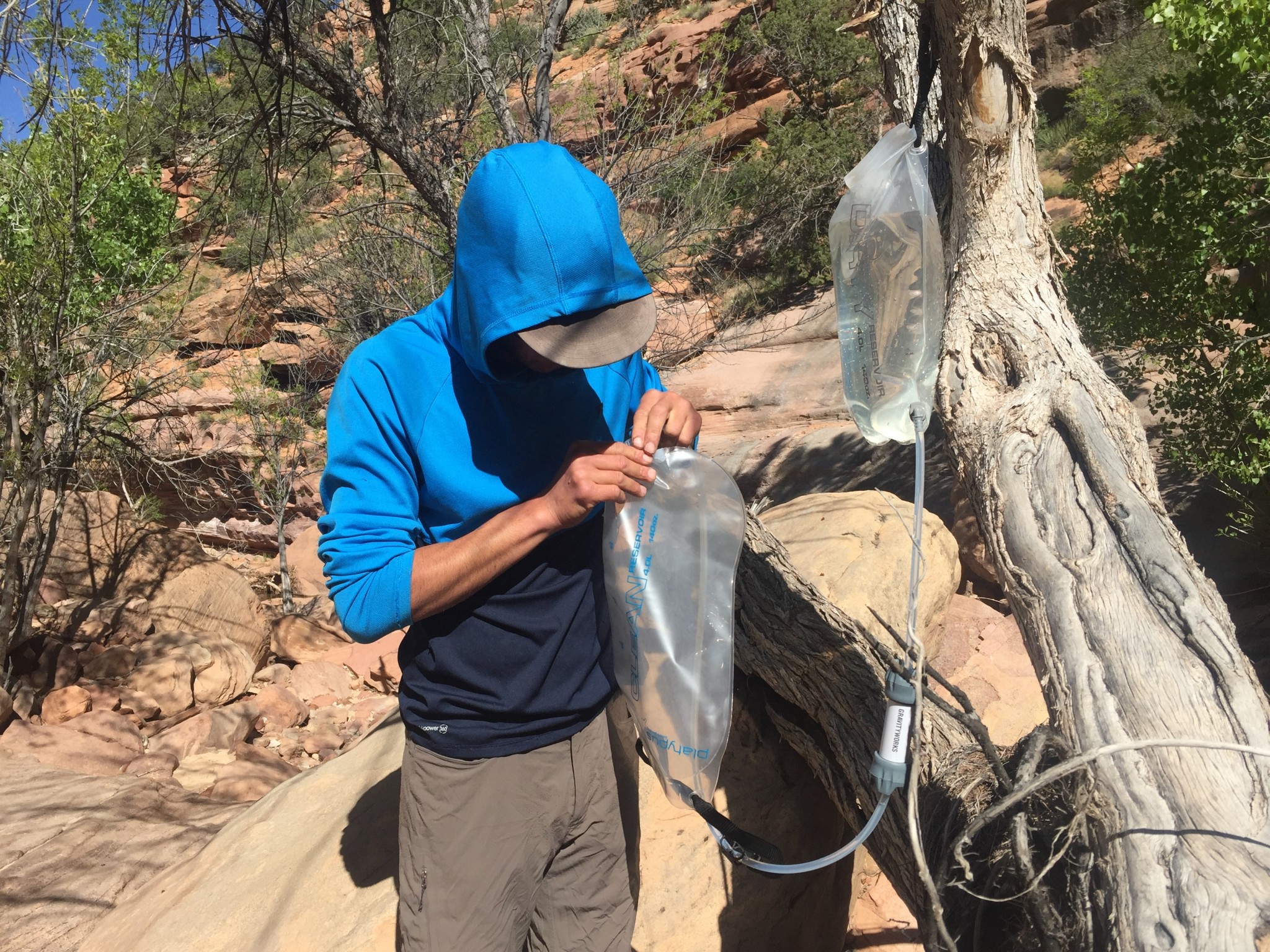
The Platypus GravityWorks is our favorite gravity-fed backpacking water filter. This model is fast, portable, and easy to use. It's effortless to set up, and we love its 4-liter potable water capacity for personal use or for a small group. The kit is equipped with two durable 4-liter bags (one "clean," one "dirty") and a high-flow filter that is compatible with water bottles and hydration bladders. The bags can also convert to a solar shower or handwashing station to complete your base camp. We love that we can simply hang this filter up with dirty water, walk away, and enjoy filtered water within minutes effortlessly (no pumping, no squeezing, hardly any waiting). For its versatility and ability to make filtering water a breeze, we think its 11.5-ounce weight is worth carrying on most trips.
This is a great filter, but it is important to note that it will not treat viruses. We also struggled a bit to close up the zip-top on the bags in cold weather. Though the hanging attachments don't quite seem as durable as other contenders, we never encountered any durability issues, even after several backcountry trips. Like any gravity system that uses an in-line filter, the flow rate will slow down when exposed to water containing high amounts of sediment and requires removal by flipping the filtration unit upside down. Yet, for a durable and easy-to-maintain gravity filter with a high flow rate, this is our favorite model to recommend to friends and readers alike.
Effective Against: Bacteria, protozoa, viruses | Weight: 3.0 oz
REASONS TO BUY
Lightweight and extremely packable
Effective on all microorganisms
Can treat all quantities of water
No field maintenance required
REASONS TO AVOID
Long incubation time to eliminate cryptosporidium cysts
Doesn't remove particulates
Minor chemical taste
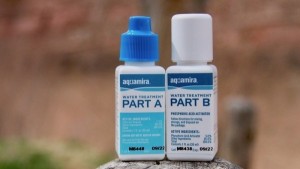
If you've got time to wait for your potable water, the Aquamira Water Treatment Drops is a lightweight and inexpensive travel system used by many thru-hikers. Treatment is simple: activate the substances, then drop them into your water and wait. When given ample time, it kills the most bacteria of all the chemical treatment systems we tested, including cryptosporidium cysts. When doubled with a filtration system, these drops can easily be used anywhere in the world. Plus, they are inexpensive and incredibly packable. There is no need to do field maintenance, and the drops inherently never clog, which are bonuses that increase their reliability.
Sadly, chemical treatment doesn't filter out particulates. Therefore, we recommend carrying a pre-filter or a handkerchief to assist with that work. Though the manufacturer advertises a 15-minute treatment time, the reality is you have to wait much longer (four hours is recommended) to get rid of hard-shelled cryptosporidium cysts. These drops are definitely our favorite chemical treatment for backcountry water due to their packable design and ease of use — just be sure you have time to wait for your sterilization. The Aquamira Treatment Drops offer great value for a couple of trips into the backcountry, but if you're seeking longer-term value, consider opting for another system in our lineup. Just note it will mean a higher up-front cost.
Effective Against: Bacteria, protozoa, microplastics | Weight: 3.8 oz
REASONS TO BUY
Excellent design and quality
Durable and lightweight
Versatile filtration options
Extended filter life
REASONS TO AVOID
Microfilter requires extra maintenance
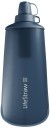
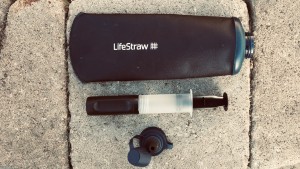
Are you going out for a long day in the hills? The LifeStraw Peak Squeeze is a personal-sized model with a high-flow microfilter in a collapsible and very packable soft bottle. Offering a solution to shallow water sources, you can simply remove the microfilter from the soft bottle and drink directly from the stream or scoop water on the go and drink straight from the packable bottle. It will filter as you drink, fueled by a soft squeeze and your guzzling force. The soft bottle top is adaptable to other compatible bottles, and the filter can be removed to carry water between sources. In the field, the microfilter and collapsible bottle roll up to the size of your palm and are easily packed inside the pouch of a running vest. When committing to long-distance adventures in the backcountry, this reliable and durable filtration system will not let you down.
The only downside to this backpacking water filter is the regular maintenance required to maintain the optimal flow rate. This makes sense, given the small size of the microfilter, which requires the assistance of a syringe to remove extra particles from the hollow fibers. Additionally, the projected lifespan of this model is 2,000 liters, which is double that of its closest competitors. The Peak Squeeze also boasts a durable soft bottle design that resists tears, rips, and punctures, so you can take it on backcountry adventures for years to come.
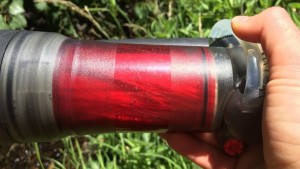
The MSR Guardian Purifier stands out for its exceptional ability among hand pumps on the market to remove water-borne viruses and other pathogens. The hollow fiber filter delivers pure potable water and requires only easy field maintenance to continue delivering year after year. It's built to last, it's tough, and it's strong. We've owned one for over seven years, and it's performed well during international travel and hiking in the backcountry. Its flow rate is exceptional for a pump filter (about 37 seconds for one liter), while the backflush system makes it functional even in the sludgiest of stagnant or turbid water holes. The filter is resilient to freezing, making it an option to consider for trips in colder climates. It's also the only system that performed remarkably well in turbid water due to its built-in backflushing system. If you encounter water muddied with sediment, this is the filter for the job.
Although this purification system is rather remarkable, it is not for everyone. The initial investment is tremendous; quite frankly, most people won't want to fork over the cash. If you're shopping for a pump filter that will suffice in North America, you probably don't need this Cadillac of hand pumps; a normal hand pump like the Katadyn Hiker Pro is adequate. Also, the Guardian is pretty large, adding weight and bulk to your pack. Still, if you require a purifier for international travel or one that offers a backflush system for turbid water, this model provides reliability that's worth the initial investment.
Effective Against: Particulates, bacteria, protozoa | Weight: 16.2 oz
REASONS TO BUY
Easy setup
Large volume reservoir
Packable
Has a sediment catcher
REASONS TO AVOID
Slower flow rate
Requires regular maintenance
The MSR AutoFlow XL is a gravity backpacking water filter designed for large groups and basecamps. Its large capacity can hold up to 10 liters of water, and its adaptable design fits various storage vessels. This is our favorite for group use because it requires minimal setup and can be left unattended while filtering large quantities of water. It also doubles as a handwash station or even a shower during the warmer seasons.
Despite our love for this system, it has the slowest flow out of all the gravity filters we tested. It requires consistent backflushes, particularly when dealing with turbid water. Should you need to utilize its full capacity, you may find site selection limited by the availability of strong anchors from which to hang it. The MSR AutoFlow XL is a good option for those who require a gravity filter that can handle large quantities of water with minimal effort, but if you're looking for a similar gravity filter with a quicker treatment time, check out the Platypus GravityWorks
Effective Against: Particulates, bacteria, protozoa, viruses, chemicals, heavy metals | Weight: 19.4 oz
REASONS TO BUY
The best water quality
Easy use
Easy field maintenance
REASONS TO AVOID
Super bulky design
Purifies only small amounts of water at once
Short comparative cartridge life
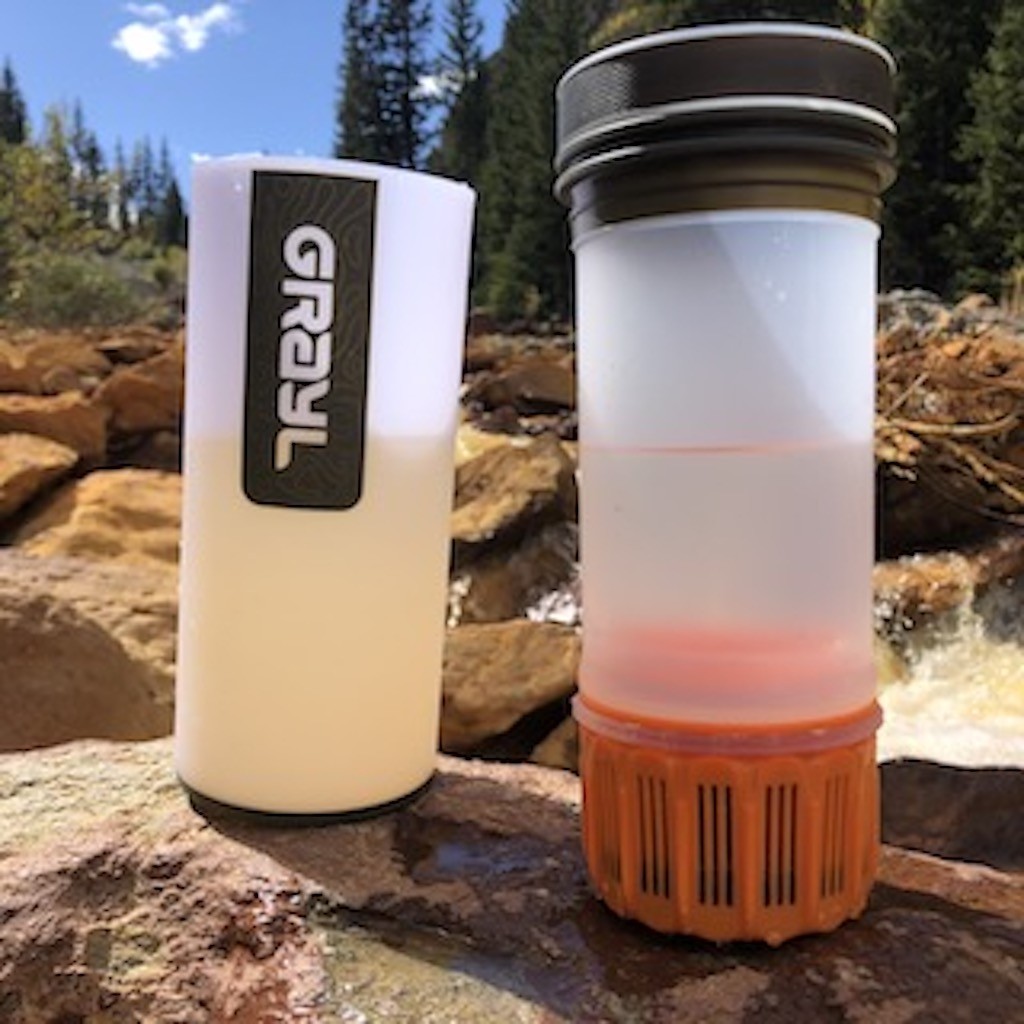
The Grayl Geopress quickly became one of our most used and favorite purification systems. In comparison to the rest, it supersedes most systems for a variety of reasons. It's easy to collect water, push it through, and drink it right away. More importantly, it removes the most disgusting water contaminants that you might find. Not only viruses, but it's said to remove heavy metals, plastics, pesticides, and more. Our water came out clear when we tested this in a heavily metal-polluted river in Ouray, CO. We believe that no other system could purify this well, either leaving some detectable smell or discoloration behind. The bottle also proved incredibly durable and met our needs while traveling. Save yourself from buying tons of disposable water bottles during travel and get the Grayl Geopress instead.
Compared to similar systems, this bottle is much easier to push down to force the water through the filter, especially with the handgrips along the side. Though we appreciate the function, this system is not our first choice for lightweight backcountry travel due to its bulky and heavy design. The cartridge life is minimal, and refills are quite costly. Based on these cons and our side-by-side comparisons, we find this system provides a relatively low value for the price. But, for traveling abroad, this model offers peace of mind when collecting water from taps or other polluted sources. If you want something less bulky and easier on your wallet, check out the LifeStraw.
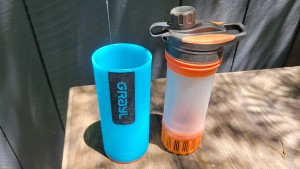
The two-chamber design of the Grayl GeoPress makes it simple and quick to filter water between the two.
Credit: Jon Oleson
Compare Products
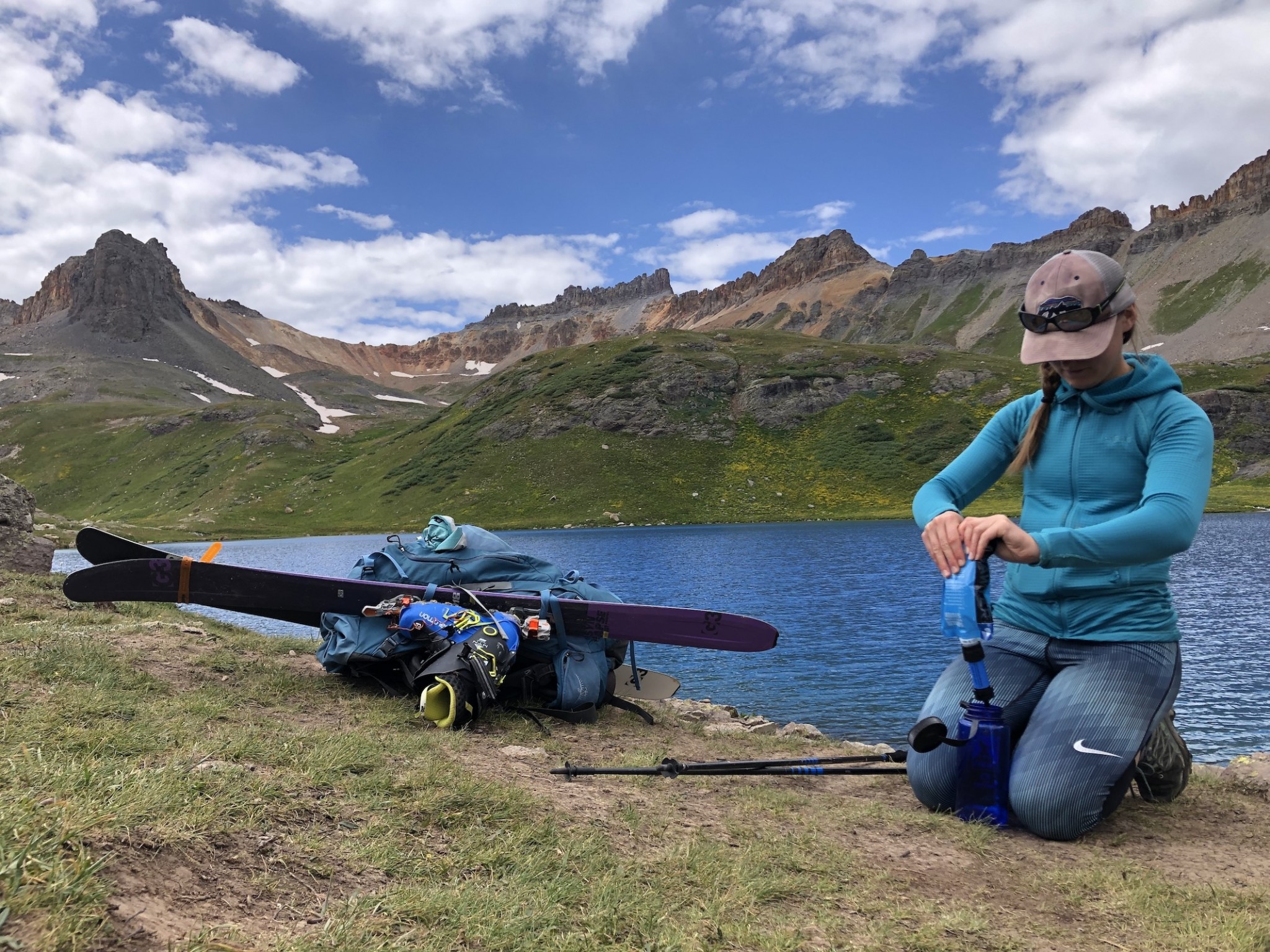
Using the Sawyer Micro during a ski adventure to find sweet descents towards the end of August. While snow is typically scarce this time of year, we appreciate the lightweight nature of this on-the-go filter to support our ambitions.
Credit: Amber King
Why You Should Trust Us
To test each product in this review, we take to the trails. We run, hike, and bike hundreds of remote miles with filters in tow, guzzling gallons of water filtered and purified from trailside sources. Using a systematic test plan, we assess each system's anatomy, dissect the pros and cons, and evaluate whether a system is reliable enough to earn our favor. Each product sees hands-on and in-field experience. We also perform rigorous indoor tests to determine minute differences between products. We specifically make sludgy water samples using fertilizers, soils, and other particulates to truly test how each filter and purifier performs. Our recommendations come from experience in the field and home-based experiments that comparatively test each product's performance.
Our comprehensive testing spanned six testing metrics:
Water Quality (20% overall score weighting)
Durability and Maintenance (20% weighting)
Treatment Time (15% weighting)
Weight and Packability (15% weighting)
Ease of Setup (15% weighting)
Ease of Filtration (15% weighting)
Jessica Haist, Amber King, and Trish Matheny are seasoned gear testers (over 25 years of collective experience) who love to explore in the backcountry. Both Jessica and Amber work in outdoor education. As educators, they spend lots of time in the woods, backpacking along trails, and exploring remote locations. You can find Jessica playing at the local granite crags, sucking up rays of the sun, or riding trails on her mountain bike, and Amber is an avid ultrarunner and rock climber with years of outdoor education under her belt. Trish is usually away from cell reception, exploring the mountains surrounding her home in Crowley Lake, California. She splits her time between running ultra distances and climbing the endless Sierra granite. Our testing team uses these filters throughout all seasons of the year, with over a decade of cumulative experience testing these filters and purifiers.
Setting up the Katadyn BeFree Gravity filter in the backcountry on a backpacking and climbing trip.
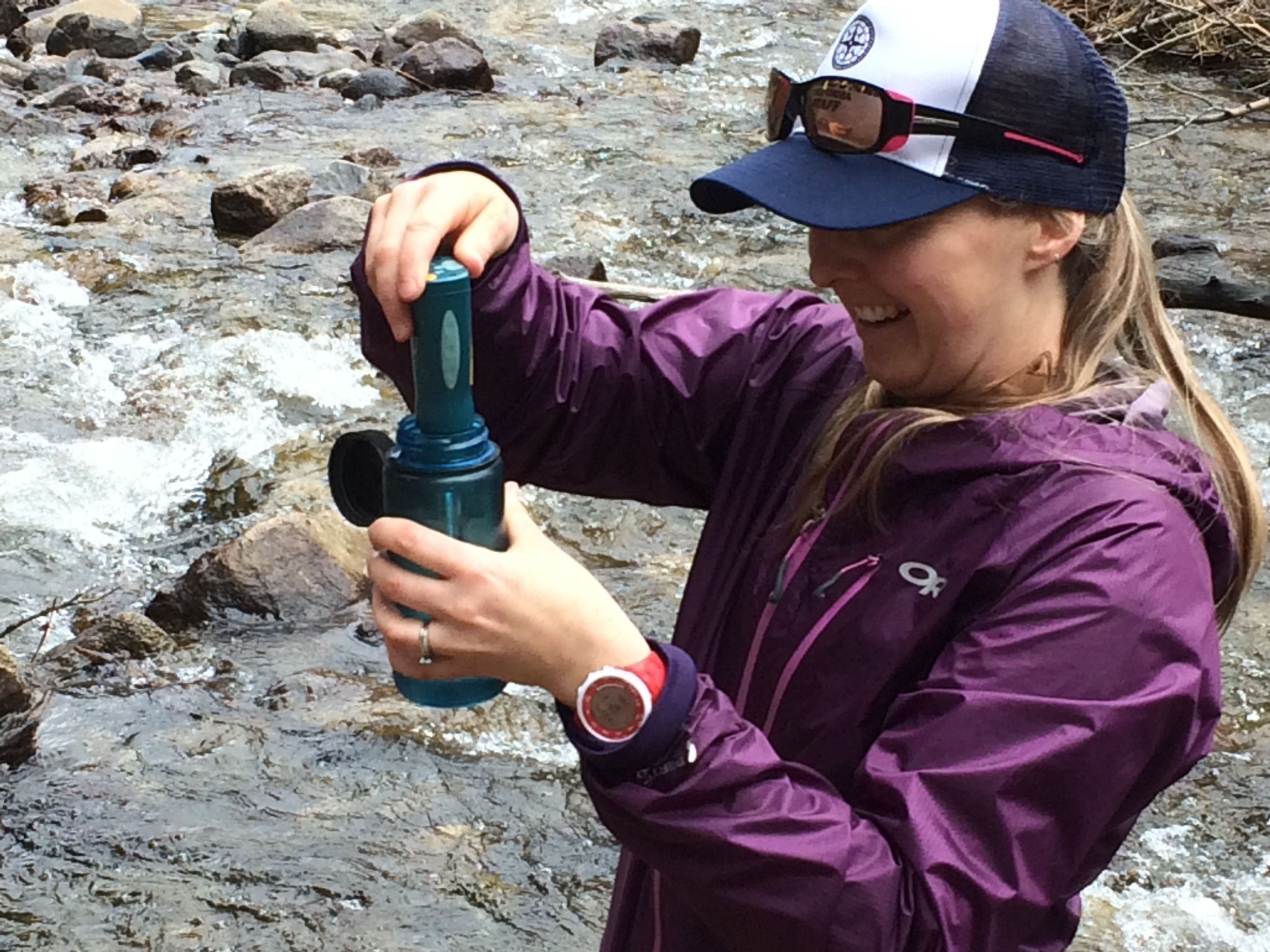
The Flex is easy to assemble, just fill the bottle and screw on the filter!
One of the many timed liters during our trip to Indian Creek. We never achieved the advertised rate of flow for the Platypus QuickDraw, but averaged around 44 seconds per liter.
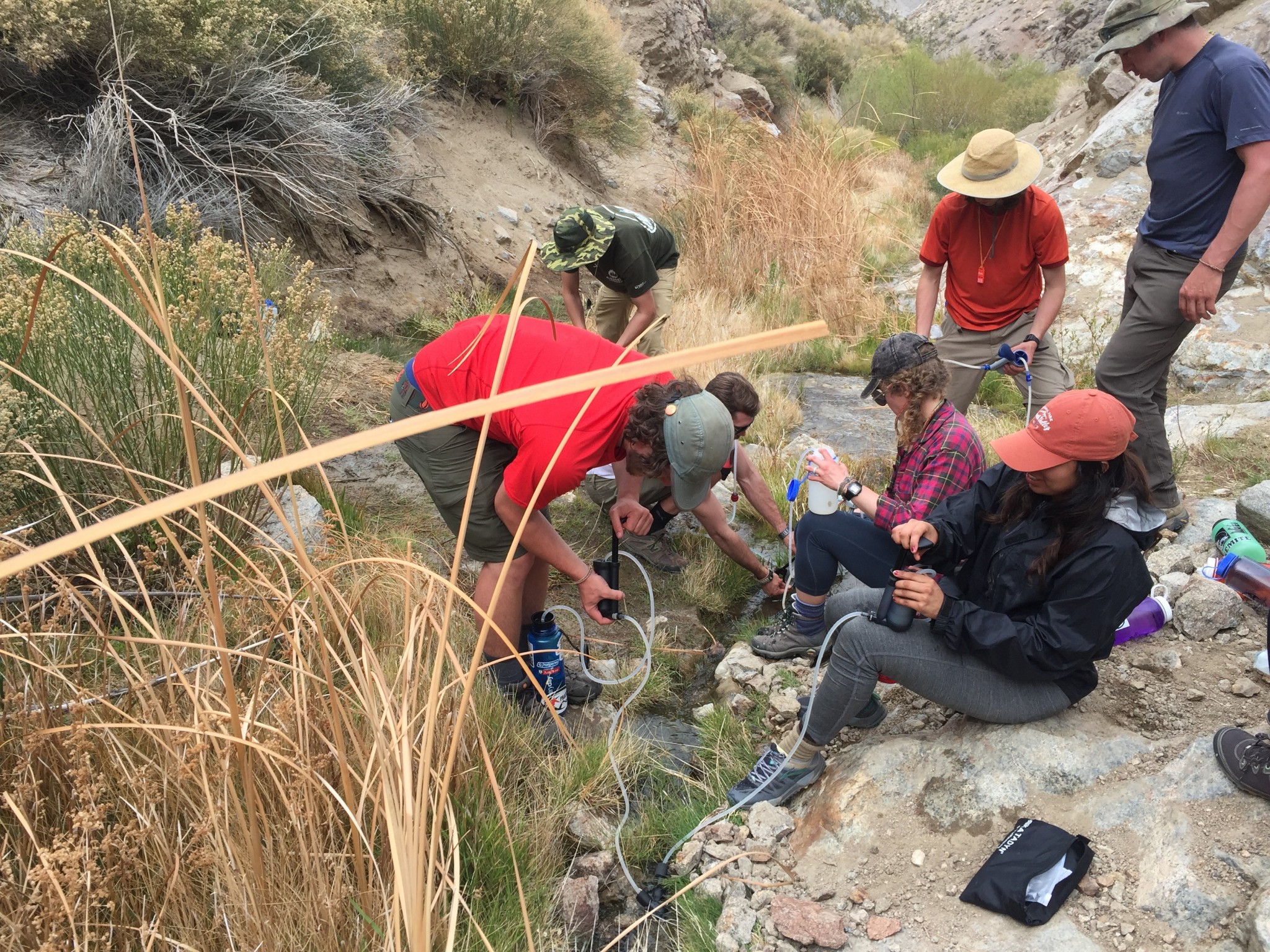
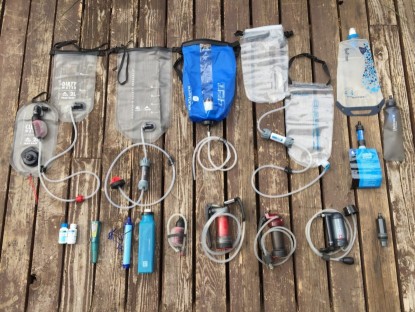
Our team of testers has put each of these water filters through the wringer so that we can provide you with the best recommendations based on your specific needs.
Analysis and Test Results
With a focus on backcountry water filters, we chose a wide variety of options that you'll encounter on the market. While it might be difficult to assess different categories of water treatment products (for example, chemical treatment versus a hand pump), the metrics used to evaluate each filter offer helpful insight into which products excel in one area or another. Using this information, we hope to help you find exactly what you are looking for.
Value
A great purifier or filter lasts a long time and doesn't cost an arm and a leg to maintain. While the original ticket price on some items might seem low, the expenses of replacement parts might add up, running up a larger bill over the life of the filter. The Sawyer Squeeze systems offer impressive value because they provide more filtered or purified liters before requiring replacement than other models we tested.
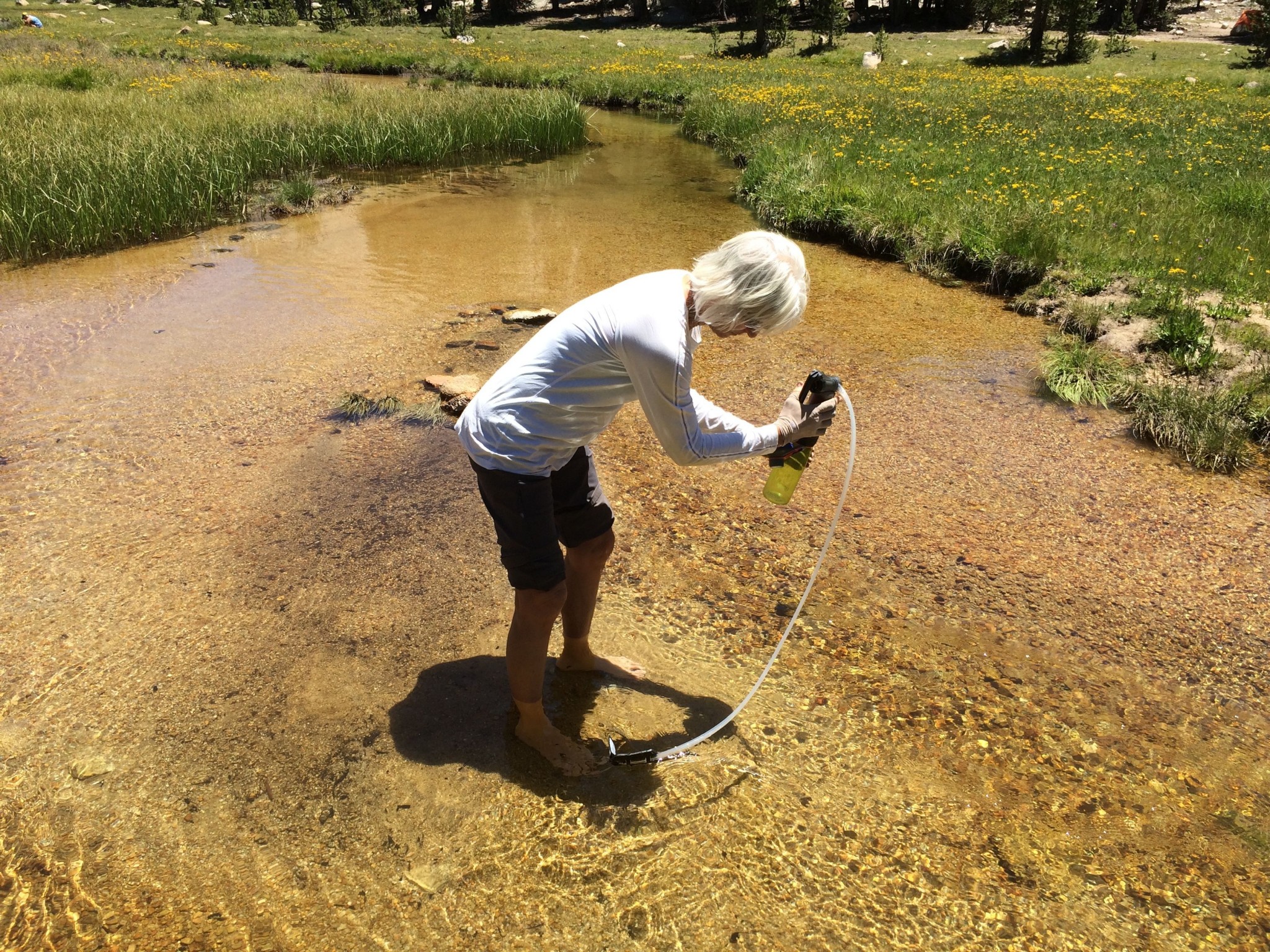
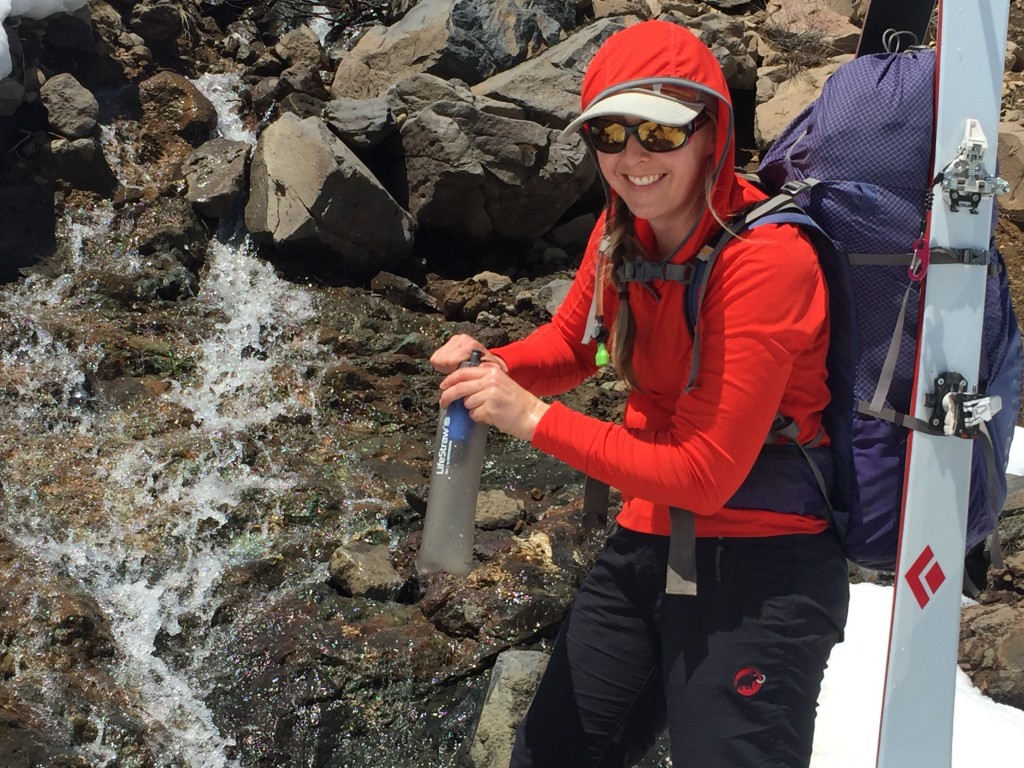
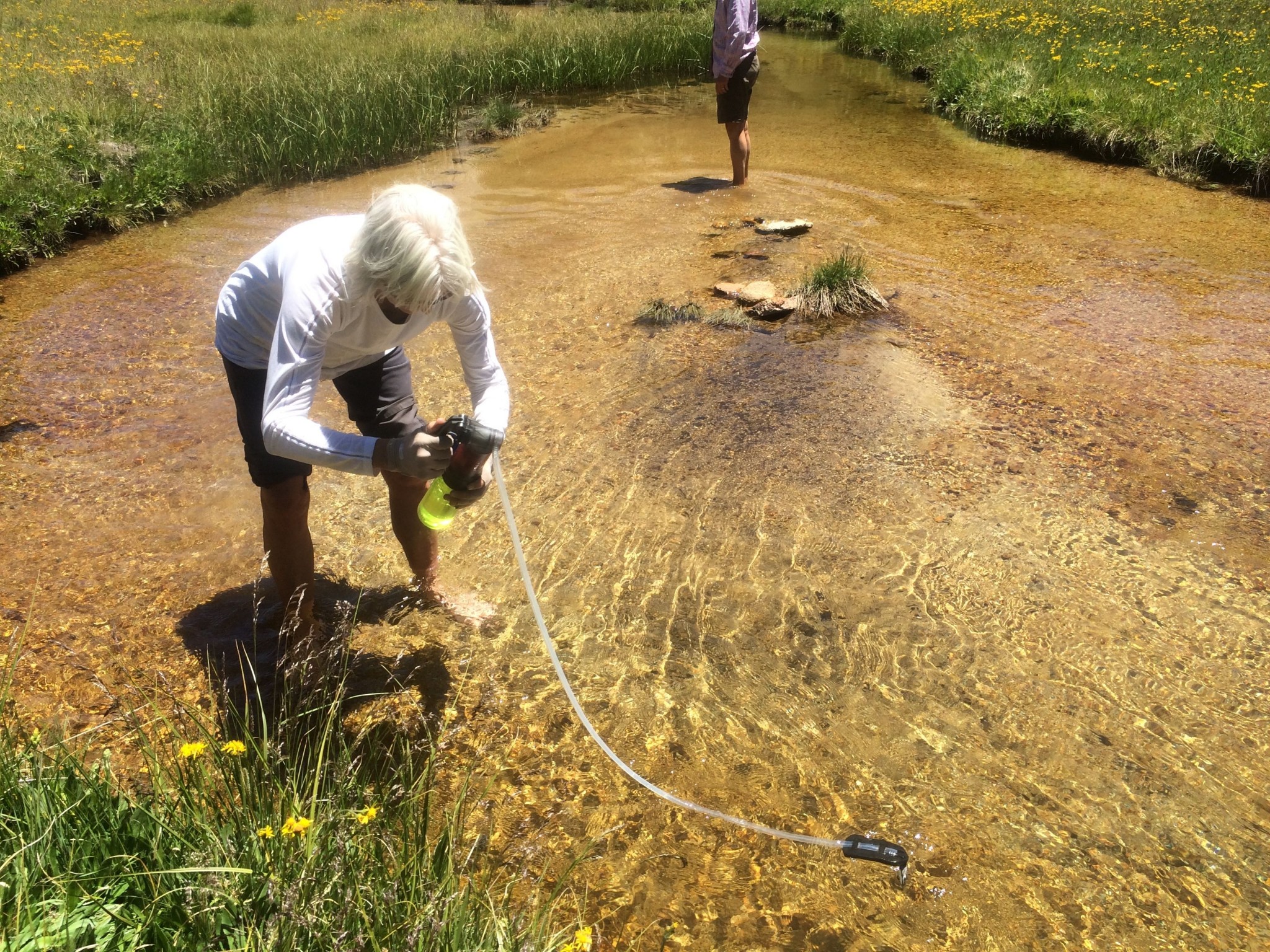
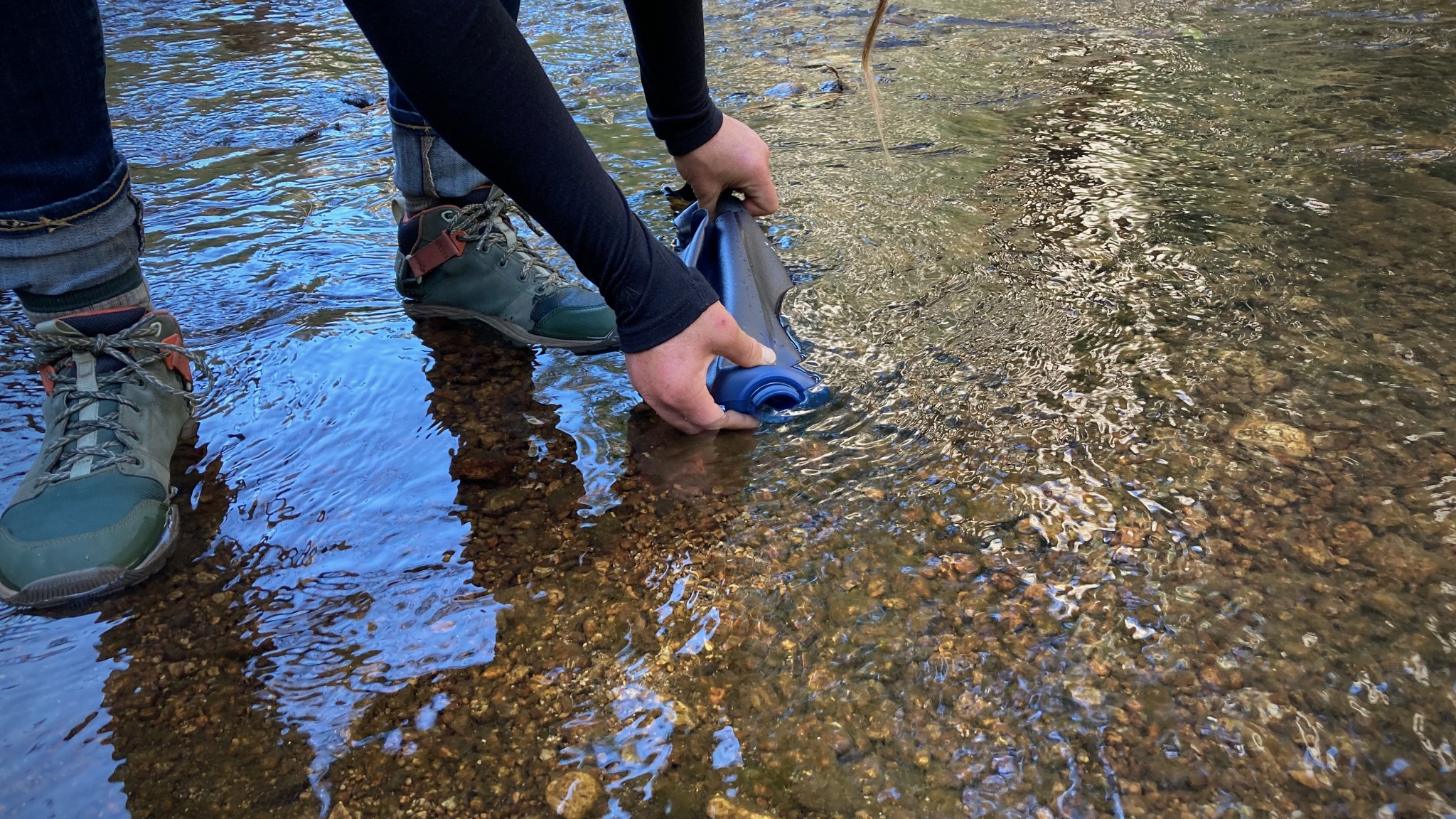
We've been impressed for many years by the value that Sawyer products present, like the Sawyer Micro here shown filling from a mountain stream.
Credit: Amber King
The Katadyn Hiker is a pump filter with great reliability and longevity at an affordable price compared to pump filters that tend to cost much more. The LifeStraw Peak Squeeze is also a fantastic system for adventuring, offering the versatility to drink from a bottle or directly from the source. While purification tablets and liquids like the Potable Aqua Purification Tablets, Aquamira Water Treatment Drops, and Katadyn Micropur Purification Tablets have a low upfront cost, they offer less value per liter over time as they need to be replaced every 30 liters or so. When considering the price, consider how you'd like to pay for your system: with minimal, repetitive costs or a larger sum less frequently.
Value is an important consideration for your backpacking water filter, we hope our evaluations help you to decide the best filter for your next adventure.
Credit: Trish Matheny
Water Quality
When considering this metric, we specifically look at what each backpacking water filter can remove, as well as the overall taste and odor of the water. We went to shallow puddles, smelly swamps, and contaminated streams to see what each filter could do. Those that remove everything, including heavy metals and pesticides, triumphed in this category.
Backpacking water filters and purifiers use different types of technology to remove protozoa, bacteria, and other water-borne pathogens. Filters typically don't have a pore size that can remove viruses. Other categories are chemical tablets and UV light systems. Below, we outline the different types of systems and what they are capable of eliminating.
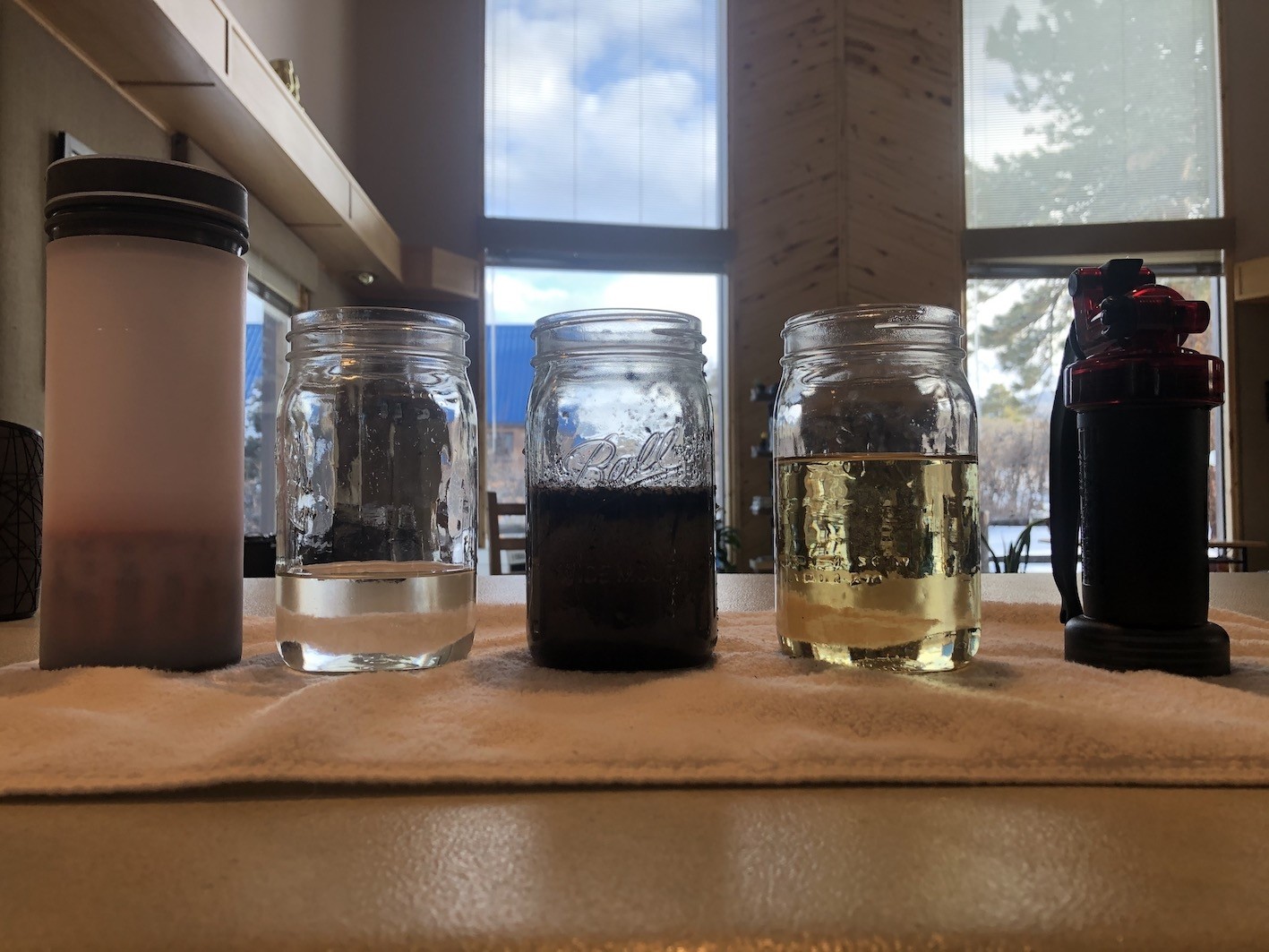
The Grayl Geopress (left) does the best in our water quality tests. All other filters processed this soil sludge filled with pesticides and other chemicals and produced this yellow colored water (right). While the Geopress produced clear, clean water that we actually trusted to drink.
Credit: Amber King
Water Purifiers
Water purifiers are what you need if you're traveling abroad or treading in terribly polluted areas. Water purifiers remove particulates, protists, and bacteria but can also rid the water of viruses. For example, the MSR Guardian is a tried and tested hand pump that can do just that. It expunges smells from water and removes viruses, but it can't remove heavy metals or chemicals. That said, if you're traveling internationally, it's a great companion to filter water from the sink or from a local stream.
The Guardian Purifier is somewhat overkill for the alpine streams in the Sierra Nevada, but it's perfect for traveling in developing nations where water can be unclean.
Credit: Jessica Haist
The Grayl Geopress stands out above the rest, using push technology to scrub water of contaminants. We tried this system on a particularly contaminated stream in Ouray, Colorado, that runs yellow from pollutants like lead, arsenic, chromium, and iron oxides. The water smells acidic, and it is acidic. After using the Geopress, all these metals were removed, and the pH of the water was neutralized. We drank it shortly after, not experiencing any weird tastes or side effects. We'd also take the MSR Guardian with us, but we'd be more careful about our water source. However, the MSR Guardian has a much longer lifespan and can process more water in bulk.
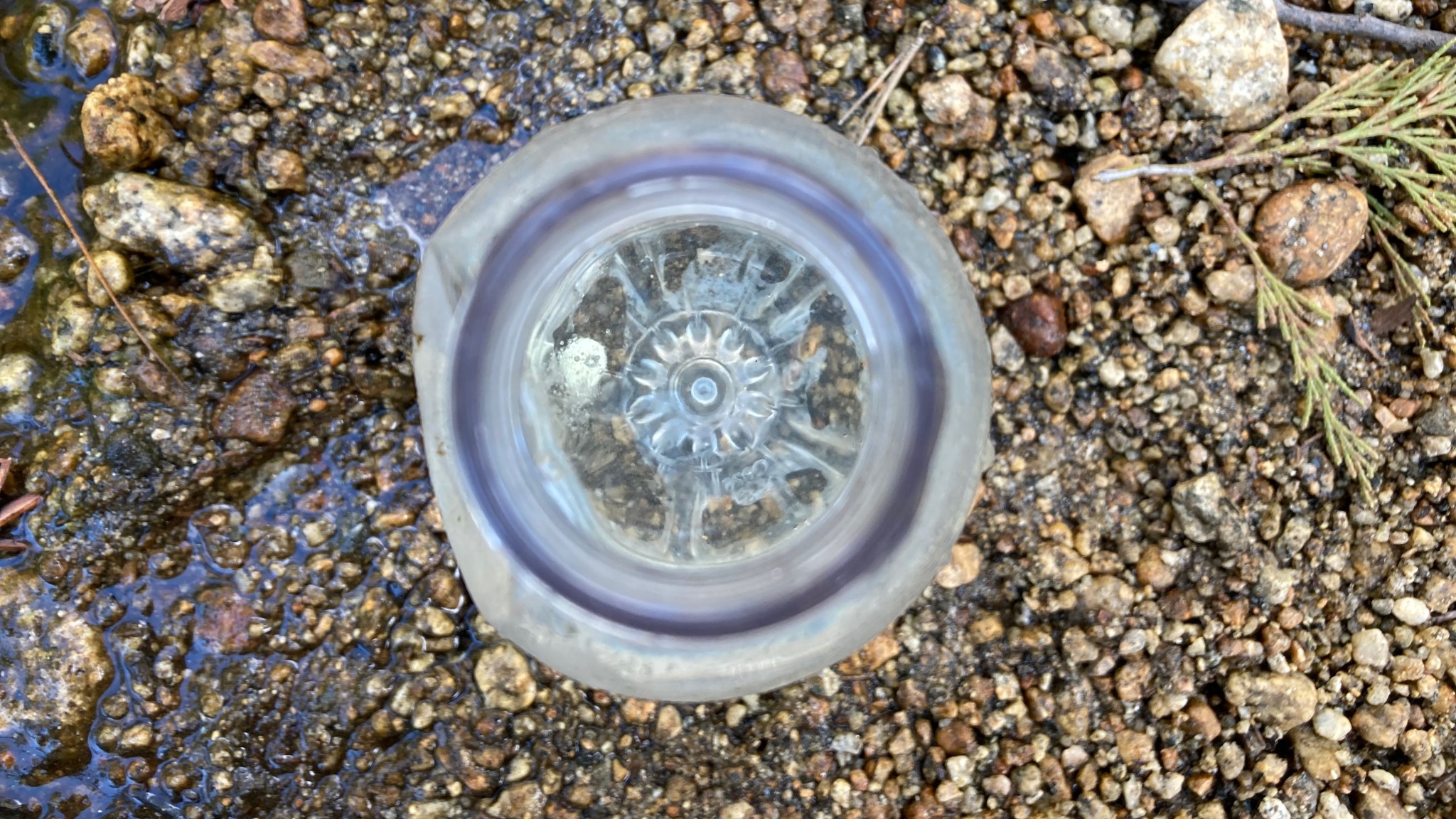
A look at the purified product, provided by one of our favorite purification systems. It is said to offer protection from heavy metals, particulates, viruses, and other living organisms. In our tests, it was the only one that would remove the yellow color of this polluted river.
Credit: Amber King
UV Light
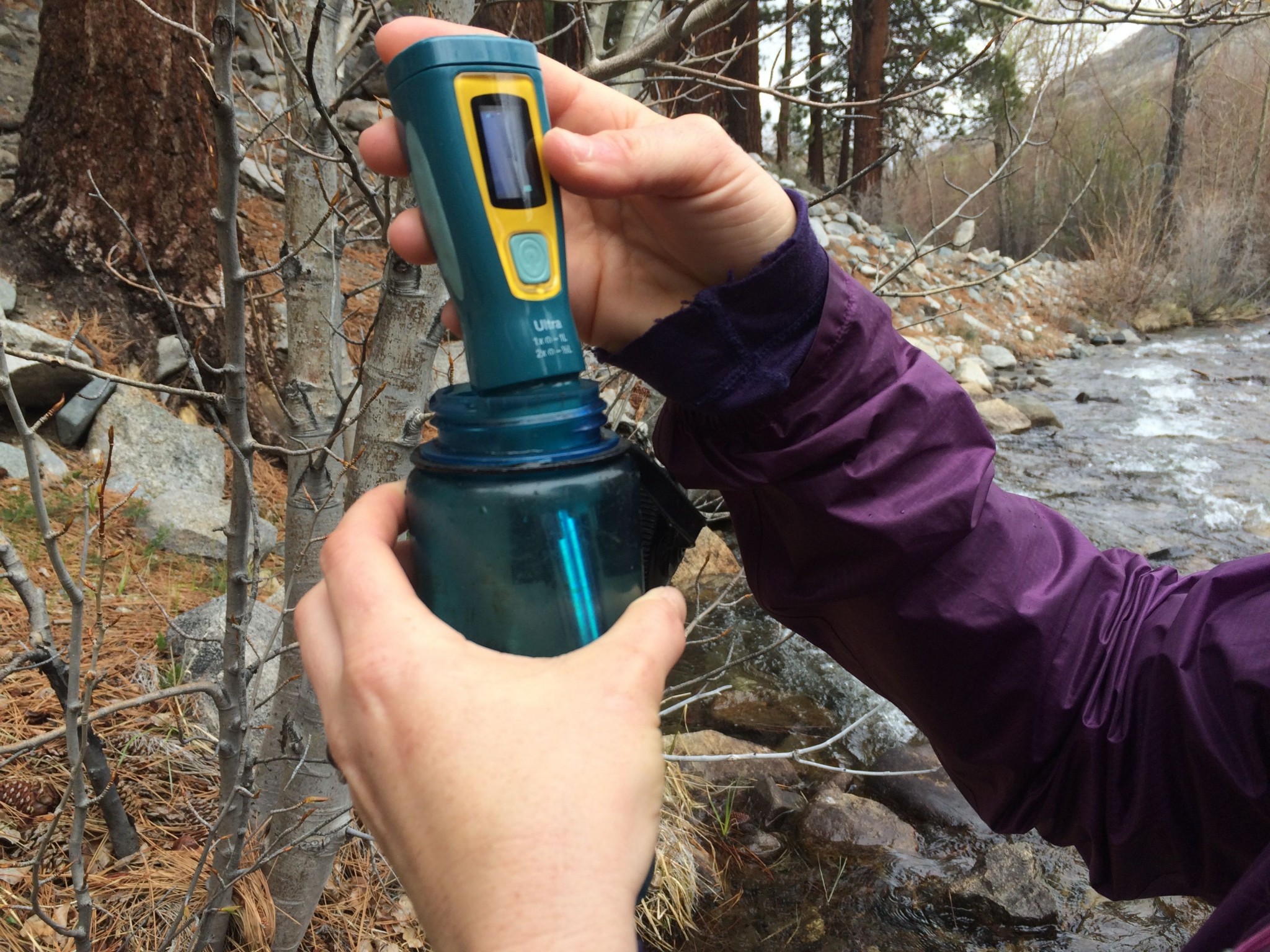
UV light purifiers also effectively eliminate water pathogens. UV light like the SteriPEN Ultra can be put into a glass of liquid and swirled around to destroy pathogens that could cause an infection. The SteriPen is easy to use and features a long structure that you swish around in your water in order to achieve purification. Though the SteriPen offers great water quality, it will not remove particulates, smells, or metals and, for this reason, doesn't score as high as other models.
The SteriPEN Ultra uses ultraviolet light to get rid of harmful microorganisms.
Credit: Jen Reynolds
Chemical Treatment
Chemical treatments are effective, though they all impart an off-flavor to the water and do not filter out particulates. The Aquamira Water Treatment Drops are our favorite chemical treatment because they kill all organisms (with enough time), while the Potable Aqua Purification Tablets and MSR Aquatabs can destroy viruses, bacteria, and some protozoans, but not Cryptosporidium. If you want to add a backup to your emergency kit, check out the Katadyn Micropur Purification Tablets, which have a 5-year shelf life but a strong chemical flavor. The Aquamira Drops have the least "chemical" taste of all three options. Try filtering the water through a buff or handkerchief before treating the water to reduce sediment if necessary.
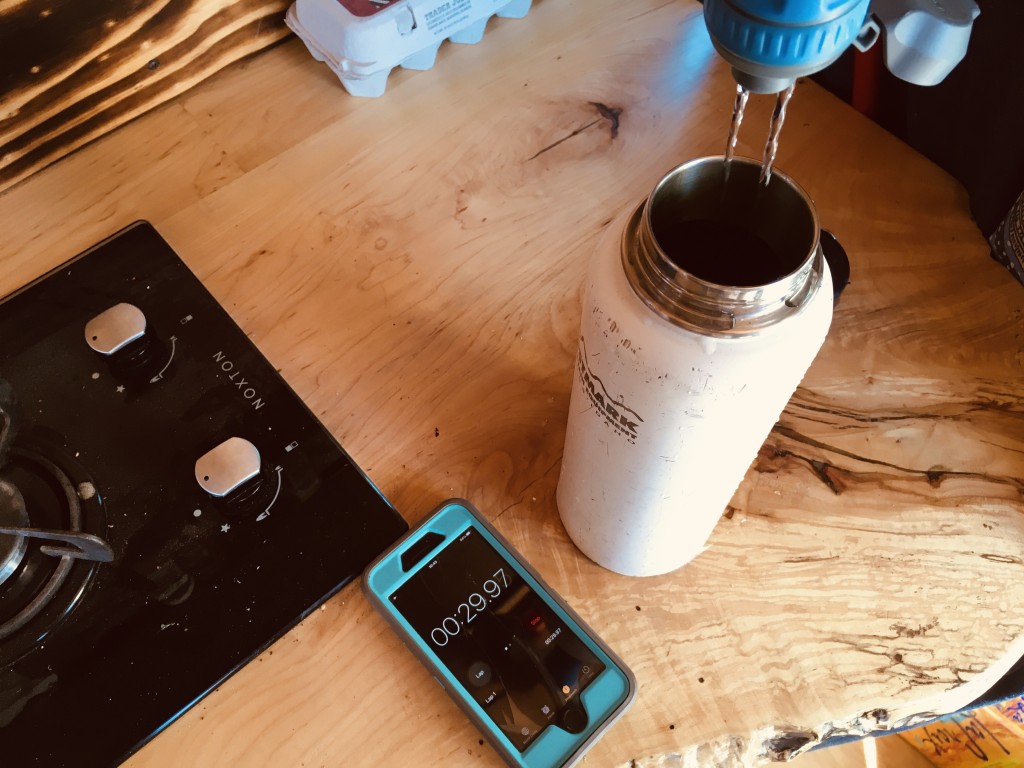
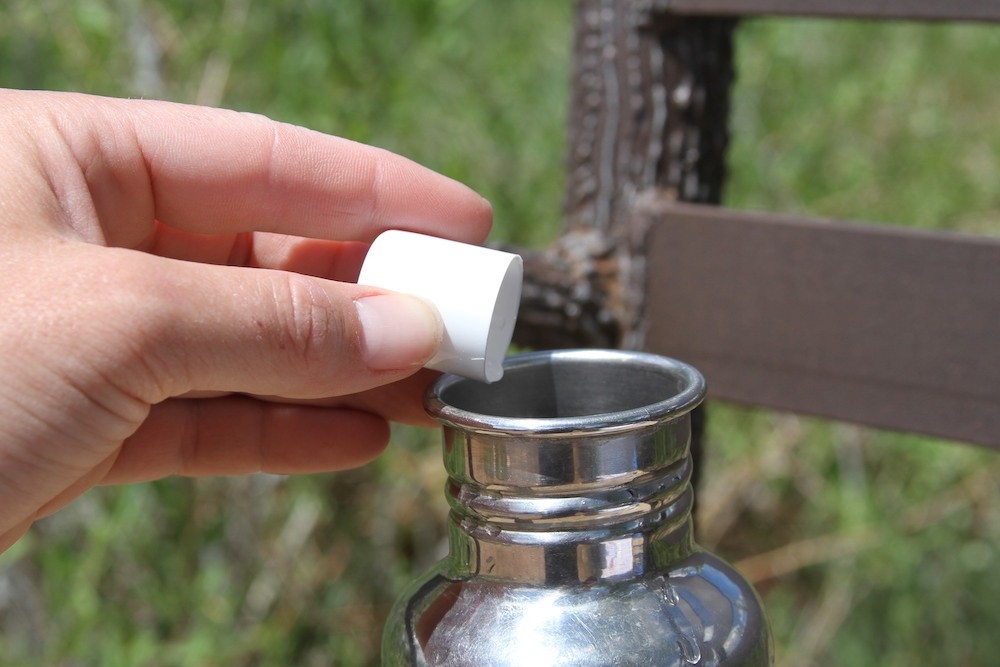
Pouring the Aquamira drops into our water to kill anything that we'd be concerned about.
Credit: Amber King
Water Filtration Units
A backpacking water filter (not a purifier) can remove particulates, bacteria, and protozoans (Giardia and Cryptosporidium) but cannot remove viruses. The best filtration systems can remove chemicals, heavy metals, and odors using activated carbon embedded in the core of the media.
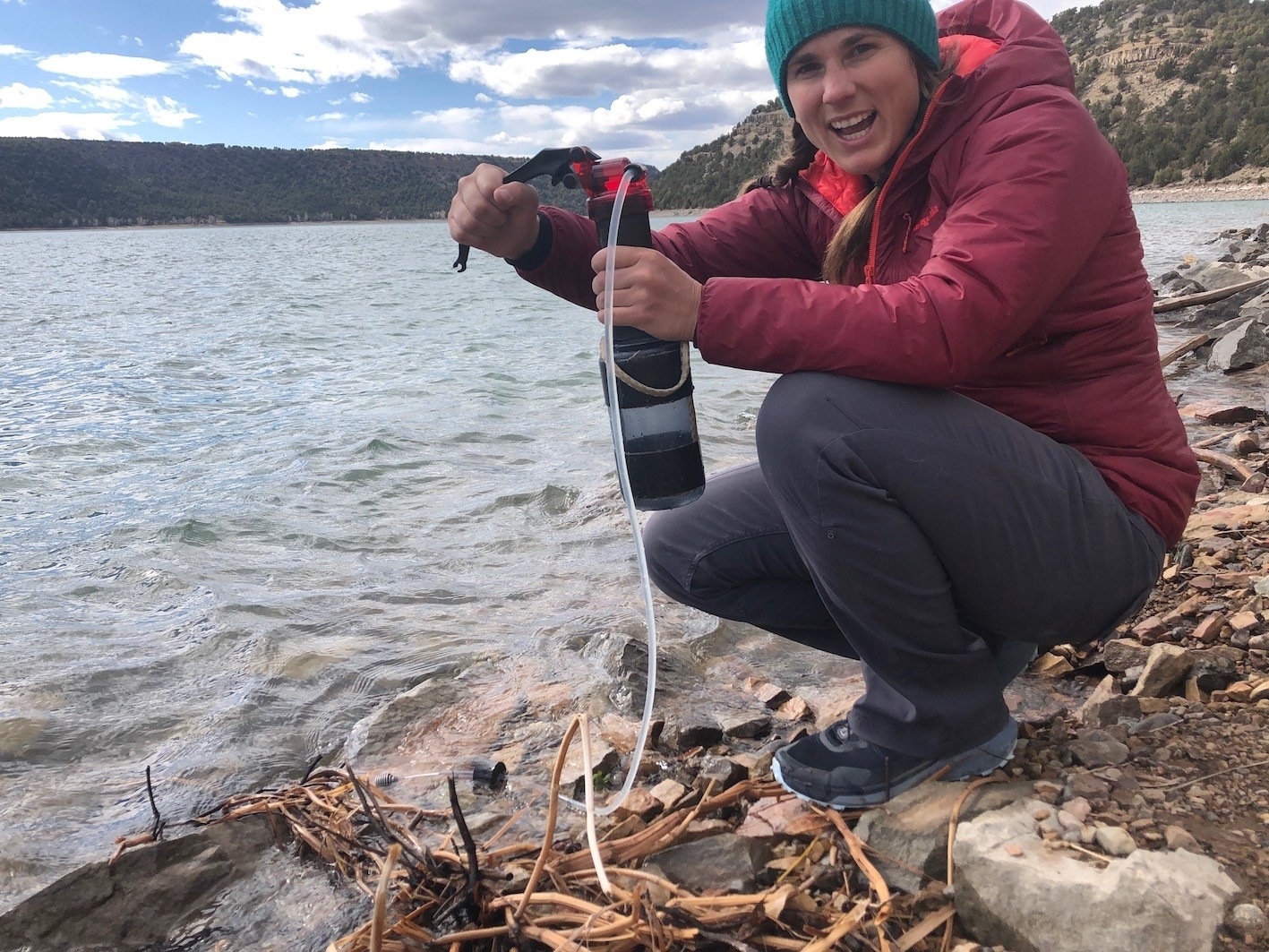
The Platypus GravityWorks hard at work, cleaning out super turbid water and turning it into delicious and drinkable water.
Credit: Amber King
Of the backpacking water filters, the Katadyn Hiker Pro, Katadyn Hiker, and MSR MiniWorks EX offer protection from both microorganisms and chemicals like pesticides to improve the taste of the water.
Filters remove particulates based on size. Bacteria are larger than protozoans, and viruses are about 10x smaller than bacteria. Cysts that come from Giardia and Cryptosporidium need a filter media smaller than 0.2 microns. Purifiers that filter out based on size need filter media with an absolute size of 0.02 microns (notice the extra zero) to filter out viruses. Dirt is much larger than all of these microorganisms.
A Note on Water Turbidity
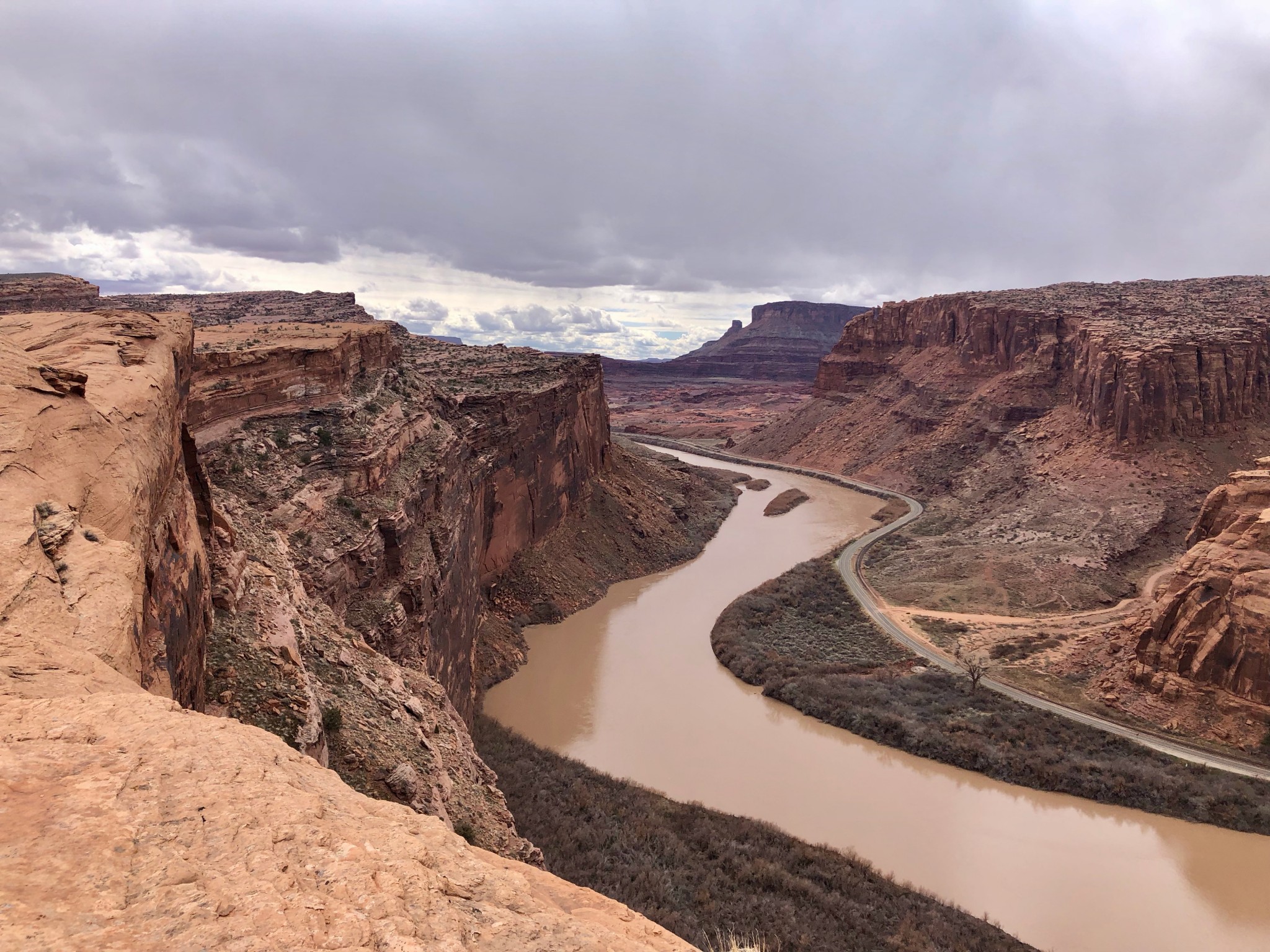
It may be useful to plan for water sources that might be saturated entirely with silty sediment (called highly turbid). For example, the Colorado River, which has carved out popular backpacking locations like the Grand Canyon, is one of the most turbid rivers in the world. If you live close to it, you've seen it transform from a clear greenish color to what looks like chocolate milk shortly after rainfall.
The highly turbid Colorado River is a place where you may want to pre-filter you water...even with the best filter out there.
Credit: Amber King
Most backpacking water filters and purification systems cannot deal with the amount of sediment and silt in water sources like this. The only system that held up in these conditions is the MSR Guardian Purifier, another reason it's one of our favorites. It utilizes an auto backflush that cleans the filter with every pump.
The Guardian self cleans with every stroke, sucking water in through one hose and the purged water back out the other.
Credit: Jessica Haist
If you plan on traveling to areas with high turbidity, bring a gallon ziplock bag or a bag designated for settling water. Scoop up the silty water and let it settle for a few minutes. Clearwater will remain at the top, with sediment falling to the bottom. Gradually pour the upper layers of water into your filtration device or filter from the top of the bag. This is an easy and cheap "pre-filtration" technique for these areas. Some gravity systems have a "sediment collecter" in the bottom, like the MSR AutoFlow XL.
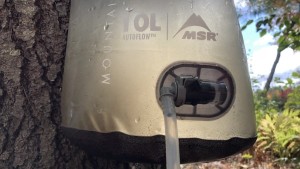
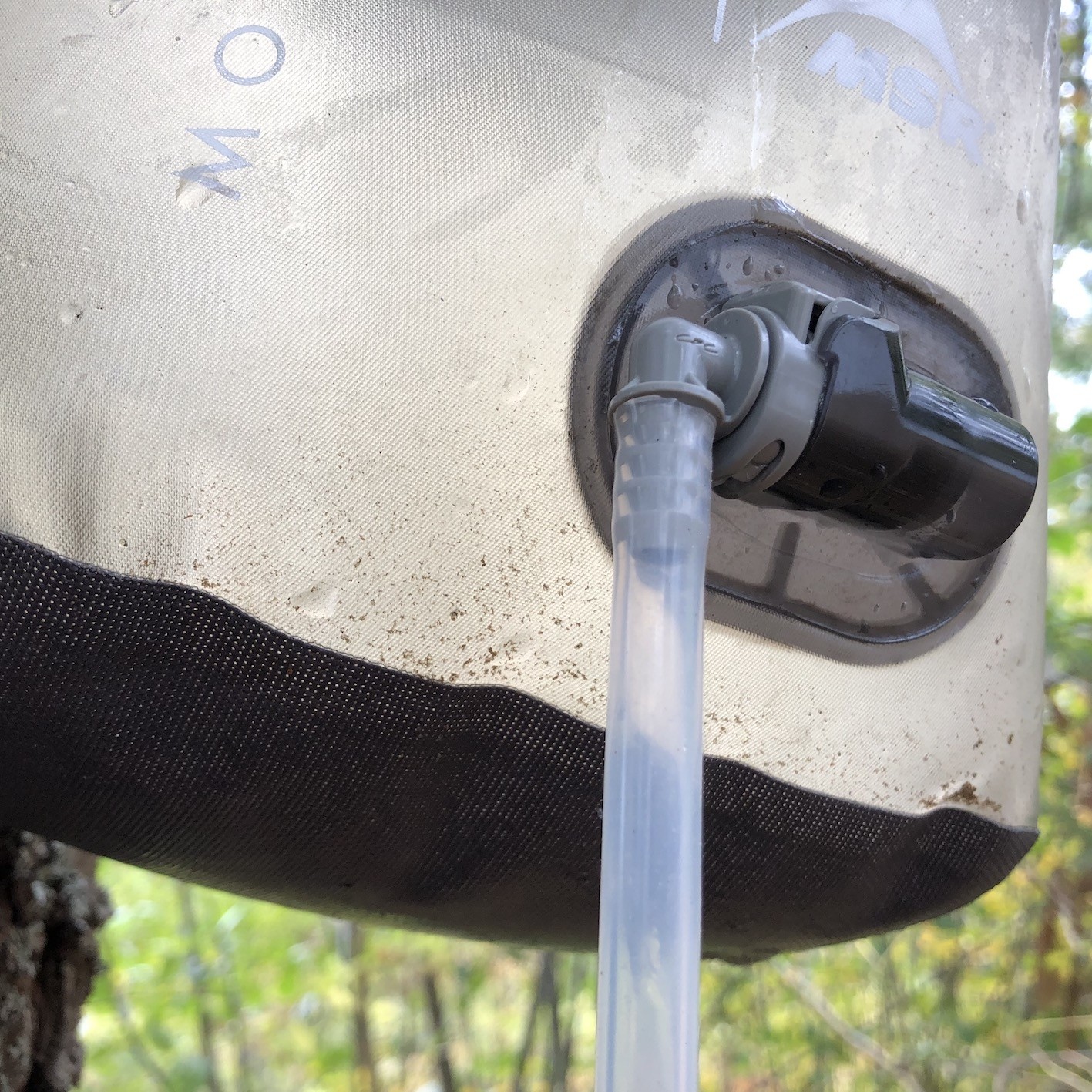
The space between the bottom of the bag and the intake provides a place for sediment to settle out. This is considered the "sediment trap" that works really well with turbid water.
Credit: Amber King
Durability and Maintenance
Reliable backpacking water filters are durable in construction. You don't want to be without a filter simply because it gets dropped, and you also don't want to spend hours maintaining it. Products that offer high-quality components and reliability with minimal durability issues are available.
The most durable and reliable products are chemical treatments. Each comes in either jars or prepacked packets that can go into a plastic bag. They have no moving parts, don't require maintenance, and don't expire. If you want 100% reliability, this is it. The Aquamira Treatment Drops are a favorite of ours. We would strongly recommend carrying these as a backup system, especially when traveling into the backcountry for extended periods. There are too many situations where filters can clog, parts might be lost, or things may not work. Carrying these treatment drops can mean the difference between life, death, or grave discomfort.
Gravity Filters
All of these systems have filters that require frequent maintenance and care, depending on how much sediment is in the water you are filtering. Both the Platypus GravityWorks 4L and the MSR gravity systems use the same hollow fiber technology. It's important to know that regular back flushes are required, which is simply flipping the filter upside down and allowing water to run through it. Similarly, the LifeStraw Peak Gravity 3L must be flushed with clean water while using a syringe to draw clean water through the filter to remove any clogs. Alternatively, the Katadyn Gravity BeFree 6L requires a rinse, which is hard to do with water that isn't clear of sediment in the first place. All systems are pretty durable and easy to use; just be sure that you're amenable to their maintenance in order to maximize the flow.
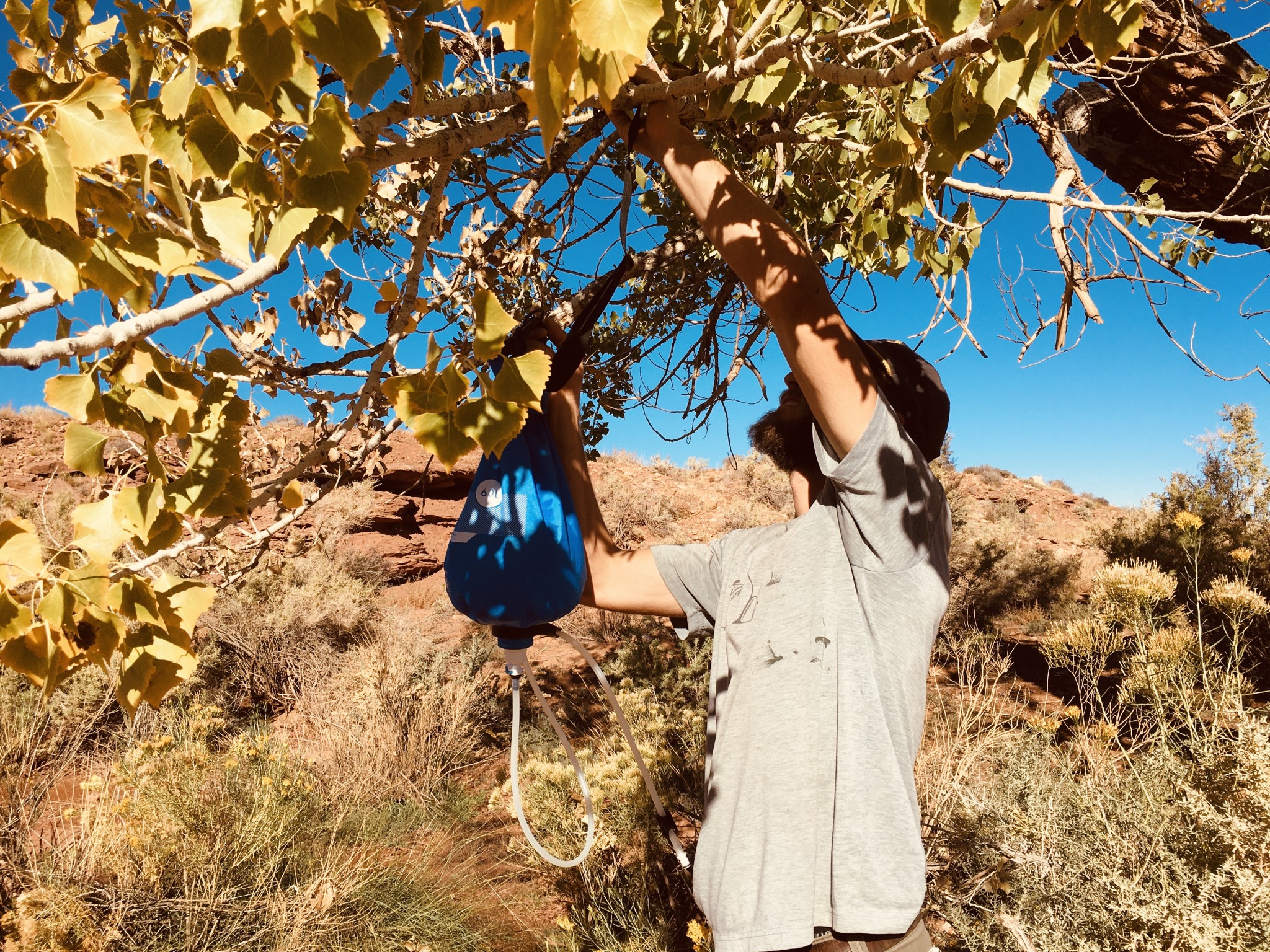
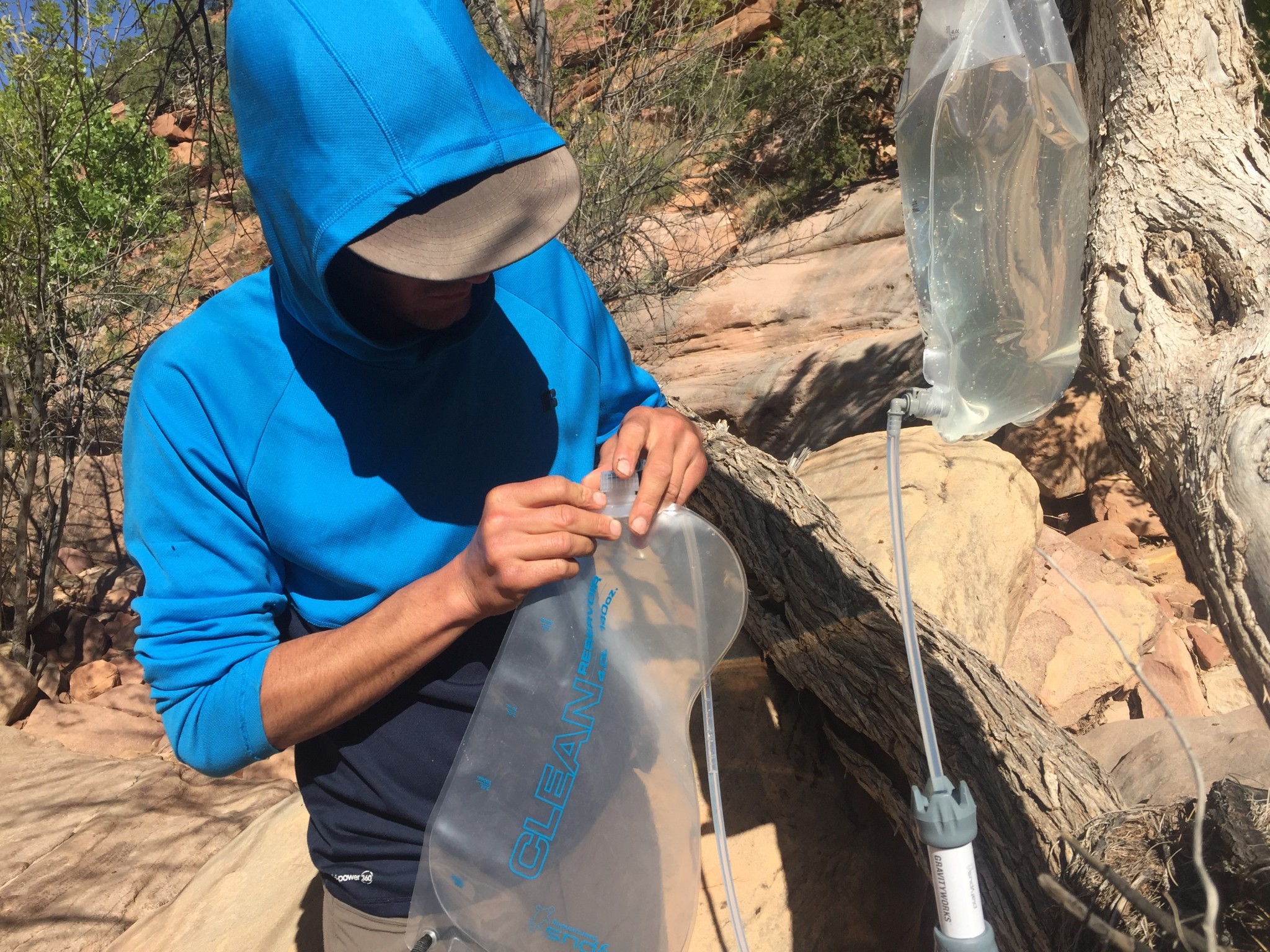
Toby Swimmer hangs the Katadyn BeFree Gravity 6L from this cottonwood tree in Indian Creek. This filtration system is very easy to use and can be maintained in the field by removing and rinsing the filter.
Credit: Trish Matheny
Hand Pumps
These models are pretty durable in general until they get clogged. The MSR Guardian is the most durable and maintenance-free backpacking water purification system we tested, and we'd trust it anywhere. It auto cleans, even in turbid water, offering the best reliability in terms of hand pumps. It can also be frozen, unlike any other hand pump system. The MSR MiniWorks EX is another reliable hand pump that uses a ceramic-carbon core that can easily be serviced. Unfortunately, it does require a lot of maintenance to keep it working well (lots of scrubbing), but it can be fixed in the field, which is a bonus.
A look at the ultra-reliable and easy to maintain MSR MiniWorks EX. While it doesn't win any awards, it is one of the easiest filters to service in the field.
Credit: Amber King
The Katadyn Hiker Pro and Katadyn Hiker models are extremely consistent in performance. Both use a glass fiber filter that needs to be replaced if you allow it to become completely clogged. Both can be serviced in the field, but you must be careful not to keep pumping if performance decreases. Between the two, the Hiker Pro is better by a hair. It's more durable and performs a bit better overall. For minimal improvement, though, we tend to recommend the Hiker. These pump filters require less maintenance than the MSR MiniWorks EX. Katadyn also offers the Katadyn Pocket hand pump, which is one of the most durable filters that we tested and is easy to clean in the field or at home by removing the ceramic filter and using scour pads to restore the filter to its original color.
We discovered that the Hiker Pro is a great choice when water sources are small and hard to reach.
Credit: Jessica Haist
The MSR Hyperflow Microfilter is the fastest-flowing pump filter we tested, but it also requires the most service. When the filter is clogged, it must be backflushed, requiring a complete disassembly of the system to return it to a functional state. So, while it is a durable unit, regular maintenance is necessary (backflushing every 8 liters with clear water, more with turbid water), which can be a pain.
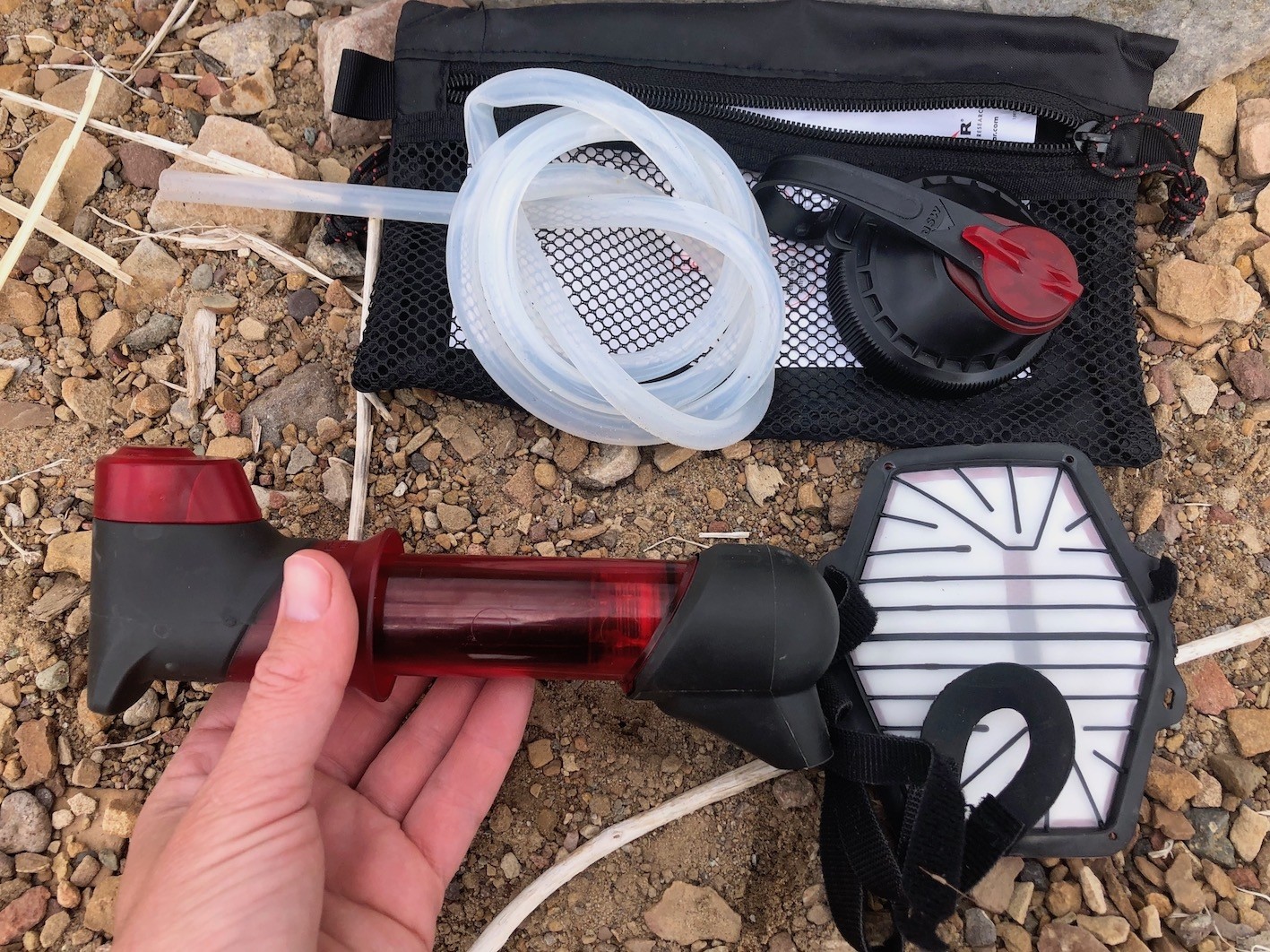
A look at all the components for the HyperFlow. The whole system is quite durable, small, and lightweight.
Credit: Amber King
Squeeze Systems
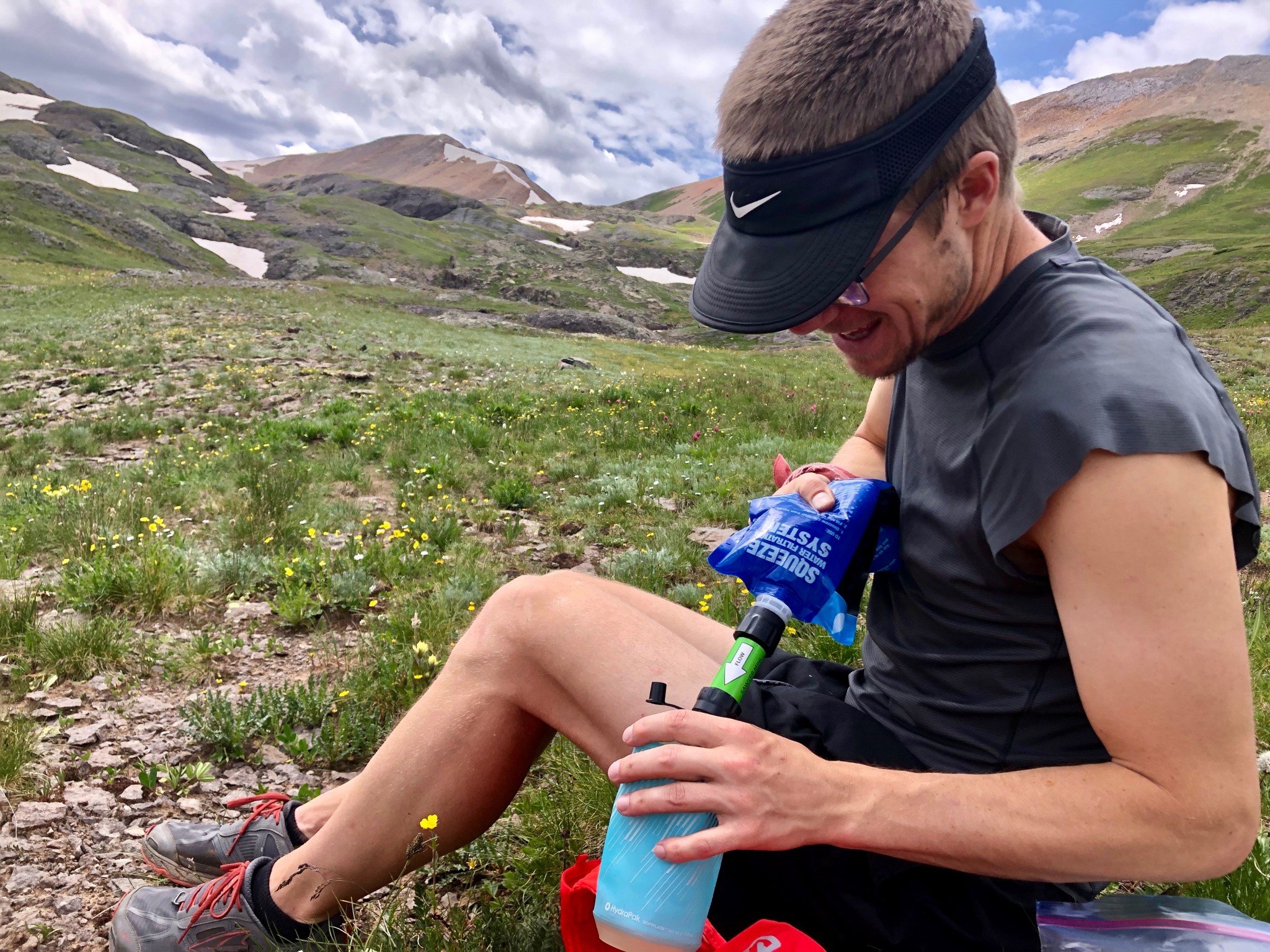
We are super impressed with the Sawyer Squeeze, which claims to last up to 100,000 gallons with a built-in design. Sawyer offers three systems: the regular Squeeze, the Sawyer Mini, and the Sawyer Micro Squeeze. The most annoying aspect of all these systems is that we found the bags to break easily when in "squeeze" mode. When squeezed too hard, the bags tend to break at the seams, with the Mini being the most problematic. The regular Sawyer offers a good amount of flow, with less squeeze force required, breaking fewer bags overall. These systems require you to carry a plastic syringe to backflush after most uses. Overall, the regular Squeeze requires the least maintenance simply because it's a bigger squeeze system than the rest.
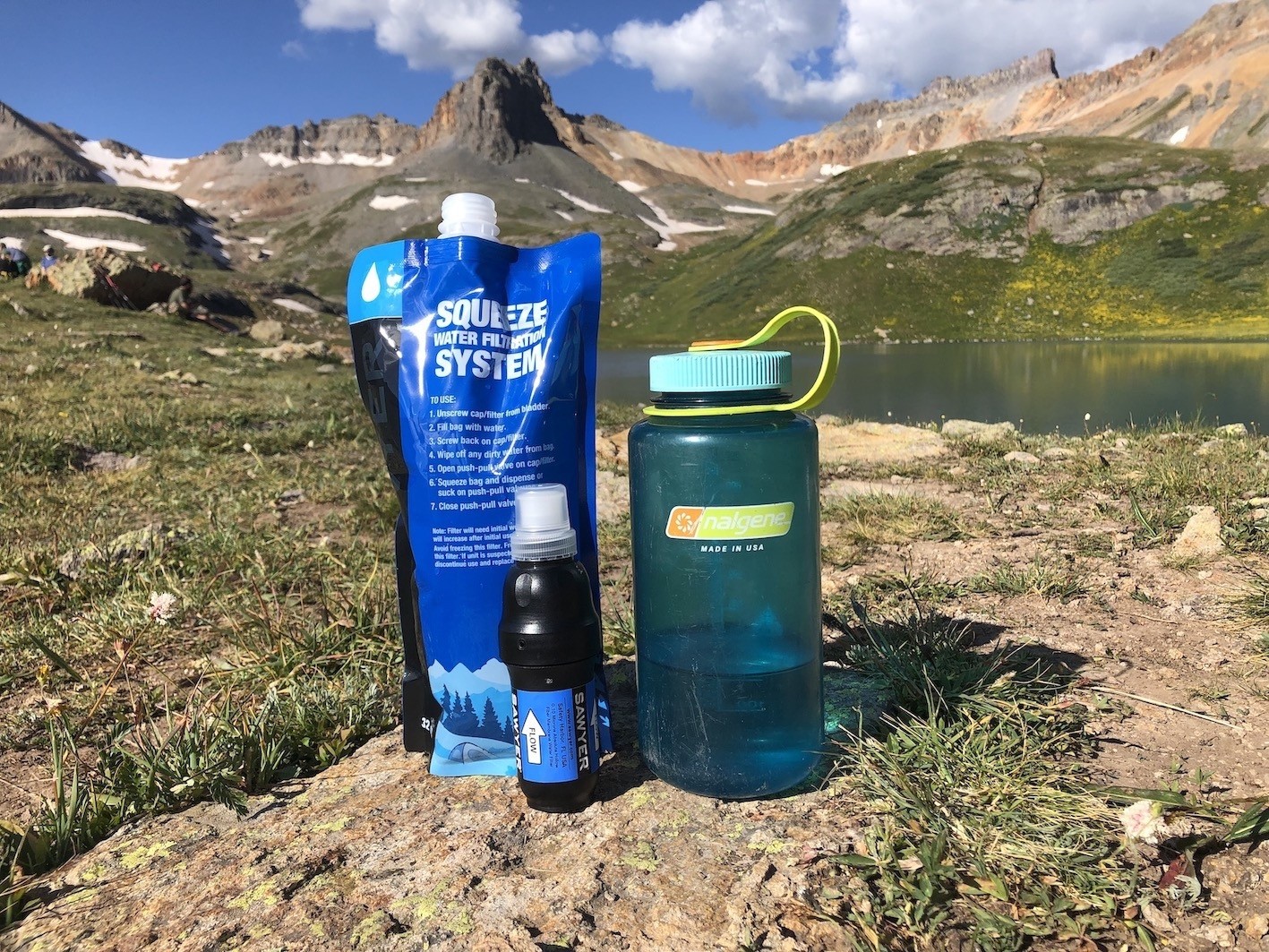
A look at the profile of the Sawyer Squeeze. However, make sure that you take extra bags with you on long trips since they aren't very durable.
Credit: Amber King
The Katadyn BeFree 0.6L is a notable option for lightweight missions like trail running. The bottle that it comes with is also prone to leaking. However, we found that it can be attached to other handheld bottle options that are much more durable. Overall, its durability is a drawback, but the filter itself offers some of the best flow and adaptability. Cleaning is easy; just swish it in clean water. You don't need to carry any extra parts, and clogging does not happen often.
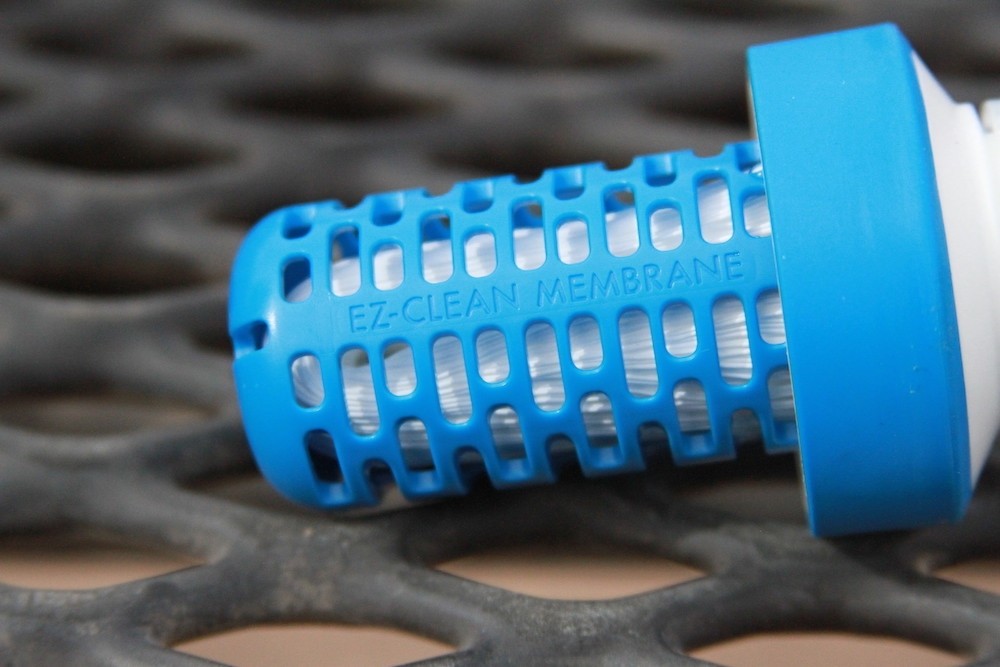
The EZ clean membrane of the BeFree is easily cleaned. Simply swish it around in a water source and continue on your way. This filter and top are compatible with other soft bottles as well.
Credit: Amber King
Another great squeeze bottle is the LifeStraw Peak Squeeze, which corrects the durability complaints we have with the Sawyer and Katadyn bottles. The overall versatility is top-notch, as you can drink directly from the source or via the bottle after filling. If there's a distance between water sources, you can also remove the filter and store the water in the 33.8-ounce bottle to drink along your route. Regular maintenance is key for optimal flow rate, and the projected lifespan of the filter is double that of the Katadyn BeFree 0.6L.
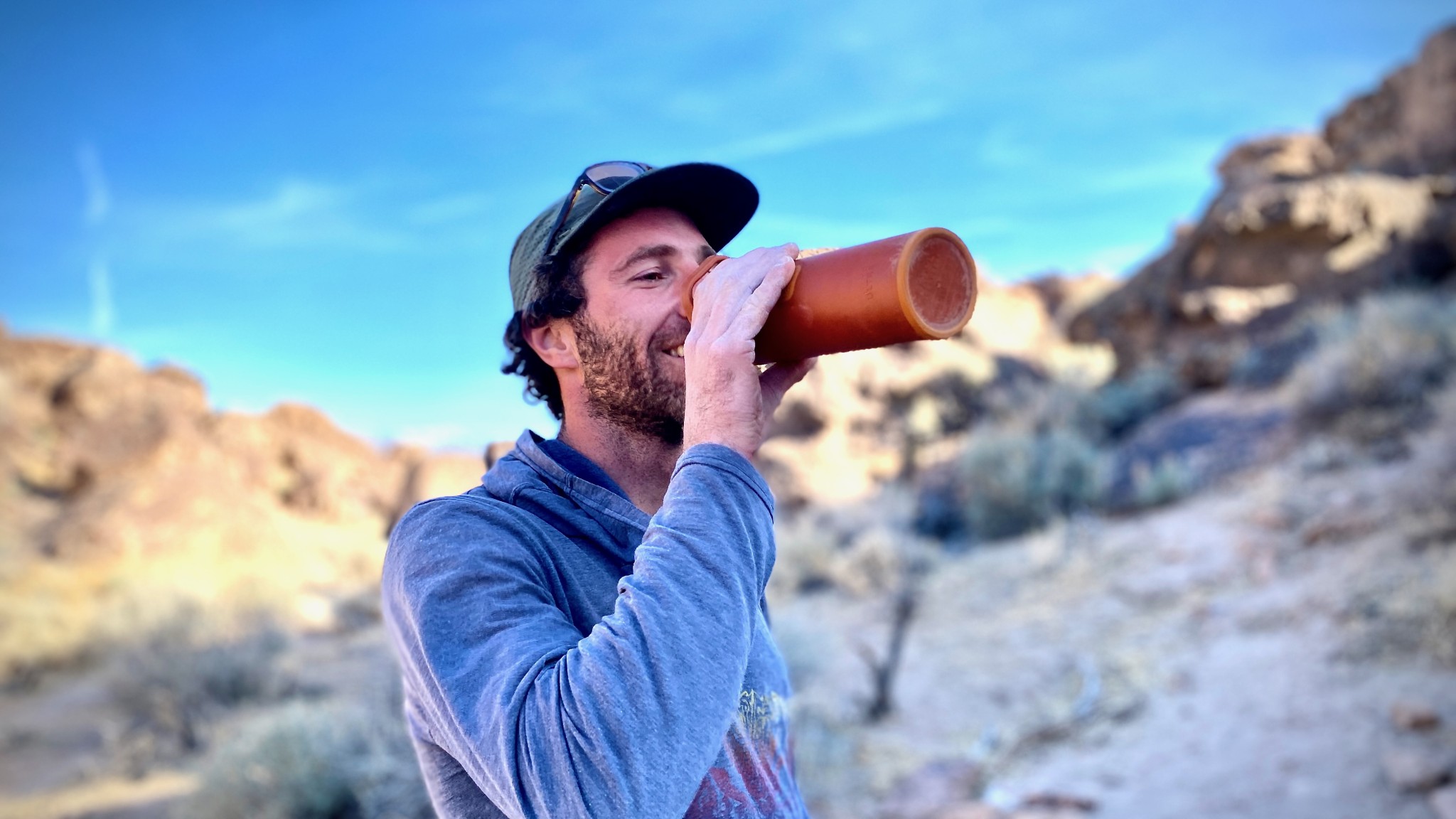
Steve Mace demonstrating one of the filtering options of the LifeStraw Peak Series filter while adventuring in the Eastern Sierra.
Credit: Trish Matheny
On-the-Go Systems
The Sawyer Squeeze and LifeStraw are two options that we like. If you're seeking the most barebones option that doesn't require you to carry extra items, the Lifestraw is where it's at. It's light, easy to carry, and long enough to provide easy access to water sources. Both the Squeeze Mini and Micro are fine options for on-the-go carry but do require you to carry a syringe and straw adaptor.
A look at the intake for the LifeStraw. While you can't clean this directly, you can blow the water back through if it gets clogged. Although not ideal, it works well enough.
Credit: Amber King
UV Light
This is one of the most unreliable systems simply because it needs a power source. Battery life can be tough to predict, especially in colder temperatures. For this reason, we do not recommend taking filters like the SteriPen along for filtration during extended trips into the backcountry. However, it would be a suitable option for travel or purifying municipal water sources regularly.
Due to the battery life the Steripen requires, we do not recommend it for extended backcountry trips.
Credit: Jen Reynolds
Backcountry Field Maintenance
Although maintenance is always important in the backcountry, it is useful to consider which options are the easiest to clean up, as this adds value to the filter's overall reliability in the field. This is especially true for those making a big choice about long backpacking trail hikes, where the water filter chosen will be the only one used for weeks or months on end.
Of all the options tested, the easiest units to clean in the field are those that can simply be backflushed, like the Platypus GravityWorks 4L and MSR AutoFlow XL. Some filters, when thoroughly clogged, require a complete replacement, which isn't ideal when you're in a remote space. By far, the easiest to maintain is the MSR Guardian Purifier, which backflushes and cleans itself and has been hassle-free in our testing.
We were surprised how easy and fast the MSR Guardian was to pump with great water quality at the end.
Credit: Jessica Haist
Treatment Time
This metric considers the time it takes to collect water from the source and then filter it. To test this, we noted if water filtration is instantaneous. If not, we performed three separate time trials and averaged them to determine an average time to filter one liter. The fastest times received the highest scores.
Straw Filters
The fastest backpacking water filter systems are the straw filters that allow you to drink water directly from the source. Water flow is typically slower than alternative filter styles and is very much based on the individual construction of the input, filter body, and straw or bite value. We found the Lifestraw personal straw fairly laborious to use, even though we appreciated its small profile and think it could certainly come in handy when traveling lean and light.
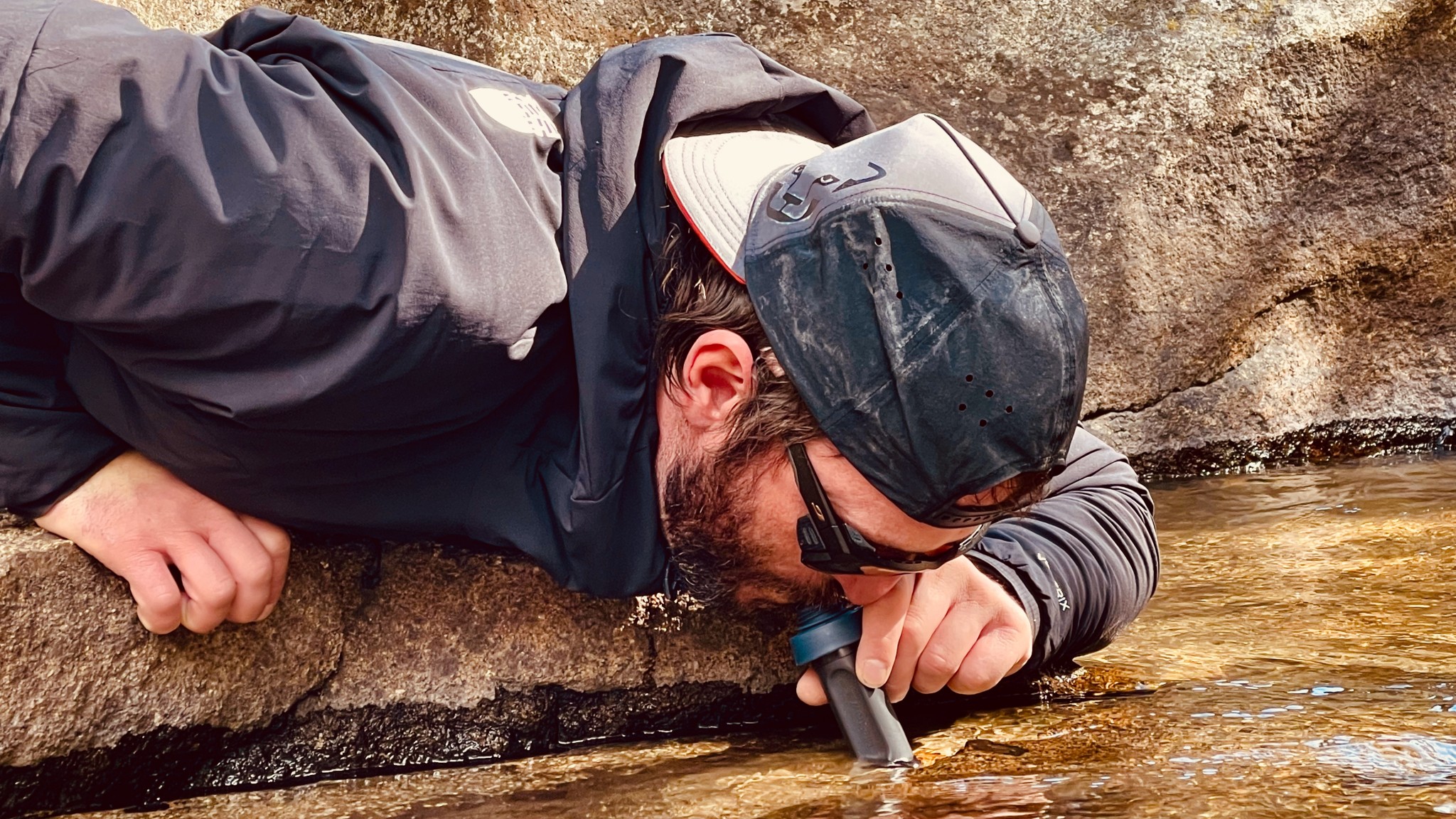
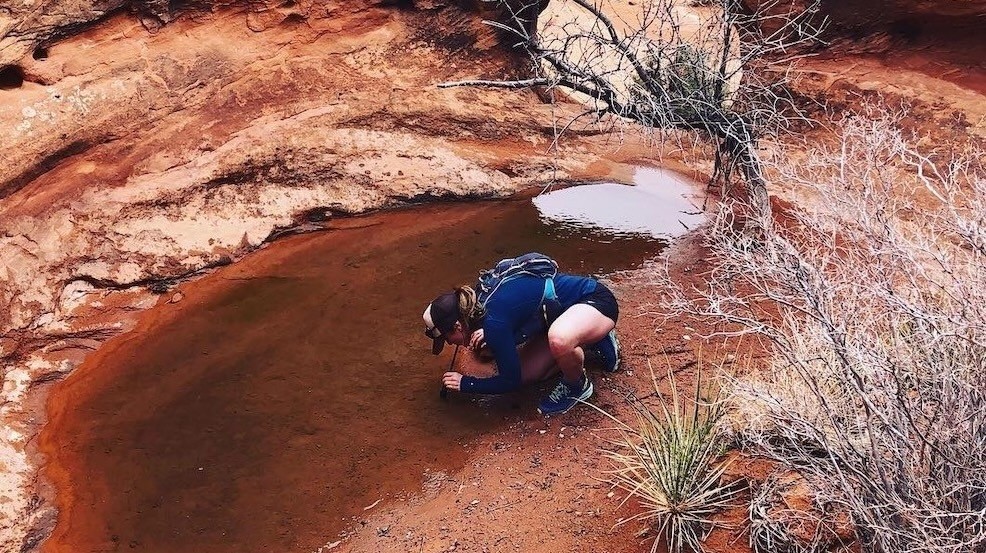
Little puddles in granite pockets are a perfect place to get water while alpine climbing with the LifeStraw.
Credit: Jessica Haist
Squeeze Filters
These backpacking water filters use a collapsible bottle or pouch, offering a little water storage. The Sawyer products all demonstrate this adaptability, but our favorite is the Katadyn BeFree 0.6L for its fast-flow bite valve that delivers water quickly. This makes it a favorite among trail runners because water collection takes no time, and treatment is instantaneous.
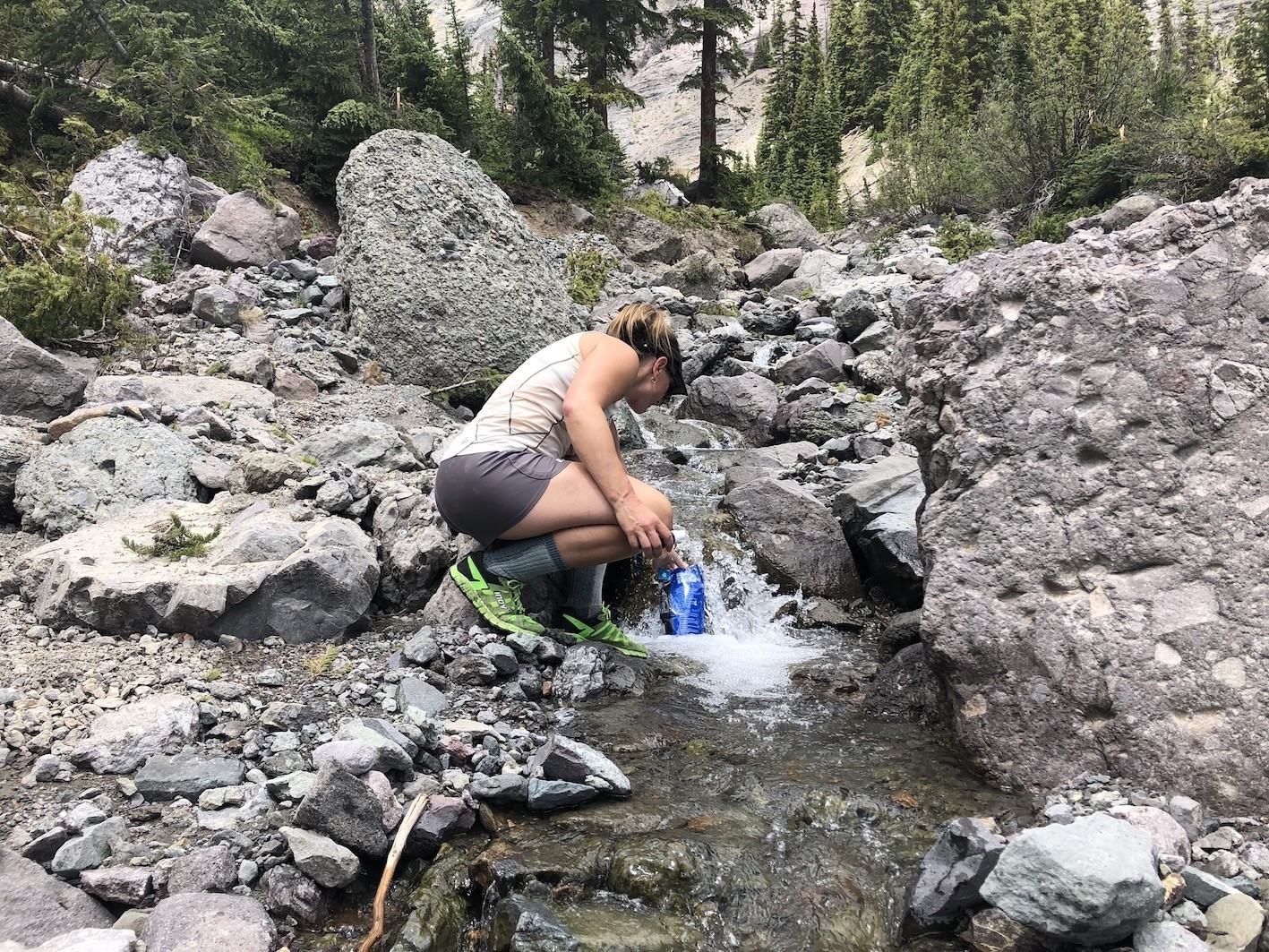
Eddy works to clean water using the Sawyer Micro Squeeze filtration unit.
Credit: Amber King
Of all the Sawyer products, the Sawyer Squeeze offers the best flow rate during our side-by-side tests. It can filter a liter of water in just 40 seconds when in squeeze mode. The Mini, the smallest of the group, took 2 minutes to filter a liter of water, with the Micro somewhere in between. However, if you like the Squeeze products and want one with an awesome flow rate, consider the LifeStraw Peak Squeeze, which is capable of filtering a liter of water in just 35 seconds. Just know that this requires more maintenance to achieve the maximum flow throughout the life of the filter.
Pump Filters
We pumped over 40 liters of water and timed it to see how many strokes each filter took to do the job and which were the fastest. The hands-down winner in this category is the MSR Hyperflow (27 seconds, 29 strokes per liter). It pumps out hoards of water super quickly. However, this model also slowed down the fastest while in use, reducing its flow rate significantly as the liters added up. The MSR Guardian placed second, filtering a liter in 37 seconds and maintaining performance even in the murkiest of water.
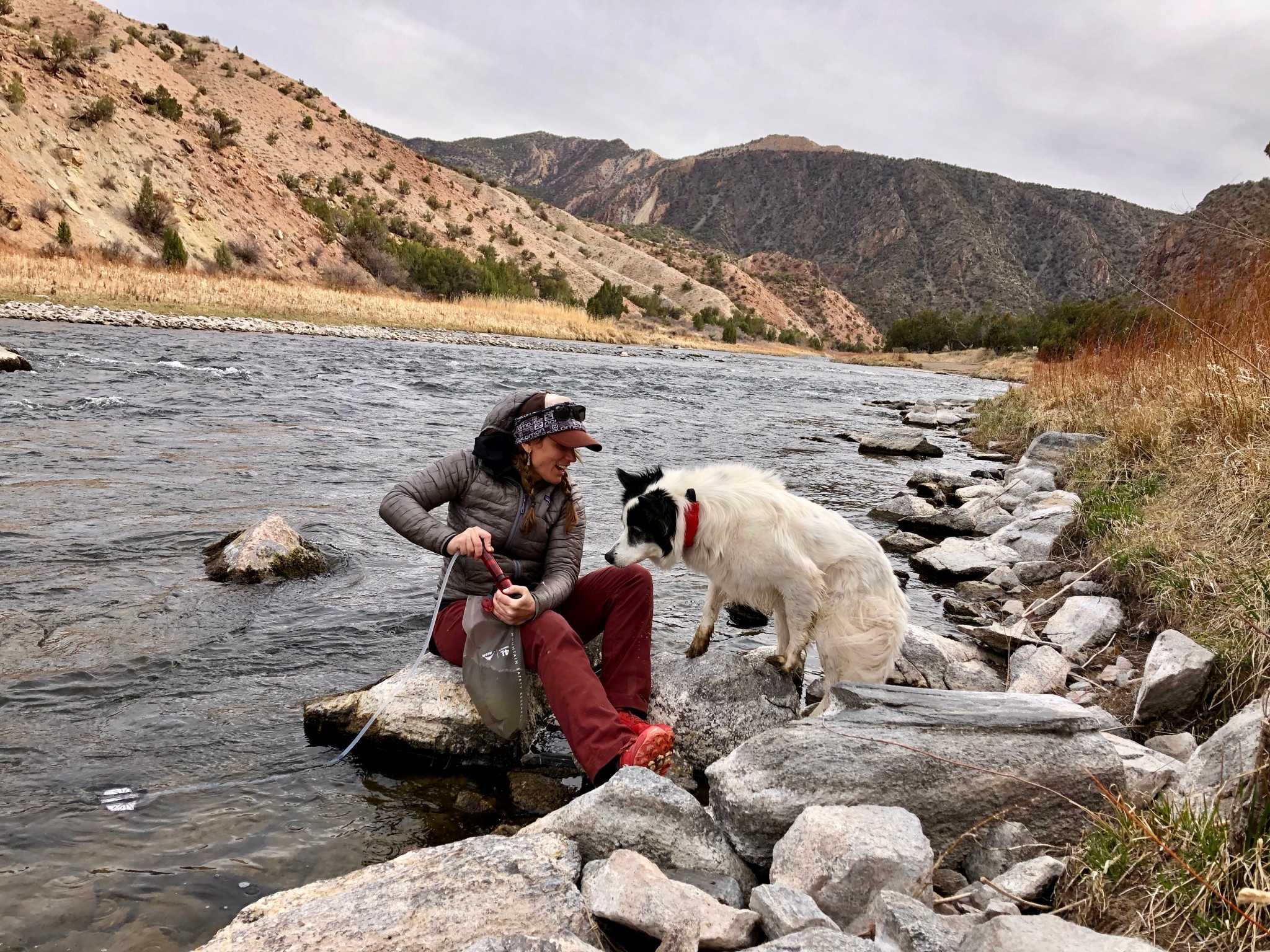
The MSR Hyperflow is the fastest pump filter tested, treating one liter of water in just under 30 seconds. Jack the dog and our main tester are impressed with its performance.
Credit: Amber King
The Katadyn products and the MSR Guardian offered the most consistent performance overall, with these working best in turbid conditions. The Katadyn Pocket performed well after a significant rain storm, producing clean, high-quality drinking water — but we had to be patient at one liter per minute. The MSR Hyperflow and MiniWorks EX needed cleaning almost every 4 liters in these tests. In our sludge tests, all the pump filters except the MSR Guardian needed to be cleaned out after processing every liter. Impressive.
Gravity Filters
With comparable flow rates, gravity filters are nice because you conveniently don't have to pump or do anything once they are set up. They can process large quantities of water, making them highly useful for small to large groups. All of the gravity filters are relatively close in treatment time, but the clear winner is the LifeStraw Peak Gravity 3L with a treatment time of 30-34 seconds per liter. The Katadyn BeFree Gravity 6L is a close second, filtering one liter in 40 seconds. The Platypus GravityWorks 4L comes in third place, filtering one liter in 52 seconds.
The Platypus GravityWorks filter is very easy to use and treats a large quantity of water quickly.
Credit: Jessica Haist
While gravity filters are inherently rad because there's so little work involved, there are some stark differences in performance. Please note that flow rates will decrease with murkier or turbid water, just as they will if the filters are not properly maintained. Also, note that if you aren't rushing, the difference in passively waiting one or two minutes for a liter of water often isn't a big deal.
Weight and Packability
Weight and packability are essential. If you're carrying less weight, long hikes can be more enjoyable. To assess this metric, we weigh each system and look at its relative profile. We tested them with hydration vests, backpacking backpacks, and day packs. Generally, products that were lighter and easier to pack scored better than bulkier options.
Of all the treatments out there, chemical treatments are by far the lightest. If you're planning a long thru-hike or huge trail run, they're a great choice. Of the treatments, the MSR Aquatabs, Potable Aqua Purification Tablets, and Katadyn Micropur Purification Tablets can simply be put into a little baggy without requiring you to carry the whole bottle, helping to eliminate weight. The only downside is that these result in a chemical taste in the water (for most people). The Aquamira Treatment Drops can't be parsed out like the tablets, but some prefer them because they don't taste as bad as the tablet options.
The lightest filtration systems out there are on-the-go systems like the collapsable Katadyn BeFree 0.6L, Lifestraw personal filter, and LifeStraw Peak Squeeze. Of the gravity filters, the Katadyn BeFree Gravity 6L is the lightest and most packable (9.28 ounces). If you prefer a hand pump system, the lightest systems are the MSR Hyperflow (10.6 ounces) and the Katadyn Hiker Pro (13.2 ounces).
The Sawyer Mini (and its included straw) next to the LifeStraw (top) for size comparison. The Mini is much lighter and more compact than the LifeStraw, and in our opinion, more versatile as well.
Credit: McKenzie Long
Ease of Setup
We assess ease of setup based on how many steps each filter requires to begin filtering water and whether or not that setup feels intuitive. We also consider how easy it is to access different water sources.
The Grayl UltraPress comes set up and ready to go; however, we found it difficult to fill the 16.9 oz. bottle when collecting water from shallow bodies of water.
Shallow water sources make it difficult to collect enough water to fill our 16.9 oz. Grayl Ultrapress bottle.
Credit: Trish Matheny
The easiest setups are the ones that require little thought, few instructions, and easy access. The top models have no parts to carry around or steps to follow. On-the-go systems prove to be the easiest here, and the basic Lifestraw is the best for this. Unlike other more complex on-the-go systems, this filter only requires you to find a puddle or accessible water source and simply drink.
A lightweight personal filter that allows you to drink from virtually anywhere.
Credit: Jessica Haist
Purification tablets are also pretty simple. Those like the MSR Aquatabs, Potable Aqua Tablets, and Katadyn Micropur Tablets just require you to drop them in the water and wait. The Aquamira Drops are also pretty simple but with a steeper learning curve. These require you to follow a series of specific steps where you have to mix two solutions and wait for a specified amount of time. The time frame depends on what contaminants you need to eliminate from the water.
After filling your bottle, dropping in the tablet, move your water to a dark environment, and wait 4 hours for the process to be complete.
Credit: Trish Matheny
Hand pumps are also relatively easy to set up and offer great access to all sorts of water sources. The Katadyn Hiker Pro, Katadyn Hiker, and MSR MiniWorks EX are favorites because the intake can grab water from the smallest nooks and crannies. The MSR Guardian works well for this, but it has a larger particle screen that makes it harder to reach shallow sources. Pump filters excel at reaching water over steep banks, boat sides, or fast rivers when water access can be an issue. While easy to pump, the Katadyn Pocket has a lot of moving parts, and we felt it necessary to carefully read the instructions to make sure we had the input and output hoses in the correct locations.
The Katadyn Hiker allows you to take water easily from any source. Steep banks, shallow streams, babbling brooks. This is due to its weighted intake with a high quality prefilter.
Credit: Amber King
Gravity filters require more effort to set up because you need a place to elevate them. The ideal scenario is to hang the filter from a branch. If that is not available, you may need to get creative. Reservoirs that are very flexible with large openings can get water from most water sources. However, because you have to scoop up water, the source needs to have a sufficient pool to collect water. Shallow pools are harder to reach.
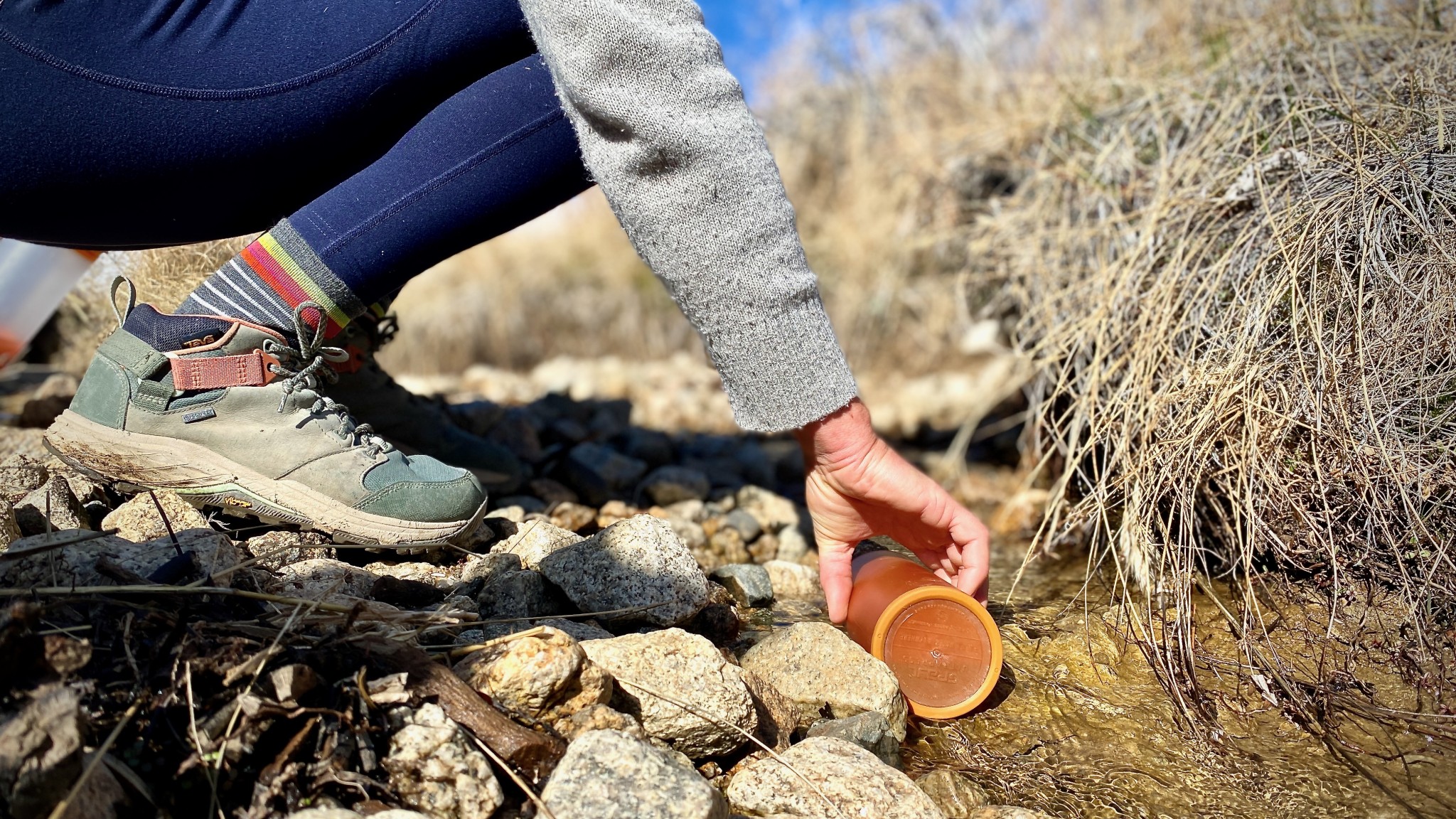
The opening of the LifeStraw Peak Gravity is a little difficult to fill in shallow water.
Credit: Trinity Robinson
Ease of Filtration
Here, we look at the amount of effort required to physically get water through the backpacking water filtration system. While we don't score storage capacity, we note how much water each system is designed to store or if another bottle is necessary for storage.
UV Purifiers
Of all the categories, the SteriPen Ultra requires the least amount of work. Setup is easy; simply turn the light on. Though the SteriPen requires a little less time to filter a liter than other UV options, it is not hands-free and requires consistent attention during purification.
The Steripen Ultra is not a hands free device, requiring consistent swirling and attention during water purification.
Credit: Jen Reynolds
Gravity Filters
Gravity backpacking water filters are by far the best systems for ease of filtration. After set up, the filtration process is hands-free. All gravity filters in our review earn top points for being easy to filter. These filtration systems can move lots of water quickly, making them a top choice for groups. One difference is the height requirement to filter. Some need full suspension and can't be put on the ground. In contrast, the MSR AutoFlow and the Platypus GravityWorks can be laid on a hill or over a rock and still filter water.
Filtration with the Platypus Gravity doesn't require a huge height differential.
Credit: Amber King
Some come with "clean water" vessels like the Platypus GravityWorks while others like the Katadyn Gravity BeFree 6L and MSR AutoFlow have a simple hose running from the bag to a storage vessel of your choice. All adapt nicely with a hydration bladder and can be filtered into a bottle if needed.
Hand Pumps
Hand pumps are a little harder to use as you need to pump to move water through the system physically. Hand filters vary by design and efficiency, which is dictated by output per pump. Of the hand pumps we tested, the MSR Hyperflow, MSR Guardian, and the Katadyn Pocket are the easiest to use. They are highly efficient filters, which translates to less pumping and more water production. The Guardian has a large handle that's easy to grab, similar to the MSR MiniWorks EX. The MSR Hyperflow has a tinier system, but it's still pretty ergonomic. The Katadyn Pocket was recently redesigned with a new grip handle and a longer outlet hose to increase efficiency and maximum comfort while water moves through the system. Most hand pumps we tested have attachments that best fit a Nalgene bottle. The Katadyn Hiker models both have easy-to-use handles, but they aren't as ergonomic as the MSR products.
We love the large handle on the MSR MiniWorks EX, though it's overall not the easiest to use.
Credit: Amber King
On-the-go Filters
On-the-go backpacking water filtration systems are typically easy to set up but are propelled by either sucking or squeezing forces. Of the on-the-go systems, the LifeStraw Peak Squeeze and Sawyer Squeeze are the easiest to suck through when in straw style. Others are harder, like the Sawyer Mini, which gives you very little water for each suckle. Press action filters like the Grayl UltraPress provide another on-the-go option, only requiring a little extra muscle to press the water through the filter before enjoying the results immediately or storing water for later use in the durable bottle.
On-the-go water filtration systems, like the Grayl Ultrapress, can be a convenient way to filter clean water from a variety of sources.
Credit: Trish Matheny
Conclusion
A critical gear consideration like a water filter or purifier warrants research and excellent hands-on testing. Whether you are filtering water for a group or simply want to add a backup to your emergency kit, this is where we come in. We hope that our insights have helped you in your search and in narrowing down your options. Happy trails!
When faced with questionable water sources, you need to be able to trust your water filter.