We buy all the products we test — no freebies from companies. If you purchase through our links, we may earn a commission, which helps support our testing.
We tested backpacking sleeping bags from Western Mountaineering, Feathered Friends, Nemo, Rab, and more to find the coziest options for your next adventure
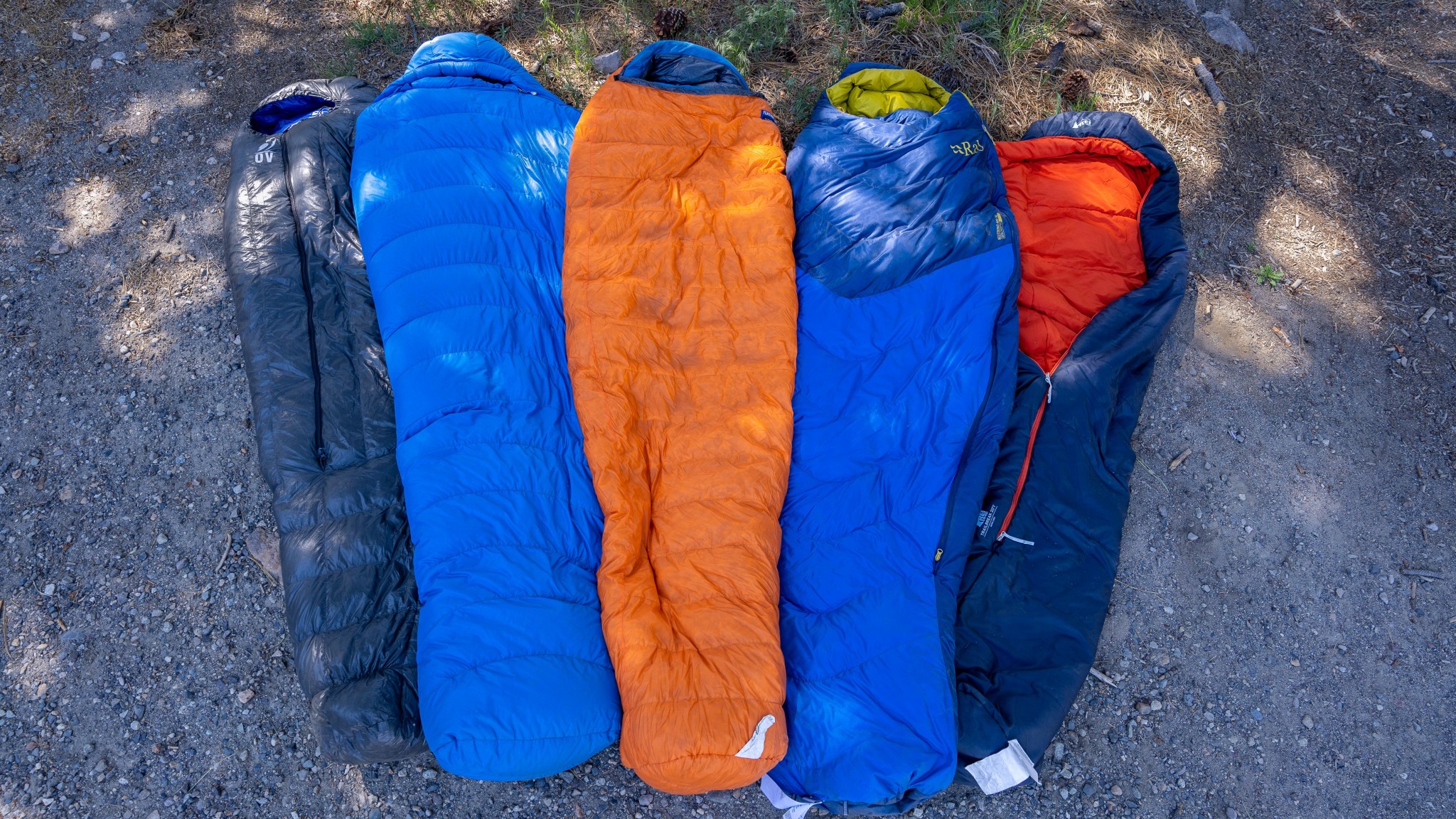
Over the last 12 years, we've purchased and rigorously tested nearly 100 of the best backpacking sleeping bags, with 15 top models in this review. Each bag underwent rigorous hands-on testing in the lab and backcountry, from snowy peaks in the Sierra Nevada to Death Valley's sweltering desert. Our experts considered every aspect of sleeping bag performance, including warmth, weight, and comfort. You care about your gear choices, and we've done our best to make selecting a sleeping bag easy. From the absolute best bag to a good bargain, read on to find your perfect match.
Editor's Note: We updated this review on November 22, 2023, after retesting several top contenders, adding 4 new bags, and removing outdated and discontinued products.
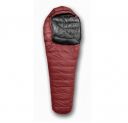
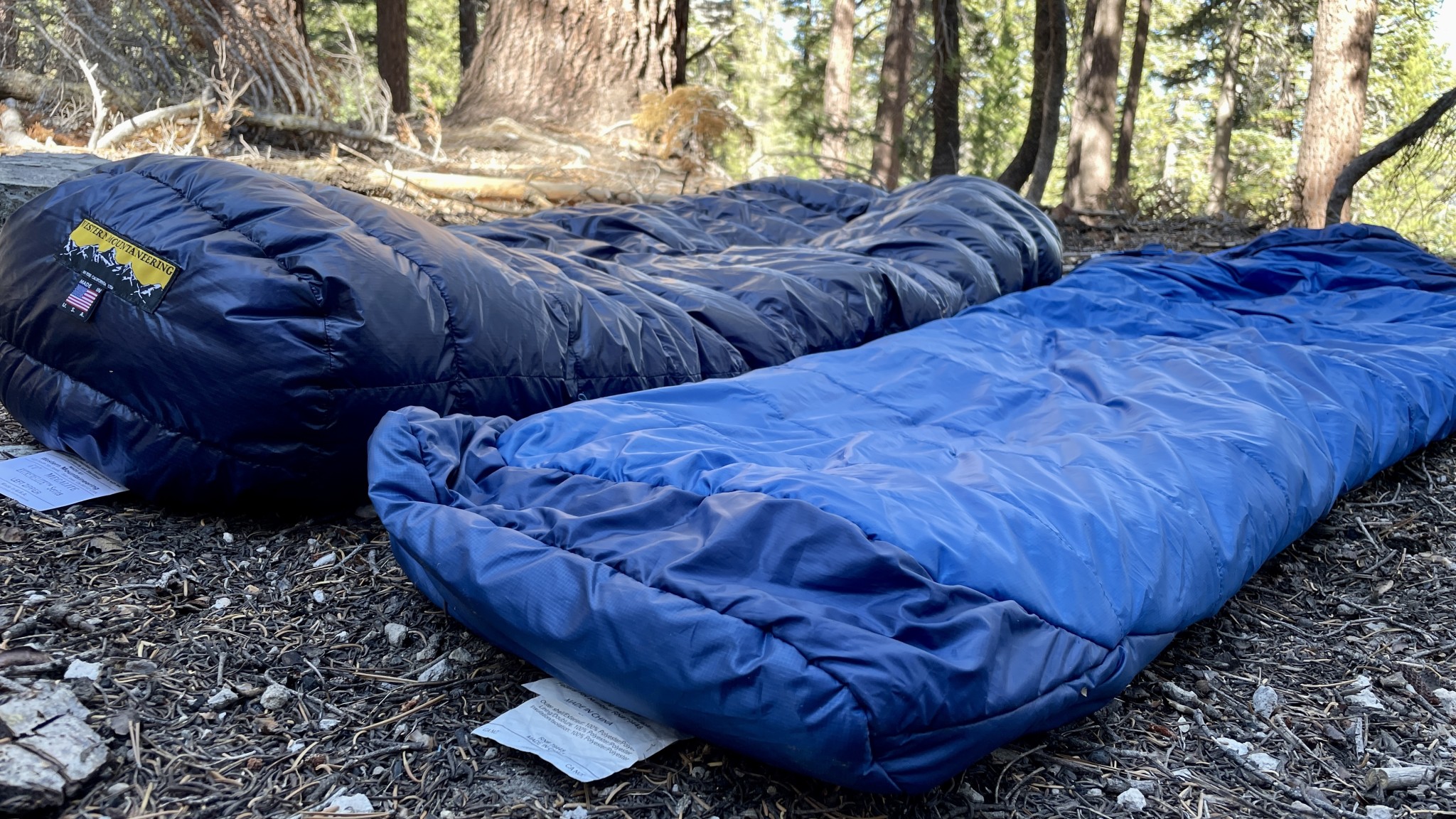
The Western Mountaineering MegaLite is our favorite backpacking sleeping bag because it performs exceptionally in every way. Like other ultra-premium bags with down insulation, it offers an outstanding warmth-to-weight ratio in a bag that packs down extremely small. But unlike other ultra-premium down bags we tried, it also features spacious interior dimensions that provide superior comfort no matter your sleeping style. For virtually any overnight backcountry activity, this bag is a great choice.
Our criticisms are few and minor: the hood closure is slightly awkward, and the zipper is good but not great. More significantly, the steep price is likely to dissuade a lot of shoppers. However, we think it's worth it for serious backpackers, especially when you consider that this model could last for over a decade if well cared for. The hard choice then is deciding between the MegaLite, our favorite bag for the average backpacker, and other top performers.
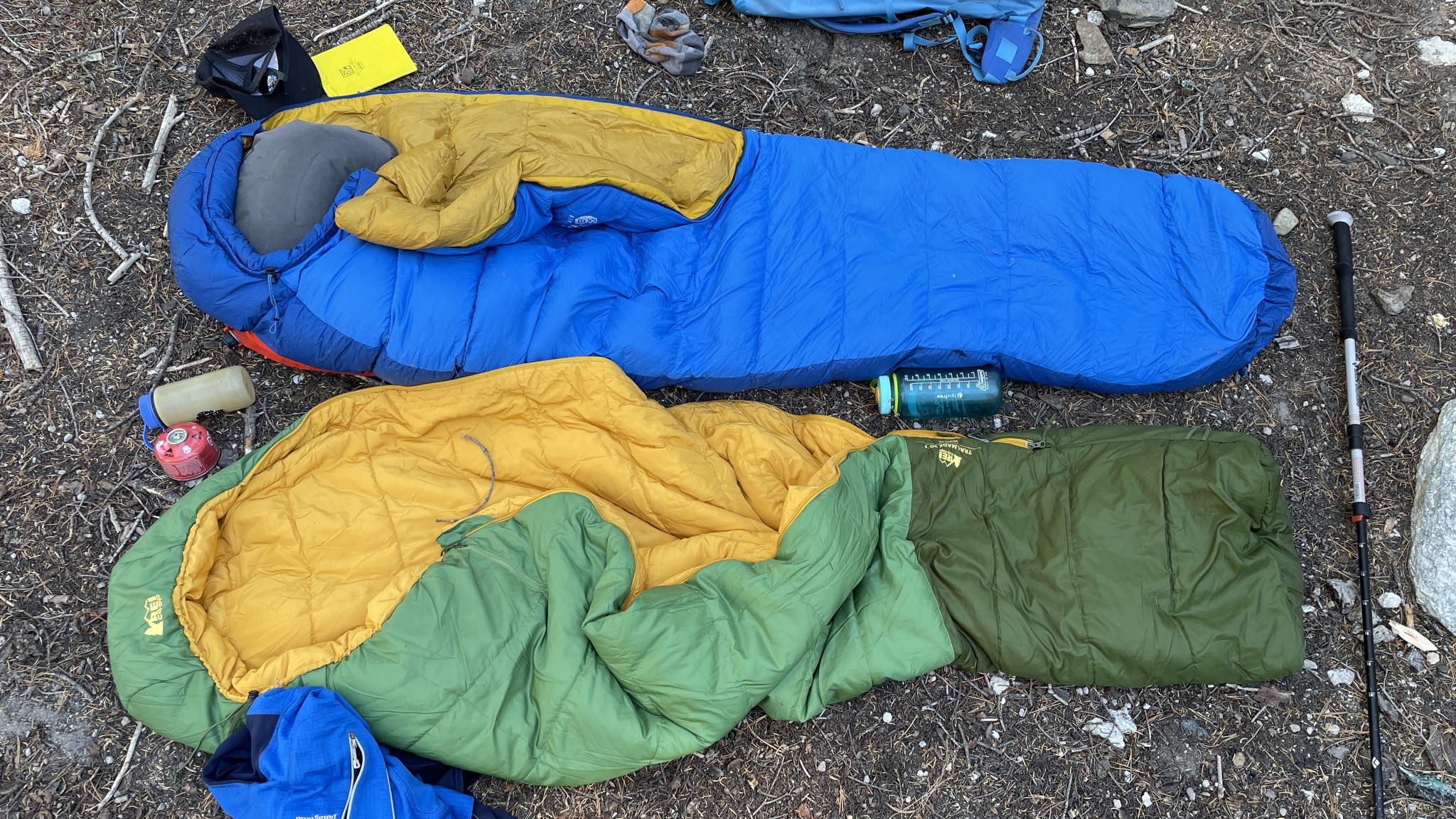
A sack full of feathers isn't cheap. Fortunately, the Mountain Hardwear Bishop Pass 15 provides an amazing bang for your down buck. It's filled with a generous 21-ounce of 650-fill power duck down and weighs just over 2 pounds, giving it a great warmth-to-weight ratio. While it has the standard set of sleeping bag features, they are well done. We appreciate the long zipper and its glow-in-the-dark zipper pull, which makes answering nature's call in the dark easier. The liner of the bag is a bright color, making finding small items inside easier. It also has generous measurements that will allow most backpackers to sleep comfortably.
Most casual backpackers probably won't notice the downsides of the Bishop Pass. It's not as light as the ultra-premium options, and the 650FP down insulation is also not as lofty as the higher fill power down inside its more expensive competitors — maybe that's why there's more of it in there. Our testers found the 15-degree rating to be consistent with similar bags lower limit EN ratings, but it will lose most of its insulative power if it gets wet, just like any other down bag. Despite these flaws, we believe the Bishop Pass is the best budget down sleeping bag currently on the market.
Weight: 3.2 lbs | Fill Material: Recycled polyester
REASONS TO BUY
Low Price
Comfortable
Good features
REASONS TO AVOID
Bulky
Heavy
Not super warm
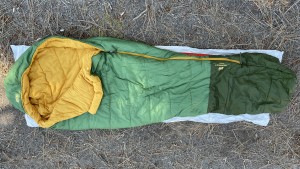
Outdoor gear is getting more expensive, and it's increasingly rare that we find anything in the price range of the REI Co-op Trailmade 20, let alone one of the most important pieces of your backpacking kit. Though this sleeping bag can boast a low price tag, it's not low on features or performance for a synthetic bag. It's comfortable for all but the most rowdy sleepers or biggest hikers. It has several great details, including long zipper pulls, different drawcords for different parts of the hood, and a bright yellow interior that makes finding that lost sock in the morning easy. Because it has recycled polyester insulation, it will also keep you warmer than down if you happen to get wet.
As you would expect with a sleeping bag of this price, there are some compromises. Synthetic insulation can't be as light and packable as down for a comparable temperature rating, and that's the case here. While it's not the heaviest synthetic bag we tested, the Trailmade is heavier than all the down bags in our test. In addition, even with a compression sack (not included), it's still bulky. We could get it down to 9 liters of pack volume. And though you'll rarely be in below-freezing temperatures when summer backpacking, our testers who run cold were a bit chilly when taking this bag down to 20 degrees. Nevertheless, we think the Trailmade 20 is a fantastic value worthy of your consideration.
The top and bottom of the hood closure on the Trailmade are controlled with two different types of cord, which makes it easy to customize tension in different parts of the hood.
If you know you "sleep cold" or have plans for colder trips in the spring or fall, the Western Mountaineering UltraLite is the bag for you. With 17 ounces of 850+ fill power down and a legit draft collar, this is the warmest bag in our test. Our cold-sleeping lead tester used it at 12,000 feet in October and had no problems staying warm. At the same time, its full-length zipper and horizontal baffle construction provide ample options to shed heat and cool off on warmer nights. We slept comfortably in this bag across an expansive range of overnight temperatures from 10° to 55°F.
With this exceptional performance comes a staggering price, as is often the case. Although, many consumers will appreciate that Western Mountaineering is a small company producing all its bags in the USA. We feel most 3-season hikers can make do with a less insulated bag boasting a lighter weight and smaller packed size. Nevertheless, if you're searching for an excellent sleeping bag that's almost guaranteed to keep you toasty, the UltraLite is our top recommendation.
When saving weight is paramount, the Feathered Friends Hummingbird UL 30 is our top choice. Feathered Friends uses the highest fill power down we tested (950+) to create a bag that is both really warm and shockingly light. The ultralight shell and liner fabrics help too. Somehow, this bag also manages to feature a sturdy full-length zipper that's virtually immune to snagging. That same zipper provides ample venting options and the flexibility to share it as a quilt with a partner during an ultralight bivouac.
We should note that the Hummingbird UL achieves its low weight and high warmth by utilizing narrow dimensions. Slender backpackers, heavy sleepers, and others who don't find a mummy bag confining probably won't mind this — but for others, it might not be the best pick. Additionally, the ultra-high fill power down comes with a matching ultra-high list price. If you can look past these drawbacks, you get a traditional mummy bag that supplies an unparalleled warmth-to-weight ratio. There may be no better bag when the ounces really count the most.
We take a good look at the zippers and surrounding bag fabric to make sure everything runs smoothly when we zip it up. Enjoying the sleek Hummingbird after a day of adventuring.
Credit: Ian McEleney
Compare Products
Backpacking sleeping bags emphasize lightweight and minimal packed size to help you sleep comfortably miles from the trailhead.
Credit: Jack Cramer
Why You Should Trust Us
Our review team researched over a hundred of the most popular backpacking sleeping bags before purchasing 15 of the best to undergo extensive hands-on testing. We measured warmth, weight, and packed size in the lab. We assessed our performance metrics, including comfort, versatility, and design, in California's spectacular Sierra Nevada, Wyoming's Wind River Range, Grand Staircase Escalante National Monument, and Death Valley National Park. Bags were tested at elevations ranging from 150 feet below to 14,000 feet above sea level, with nighttime lows between 10°F and 70°F.
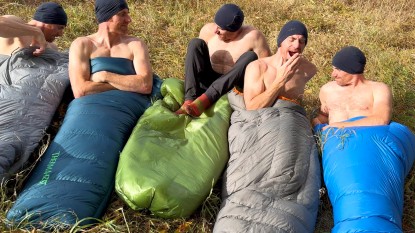
Cowboy camping under the stars is always a treat, but be wary of rain or dew with a down-filled bag.
Credit: Jack Cramer
This review is also unique because it includes direct comparisons between Western Mountaineering and Feathered Friends products. These small, specialty manufacturers source some of the best goose down, but their reluctance to give away free samples means that not many of their products end up in reviews. Fortunately, GearLab's policy to purchase every piece of gear that we test gives us the flexibility to include models from both companies in this comprehensive review. And we're glad we did because they're well-made sleeping bags that achieved some of the highest overall scores.
Our testing of backpacking sleeping bags is divided into five different metrics:
Warmth ((25% of total score weighting)
Weight (25% weighting)
Comfort (20% weighting)
Packed Size (15% weighting)
Features (15% weighting)
Lead tester Ian McEleney started playing outside in New England, and over time, like many, he made his way west. He now lives and guides in the Sierra Nevada as an AMGA-certified alpine guide and has helped over 1,000 clients select the ideal gear for backpacking, mountaineering, and climbing. Co-author Jack Cramer is an accomplished climber, former member of the Yosemite Search and Rescue team, and undeniable gear nerd. They've both spent the better part of the last two decades in the backcountry, developing the expertise to evaluate all sorts of outdoor gear. For this review, they consulted with Appalachian and Pacific Crest Trail thru-hikers, National Outdoor Leadership School alumni, manufacturer reps, and novice backpacker friends to ensure a diverse array of perspectives.
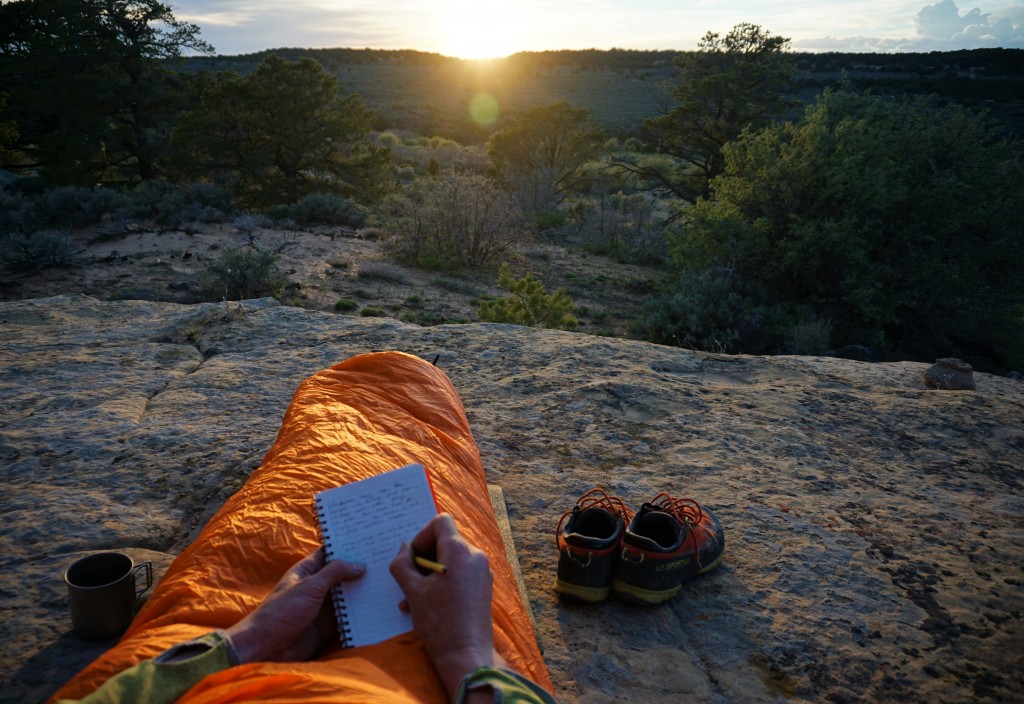
Recording our thoughts during a field test with the Feathered Friends Hummingbird.
We stuffed all the sleeping bags we tested, including this Western Mountaineering UltraLite, into this Granite Gear 11-liter compression sack and then measured the dimensions to calculate compressed volume.
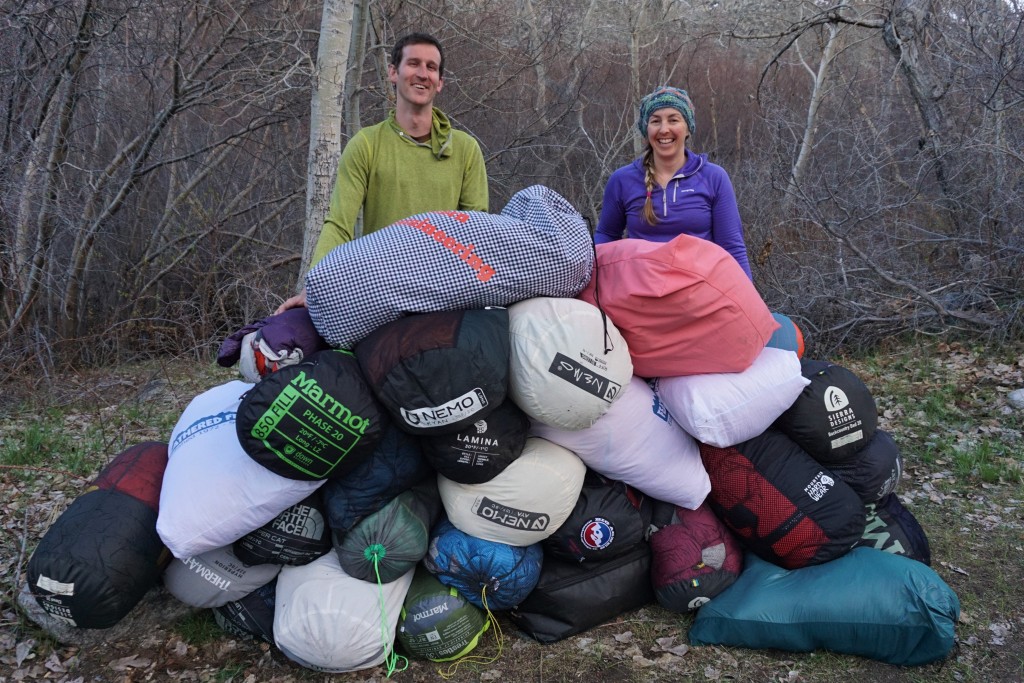
The authors of the our backpacking sleeping bag reviews with a pile of several million goose feathers.
Analysis and Test Results
Designing anything is a balancing act, and that's certainly true for backpacking sleeping bags. Add enough insulation to make it warm enough for every situation, and a bag can get too heavy. Cut that weight by shortening the zipper, and you reduce the ability to vent excess heat. It's a game of tradeoffs that varies by personal preference and planned usage. To evaluate today's top sleeping bags, we selected five performance areas that are sometimes at odds with one another: warmth, weight, comfort, packed size, and features. The push and pull between these metrics results in bags that are good for different uses and users. We've accounted for every aspect of performance so you can hone in on the ones that matter to you most.
Value
Sleeping bags come in a broad range of prices for products that ostensibly serve the same purpose. After extensive testing, we can confidently say that a bag's price seems to reflect real performance differences. Nothing came close to the Feathered Friends and Western Mountaineering bags in terms of absolute performance — they demonstrated clear superiority in overall design, build quality, and warmth-to-weight ratios. Anyone willing to shell out for a high-end sleeping bag will get something that will last for a decade or more if properly cared for. These exceptional sleeping bags, however, are beyond the budget of a lot of backpackers.
For less than half the price of the premium bags, the Mountain Hardwear Bishop Pass 15 provides an exceptional deal. Although a little heavier and bulkier on the trail, you will likely sleep just as well once you get it to camp. The synthetic REI Co-op Trailmade 20 is the other high-value bag in our test. It fared well when compared to the other synthetic models in our review, and the price can't be beat. For backpackers with a bigger budget, a bargain bag can be used for car camping or travel, and a premium bag can be saved for when performance really matters.
Our high value bags, the Bishop Pass (above) and Trailmade 20 (below).
Credit: Ian McEleney
Warmth
Sleeping bag warmth depends primarily on the quality and quantity of the insulation. Models with down insulation are generally lighter, more packable, and more expensive. They can also keep their loft over a long period of time if you take good care of them. Bags with synthetic insulation are usually heavier, bulkier, and less expensive. That said, when wet, down loses all of its insulating properties, and it takes a long time to dry after a soaking. Synthetic bags do lose some warmth when wet but will keep you warmer than a down bag. So, they can be a better choice for particularly wet activities or environments.
For bags filled with down insulation, you can make a rough estimate of the warmth by considering the fill power and fill weight. Fill power is a measurement of the "loftiness" of the down fill, and it corresponds to the amount of air a certain weight of down can trap. More trapped air translates into more trapped body heat. Sleeping bags usually contain down with a fill power between 500 and 900, with higher numbers indicating higher insulation ability. Fill weight is simply the amount of down inside the sleeping bag. Though manufacturers like to boast about fill power more, we think fill weight is actually a bit more important. Two sleeping bags with the same fill weight and fill power might not provide identical warmth, but they should be pretty close.
Though advertised as a 30 F (-1 C) bag, the MegaLite has a nice buffer between that and it's EN limit rating of 21 F (-6 C).
Credit: Ian McEleney
Estimating warmth is trickier for sleeping bags with synthetic insulation because of the variety of proprietary materials, and it makes a comparison between manufacturers nearly impossible. However, the fill weight should allow for a rough comparison — as with down, a bag with more synthetic insulation should be warmer than one with less.
In an attempt to standardize sleeping bag warmth measurements, the European Committee for Standardization developed the EN 13537 standard, which is a test designed to provide consistent temperature ratings for all sleeping bags. Though the peculiar details of the testing protocols may arbitrarily favor certain designs while offering limited information on warmth under real-world conditions, the EN ratings seem to be more accurate than the manufacturer-advertised temperature ratings of the past. Feathered Friends is the only company in our review that does not participate in EN testing.
Due to these issues, we chose to evaluate warmth using real human testers. We spent three nights in each model in a 48°F room. We compared the bags to each other and to their EN rating. The difference between the warmest and coldest bags is more significant than the companies named rating implies. The same field tester, for example, slept comfortably in the Western Mountaineering UltraLite at temperatures 10° below its 20°F rating, and shivered in a Therm-a-Rest Hyperion 32 in temperatures 10° above its 32°F rating.
The EN comfort, lower limit, and extreme temperature ratings listed on the Therm-a-Rest Hyperion. Our testers don't think it's quite as warm as these ratings.
Credit: Jack Cramer
Fit and design also affect warmth. If your sleeping bag is too roomy, your body has to heat up all that extra space, making you feel colder. This goes for length and girth, so shorter humans might want to check out our women's sleeping bag review, which features shorter models. A bag that fits too tight results in your body squeezing against the insulation, reducing its ability to trap heat. For maximum warmth, size your bag so that it fits snugly but not tight. Other design features that can affect warmth are zipper baffles and draft collars. Both features are extra bits of insulation positioned to stop heat from escaping out of the zipper and hood, respectively. They're not necessary for a summer backpacking sleeping bag, but we like to see them on bags with 20°F ratings and below. The Rab Neutrino 400 and Western Mountaineering UltraLite are two bags that feature excellent draft collars
Features like draft collars and zipper baffles (seen here on the Nemo Disco 15) can help ensure that your body heat stays trapped inside the sleeping bag, boosting the overall warmth.
Credit: Jack Cramer
As you'd probably guess, a higher score in this metric means a warmer bag. However, a high score doesn't necessarily mean it's the best bag for you. More likely, if you're looking for a bag for most 3-season conditions, a score of 7 or 8 will probably be enough. For most hikers, the bags with the highest warmth rating are best suited for frosty nights at elevation or perhaps the shoulder seasons. For folks whose backpacking season starts on April Fool's Day and goes through Halloween, consider a 9 or 10.
Keep in mind that for your bag to perform up to its temperature rating, you need a quality sleeping pad. It's not hard to find online complaints about bags not living up to their temp ratings, but this could be due to an incomplete setup. We know some folks sleep colder than others, but in some cases, we believe the culprit is an inadequate sleeping pad. Additionally, to get the most out of the feathers in your bag, take care of yourself. It helps to not be cold when you get into your bag, to be well-fed and hydrated, and to be without any wet clothes on your skin.
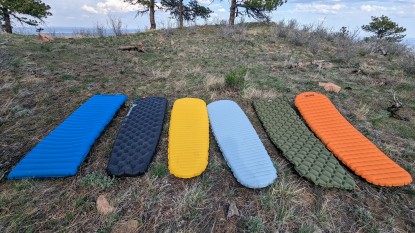
All bags are designed to be used with a good sleeping pad to insulate you from the ground. Without one you'll be lucky to sleep at all near a sleeping bag's temperature rating.
Credit: Jack Cramer
Weight
Although warmth is hard to measure objectively, weight is easy, and this is one of the most important metrics to consider for human-powered travel. The longer or more challenging your trips are, the more important this becomes. A sleeping bag's weight is a consequence of the amount and type of insulation, the type of fabrics used, the dimensions of the bag, and the nature of the features. Generally, higher-quality materials weigh less, but they cost more. Switching to a shorter zipper or a trimmer fit is a potential way to reduce weight, but it can affect comfort. We tested and measured all the bags in this review in size Regular.
To evaluate the weight, we used a digital scale to weigh each bag by itself, without any included stuff or compression sacks. Although we report the weight of stuff sacks individually, scores are based solely on the bag's weight. This is under the assumption that most users will opt for an aftermarket compression sack that is more effective at compression and potentially lighter weight.
The Hummingbird is our favorite backpacking sleeping bag for when we want to go light. Pair it with a backpacking tarp to really trim the weight of your overnight kit.
Credit: Jack Cramer
There is an almost 2.5-pound difference between the lightest and heaviest bags in this review: the Therm-a-Rest Hyperion 32 and the Nemo Forte 20. That's an enormous difference in the world of backpacking. If you select similarly heavy gear for your entire overnight kit, the weight difference will quickly grow to double-digit pounds. That could easily be the difference between making it to camp before dark or turning back before your knees and back give out.
Take ultralight principles to the extreme and it's possible to trim enough weight off your overnight pack to enjoy activities like climbing, skiing, or backpacking for weeks on end.
Credit: Jack Cramer
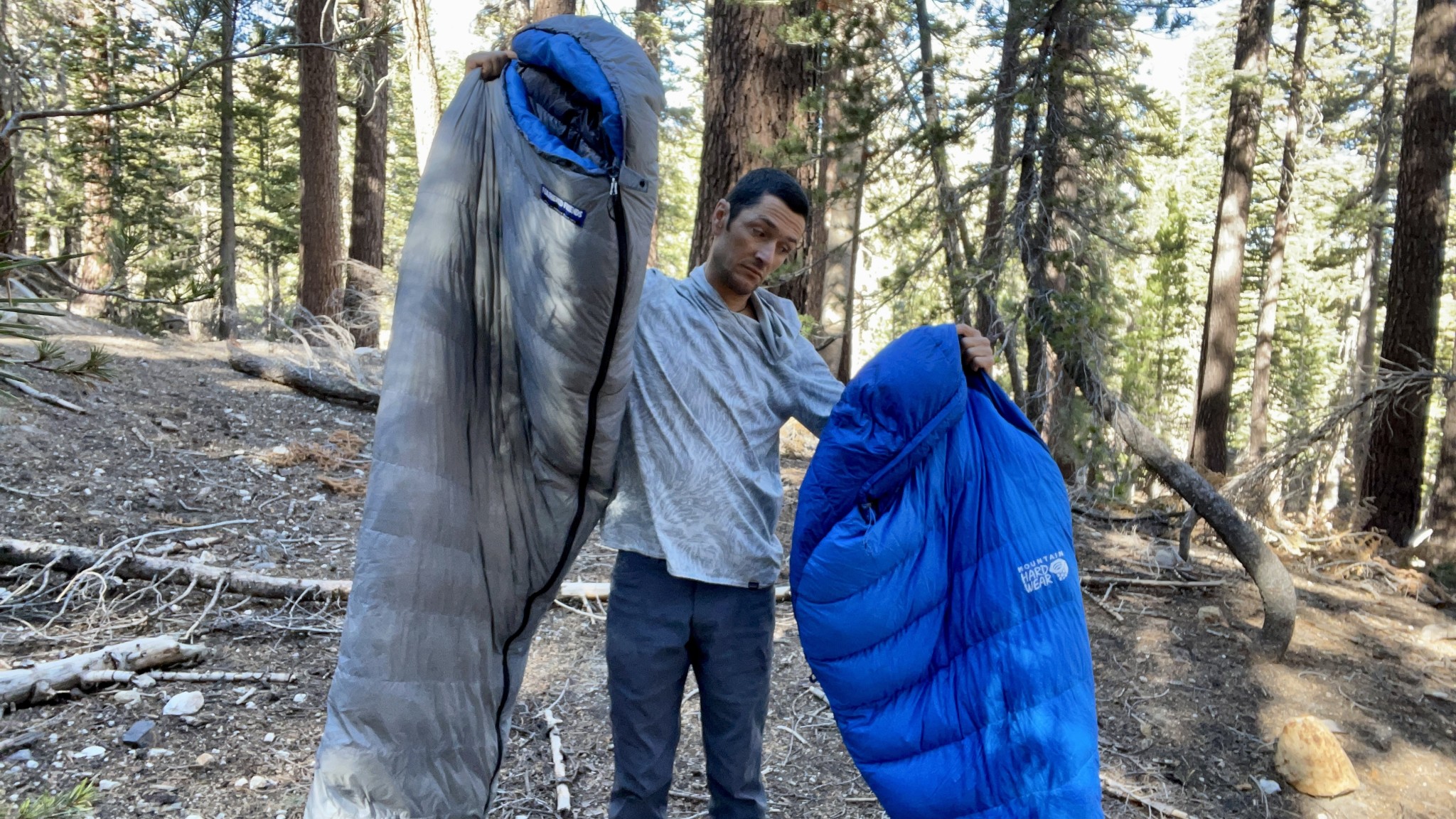
A sleeping bag is one of the three heaviest items backpackers carry. A really light model, like the Feathered Friends Hummingbird UL, can be one piece in the puzzle of cutting 10-15 pounds from your load. While this bag is pricey, it can have a positive impact not only on your joint health and longevity but also on your overall enjoyment of the outdoors. A more affordable lightweight choice is the Mountain Hardwear Bishop Pass 15. At 2.3 pounds, it's not the lightest bag, but the few extra ounces are easy to see past when you're spending half as much money.
The ultralight Hummingbird (left) and the kinda light Bishop Pass (right).
Credit: Ian McEleney
Comfort
To sleep well, you have to be comfortable. For most people, this is a simple task in a bed with a blanket and thermostat nearby. The task can be a lot harder outdoors when you're at the mercy of Mother Nature and zipped inside an ill-fitting tube. Although some people can sleep like a log on a busy city bus, many find the unfamiliar and restrictive environment of a backpacking sleeping bag to be disruptive. If you're in the former group, rejoice! You can ignore our comfort evaluations. The latter should devote special attention to this metric.
To evaluate comfort, we considered several factors: the dimensions and fit of each bag, the loft or fluffiness of the insulation, the feel of the interior fabric, and, in some cases, the noisiness of the materials. Although being too warm or cold can affect how comfortable you are, we assess that with our separate warmth metric. Thus, a bag's comfort score is our best subjective judgment of its performance in terms of fit, loft, feel, and noisiness.
The biggest comfort difference between the narrow Hummingbird (top) and the roomy Forte is around the hips and feet.
Credit: Ian McEleney
Three bags provide impressive comfort in two different ways that are worth discussing. The Nemo Forte 20 is shaped like a broad hourglass rather than a tapered sarcophagus. The bottom of this hourglass offers an extra 12 (or more) inches of girth compared to ordinary bags, which gives side and tummy sleepers ample room to stretch their legs in any direction. This extra space for the hips and feet was noticeable even when compared to tapered bags with similar shoulder measurements. The Nemo Disco 15 is the same shape but 4 - 6 inches wider for even more space to move around.
The Disco 15, and most Nemo sleeping bags, provide tremendous space at the foot of the bag which makes stretching your legs much more enjoyable.
Credit: Jack Cramer
Though we like the interesting shape of the Nemo bags, the insulation is not particularly lofty, and the other materials aren't exceptionally soft. The final standout in this metric is the Western Mountaineering MegaLite, and it has these bases covered. Its 850+ fill power down and 12-denier ExtremeLite fabric combine to create a cozy cocoon of luxurious loft. While it has some of the most space around the shoulders and torso, the standard tapered mummy shape and narrow footbox won't be appreciated by everyone.
Ultra-premium loft on the left, regular loft on the right.
Credit: Ian McEleney
As these examples illustrate, a bag's comfort is inherently subjective, so it's essential to choose one that matches your preferences. Those who don't detest the shape of a mummy bag will likely prefer the luxurious materials of the MegaLite. Meanwhile, side sleepers may find the innovative shape of the Forte and Disco superior.
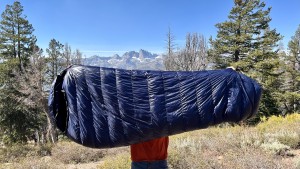
The MegaLite's 64" shoulder girth is so roomy that it can extend past the sides of a backpacking sleeping pad. On the occasional open bivy, this may be a minor problem, but it's not really an issue inside a tent.
Credit: Jack Cramer
A facet of comfort we didn't think about before testing was the noisiness of the fabric. The light sleepers in our crew noticed that certain crinkly fabrics could disturb their sleep. This issue was most noticeable with the Pertex Endurance shell of the Feathered Friends Hummingbird UL. Though earplugs easily resolve this issue, if you're concerned about noise, you should probably avoid this fabric. Fortunately, the Hummingbird can also be purchased with much quieter, more durable, and cheaper — but slightly heavier — Pertex Quantum fabric.
Waking up to the neighborhood views right outside of Boulder, CO using the Feathered Friends Hummingbird 30
Packed Size
The bigger your backpack, the further its mass is from your center of gravity. This can make hiking with your pack more strenuous, leading to premature fatigue and ultimately less fun in the outdoors. Sleeping bags are usually one of the largest items in your overnight pack. Therefore, getting a bag that compresses smaller is a good way to reduce the size and overall burden load. As with weight, the more time you're spending on the trail, or the more challenging that trail is, the more this becomes important.
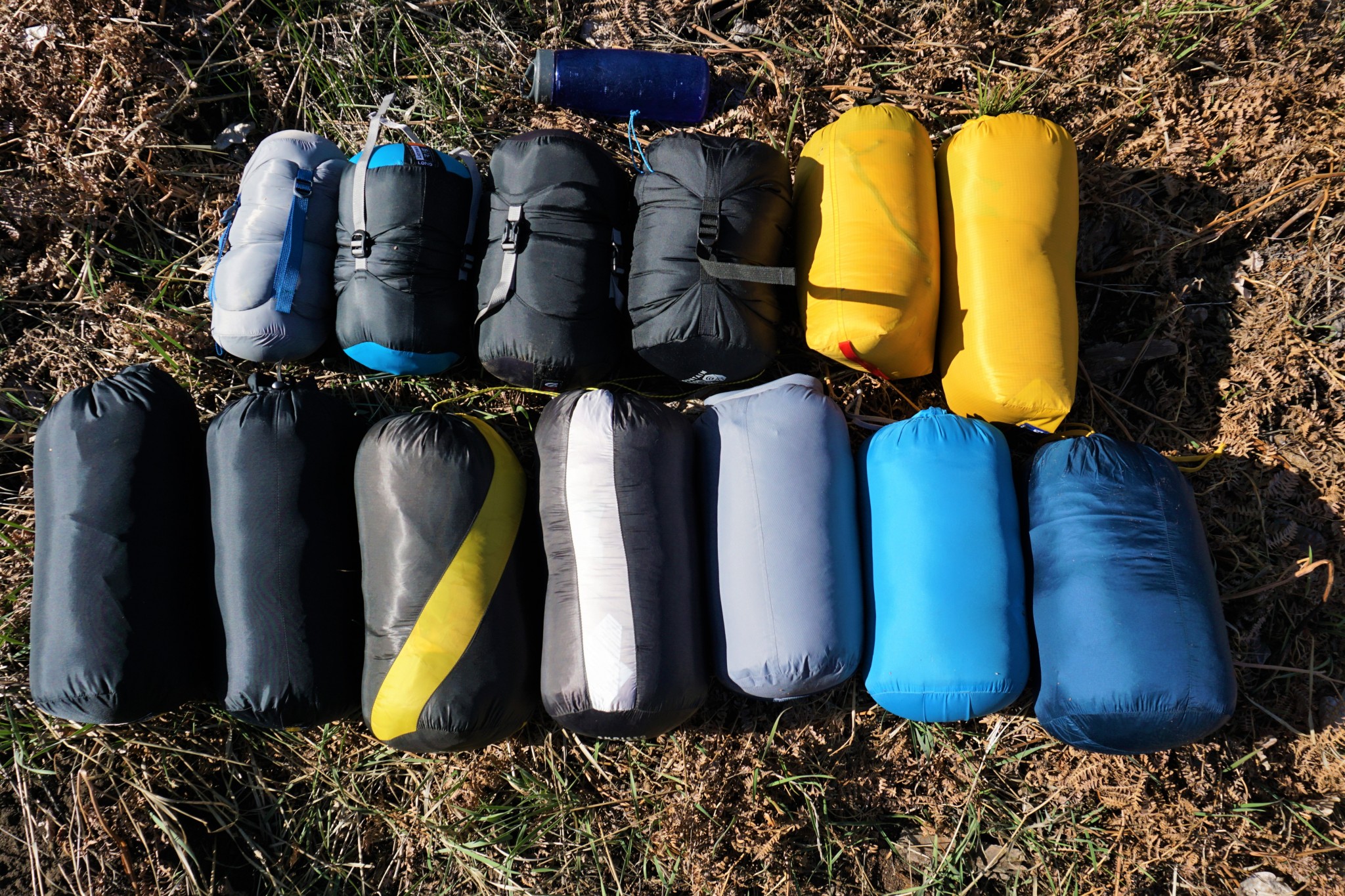
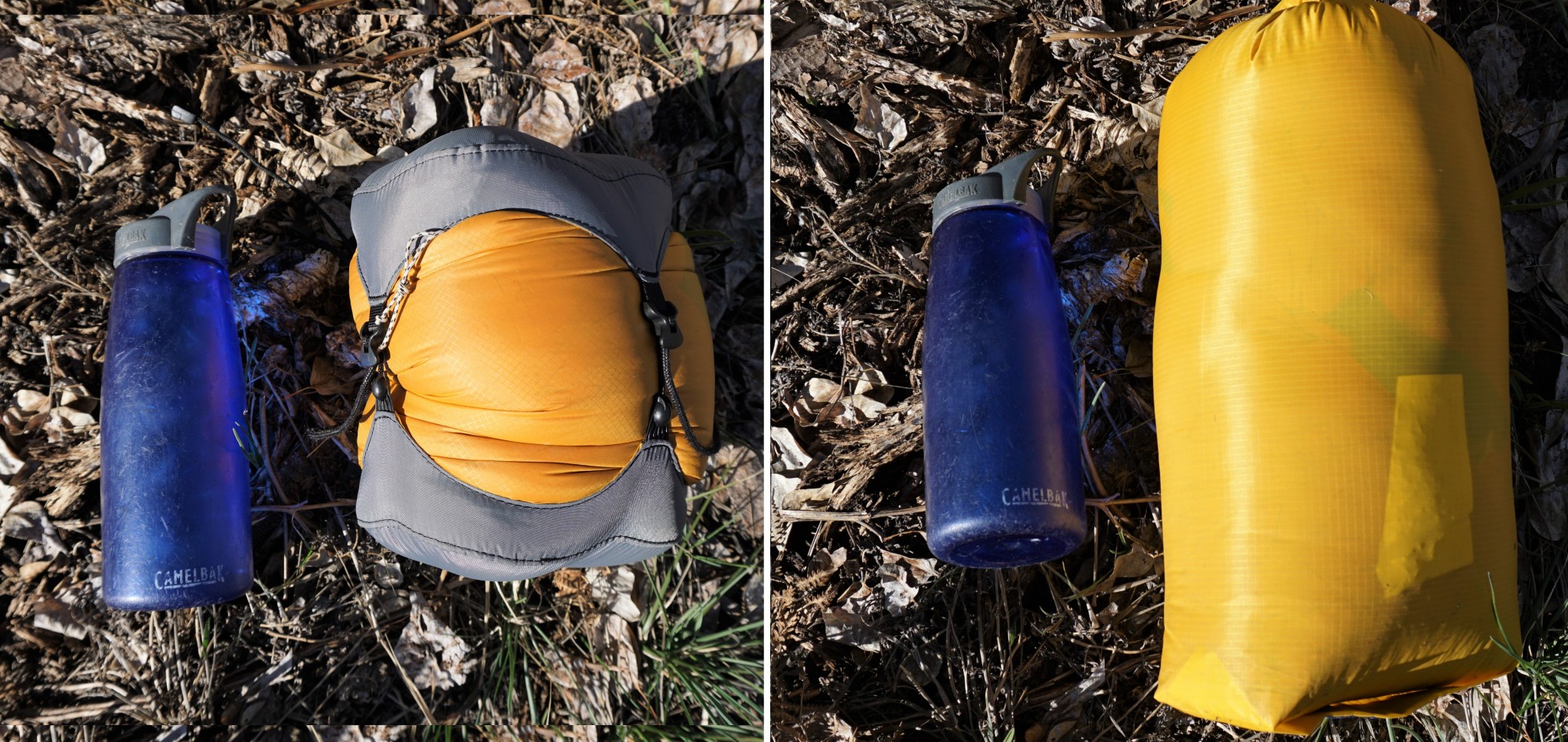
All the bags we tested include a regular stuff sack or compression sack for storing them inside your backpack. The regular stuff sacks, however, are ineffective at compressing a sleeping bag fully. Therefore, to evaluate packed size fairly, we used the same 11-liter Granite Gear Air Compressor compression sack to measure each bag's minimum compressed volume.
Compression sacks help reduce the packed size of your sleeping bag. Most of the bags we tested came with a regular, non-compressive stuff sack.
Credit: Jack Cramer
By and large, the compressed volumes we observed corresponded closely with the weight of each bag. A couple of exceptions are the Mountain Hardwear Bishop Pass 15, which compresses roughly 10% smaller than its weight would suggest, and the Western Mountaineering UltraLite, which packs down 15% larger than comparable bags.
The Feathered Friends Swallow stuffed in an after-market compression sack (left) and the stuff sack that it comes with (right). Pretty big difference!
Credit: Jack Cramer
Although these discrepancies are worth noting, we consider all the bags included in this review small, especially compared to cheap budget bags or the behemoths of yesteryear. So, we don't think packed size should be a crucial characteristic to distinguish between today's nicest sleeping bags. Depending on your plans and your budget, however, it may be worth checking the difference in packed size between a premium and budget backpacking sleeping bag you're considering.
The Therm-a-Rest Hyperion is exceptionally light. To fully enjoy this benefit consider using it with a ultralight shelter or no shelter at all.
Credit: Jack Cramer
Features
"Features" is a catch-all category that encompasses the performance characteristics that are not addressed by our other evaluation criteria. It includes things like small stash pockets, sleeping pad attachment systems, and the qualities of the bag's zipper, among other things. We also assess the overall execution of the bag. Are all of its materials similarly durable? Do its warmth, weight, and dimensions make sense for its intended use?
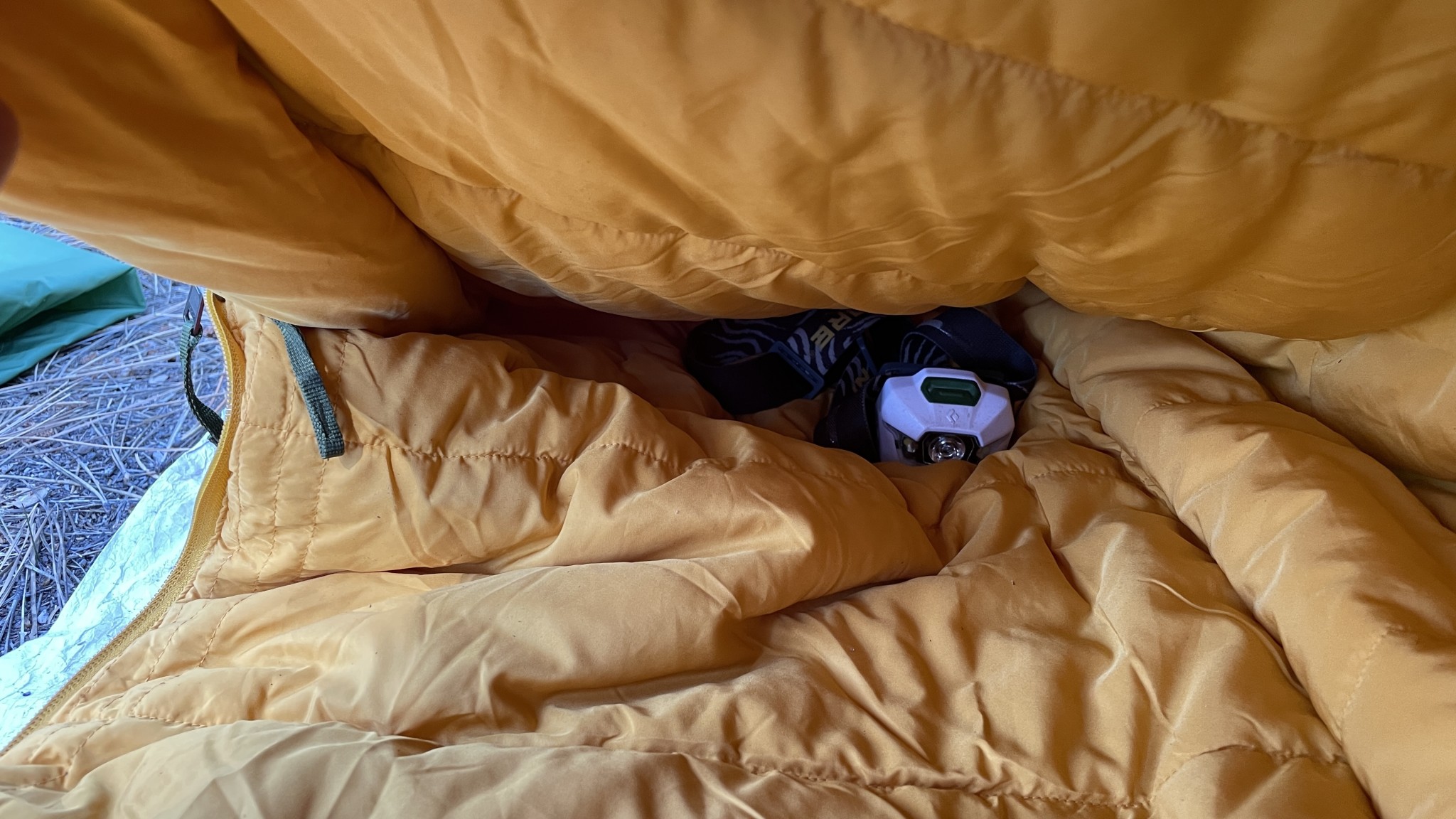
Both of the Nemo bags, the Trailmade 20, the Bishop Pass, and several others feature light-colored liner fabrics, often yellow. It's common for our testers to bring small items into the sleeping bag with them at night. This could be anything they want to keep warm, like electronics or a pair of socks. Dark interiors turn the bag into a black hole for little things like that while bright liners make them easy to find.
The yellow liner makes it easy to find small items that have disappeared.
Credit: Ian McEleney
We're also big fans of the full-length zippers on the Feathered Friends and Western Mountaineering bags. Both companies' bags have an internal strip of plastic in the adjacent fabric to direct the fabric away from the zipper teeth and further reduce the chance of snagging. Feathered Friends bags also feature a Y-shaped, anti-snag zipper slider.
The Feathered Friends bags that we tried feature a Y-shaped zipper slide and an internal strip of flexible plastic to prevent the zipper from snagging.
Credit: Jack Cramer
Another example of a design we like is the sleeping pad attachment system on the Therm-a-Rest Hyperion 32. While some hikers want the option to attach their sleeping bags to their pads so that they don't slide around in the night our testing team doesn't. So we're delighted to see that the Hyperion's attachment system is designed to be removable, leaving the decision up to you whether the extra weight is worth the benefits. We've tested other sleeping pad attachment systems that don't offer a similar degree of adjustability. Not all attachment systems are equal.
The straps on the underside of the Hyperion that you can use to secure it to a sleeping pad are also easy to remove if you'd rather save weight.
Credit: Jack Cramer
One change we've noticed on several models is a main zipper with the bottom end sewn into the bag. Most sleeping bag zippers include a pair of the interlocking pins on one end that allow you to connect and disconnect the left and right sides of the zipper. Although they're easy to overlook, these tiny pins are necessary for restarting a zipper if it gets misaligned. A few manufacturers have done away with the pins, choosing instead to sew the ends of the zipper directly into the bags.
The half-length zipper only has a single slider. This limits your options for venting excess heat. It could also be a problem if the zipper gets misaligned - there isn't any way to back it down and restart it.
Credit: Jack Cramer
This design creates a possible durability problem. Even if you're careful, a zipper will occasionally snag. When that happens, there is always a chance that the teeth will get misaligned or the zipper slider will pop off from one side. With most bags, it's not a problem; just restart the slider at the pins. But if misalignment occurs in the backcountry with the Sea to Summit Spark II, The North Face Cat's Meow, or Therm-a-Rest Hyperion, it could be impossible to restart the zipper or close the bag properly. Furthermore, fixing a misaligned zipper will likely require cutting it off the bag, realigning the teeth, and sewing it back together.
The pins at the bottom of most zippers (center) are necessary to get it restarted if the teeth become misaligned. Unfortunately, the Sea to Summit Spark II (left) and Thermarest Hyperion (right) both lack these important pins.
Credit: Jack Cramer
Conclusion
Deceptive marketing claims, a huge number of models, and preposterous prices combine to make sleeping bag shopping a daunting task. Our extensive testing process and thorough assessments aim to crack the code for three-season backpacking sleeping bags. Depending on your activities, you might be happier in a specialty ultralight option or one of the best camping sleeping bags for car camping. We hope this review has keyed you into the best model for your needs and budget. Happy camping!