We buy all the products we test — no freebies from companies. If you purchase through our links, we may earn a commission, which helps support our testing.
Our review authors and testers have spent the last decade testing over 50 of the best GPS watches, with the top 13 in this review. We've developed a testing plan that focuses on analyzing the features, battery life, ease of use, accuracy, and design. We look at both the internal user interface and the external hardware to give you the best recommendations. We know everyone has different priorities, so we delve into various use cases to help you decide which watch will be best for your lifestyle and budget.
Smartwatch: Up to 18 days/22 days with solar
Battery Saver Watch Mode: Up to 57 days/173 days with solar
GPS Only: Up to 57 hours/73 hours with solar
All Satellte Systems: Up to 40 hours/48 hours with solar
All Satellite Systems + Multi-band: Up to 23 hours/26 hours with solar
All Satellite Systems + Music: Up to 10 hours
Max Battery GPS: Up to 136 hours/289 hours with solar
Expedition GPS: Up to 40 days/74 days with solar
Smartwatch mode: 60 days;
GPS: 140 hours
Up to 36 hours normal use
In time mode: 26 days
With 24/7 tracking and mobile notifications: 12 days
Training mode with GPS: 40h / 50h / 70h / 120h
In time mode: 60 days - Solar: 1 Year
24/7 tracking and mobile notifications: 30 days - Solar: 60 days
Training mode with GPS:
60h / 90h /140h / 500h - Solar: 85h / 140h / 280h / 30d
Navigation Built In?
Yes
Yes
Yes - detailed
Yes
Yes
Satellite Networks Used
GPS, GLONASS, GALILEO
GPS, GLONASS, Galileo, Beidou, QZSS
Precision dual-frequency GPS: GPS, GNSS, Galileo and BeiDou
GPS, GLONASS, GALILEO, QZSS, BEIDOU
GPS, GLONASS, GALILEO, QZSS, BEIDOU
Maps?
Yes
Yes - detailed
Yes - detailed
Yes - detailed
Yes
Back to Start Navigation?
Yes
Yes
Yes
Yes
Yes
Water Resistance (max depth)
100m
100m
100m
100m
100m
Music Control?
Yes
Yes
Yes
Yes
Yes
Music Storage?
Yes
Yes - 32gb storage
Yes - 64gb storage
No
Yes - 32gb storage
Daily Fitness Tracking?
Yes
Yes
Yes
Yes
Yes
Touchless Payment?
Yes
No
Yes
No
No
Sleep Tracking?
Yes
Yes
Yes
Yes
Yes
Blood Oxygen?
Yes
Yes
Yes
Yes
Yes
Compass?
Yes
Yes
Yes
Yes
Yes
Barometric Altimeter?
Yes
Yes
Yes
Yes
Yes
Temperature Sensor?
Yes
Yes
Yes
No
No
Main Software App
Garmin Connect, widgets for other features
Coros App
Apple Health
Suunto
Suunto
Can Software Crossover to Different Software Ecosystems?
Yes
Yes
Yes
Yes
Yes
Warranty Info
1 year
2 year
1 year
2 year
2 year
Show full specification details ▼Hide full specification details ▲
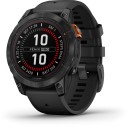
Weight: 2.9 oz | Battery Life: 22 days in solar smartwatch mode, 73 hours in solar GPS
REASONS TO BUY
Best features and user interface
Exceptional battery for most distances
Premium materials and rugged design
Accurate dual-frequency GPS and heart rate monitor
Flashlight
REASONS TO AVOID
Expensive
Garmin Connect app feels dated
The Garmin Fenix 7 Pro Solar is newly refreshed with an updated heart rate monitor, solar charging, and flashlight. These features add to the dominance of the series, and while more expensive, we found the additions to be well worth the cost. Garmin continues to provide one of the best user interfaces and experiences for a GPS smartwatch. For serious athletes or users searching for a high end option, look no further. After extensive testing while skiing, running, paddling, and backpacking, this model continued to provide reliable accuracy and enhance our outdoor experiences.
While this is a great watch, the price is high, and many will find better value in other lower-priced options with fewer features. Learning about the feature options and how to set them up is also a time investment. However, if you can afford it and you love a watch with the extra features, this is a great option for you.
Weight: 1.70 oz | Battery Life: 15 days in smartwatch mode, 42 hours in GPS mode
REASONS TO BUY
Slim ultralight design
Accurate health sensor and GPS
Advanced health metrics
REASONS TO AVOID
Shorter battery life than the competition
Fewer premium materials
The Garmin Forerunner 955 provides advanced features like turn-by-turn, multi-band GPS, and multiple industry-leading health metrics. This model is also extremely light but still features an all-day battery life that should be sufficient for most users. A touch screen and dedicated buttons make this watch easy to use in various conditions. The sensors are also some of the best, providing accurate metrics like BPM, HRV, and sleep analysis.
The design of this model, while slim, feels slightly less robust due to its lack of metal materials. If you want your watch to stand out and look slightly more rugged, you may appreciate some of the competition's designs. Garmin also needs to revamp its companion mobile application; it feels dated and more confusing than the Apple or Coros apps. Regardless, if you are looking for all the latest features without spending top dollar, this is a great model to consider.
Weight: 1.50 oz | Battery Life: 24 days in smartwatch mode, 38 hours in GPS mode
REASONS TO BUY
Exceptionally lightweight
Battery life is long
Fantastic accuracy
Very easy to use
REASONS TO AVOID
Limited sports profiles
Plastic construction
The Coros Pace 3 maintains its edge in the budget-friendly segment of the market. If we were to suggest a single product that caters to the widest range of folks, it would undoubtedly be this watch. It offers outstanding battery life without adding extra weight or bulk. With 30+ hours of GPS usage or up to two weeks of typical daily use, the need for frequent charging becomes a non-issue. If your goal is to minimize the distractions often associated with smartwatches, the streamlined design of the Pace 3 is exceptionally appealing. Both dedicated athletes and individuals focused on daily health metrics could get a lot out of this model.
Although we were pleasantly surprised by its durability, don't expect a ton of premium materials on the Pace 3. In the world of GPS watches, a rugged design typically commands a higher price tag. And while the addition of a touch screen on this latest model is a positive feature, we maintain a preference for the rolling crown, with dedicated buttons being our overall favorite. Still, if you're in the market for an ultralight GPS watch that offers great accuracy and battery life without breaking the bank, the Coros Pace 3 comes highly recommended.
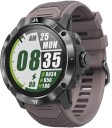
Weight: 3.17 oz | Battery Life: 60 days in smartwatch mode, 60 hours in low power mode
REASONS TO BUY
Industry-leading GPS and smartwatch battery life
Fantastic accuracy across different profiles
Easy to use with precise and fluid scroll wheel
Massive screen and rugged look in a thin case
REASONS TO AVOID
Expensive
The touch screen is not enabled throughout the entire interface
If battery life is your biggest consideration, the Coros Vertix 2 is for you. This large and rugged watch offers all the features you need to train for your next adventure, including a pulse oximeter, touch screen, breadcrumb trail, several workout profiles, workout creation, route navigation, and more. No other watch in our lineup has this level of excellent battery power, making it a favorite for ultra adventurers who need their power to keep going all day and through the night.
While we love this watch, the 51mm size may be a no-go for some folks. With the case size and never-ending battery life, it's noticeably heavy, and it may not be the best option for runners and people who do activities with lots of arm movement. The cost is also significantly higher than both the Garmin Forerunner 955 and Coros Pace 3, two other high-value options. Still, if you desire the commanding look of this model, we think you will not be disappointed — it's great for hiking, and we could see it working perfectly in expedition settings.
Weight: 2.60 oz | Battery Life: 36 hours normal use, 12 hours in GPS mode
REASONS TO BUY
Industry-leading health metrics and accuracy
Premium design and materials
Phone + SMS response via keyboard and Siri
Best watch face design and red light capability
REASONS TO AVOID
Short battery life
Expensive
In January 2024, Apple lost a patent dispute to Masimo over the blood oxygen sensor feature of the Ultra 2 and Series 9 watches. Apple Watches will still show the blood oxygen app, but the technology is disabled.
The Apple Ultra Watch 2 is a top choice for athletes and those seeking extended battery life in an Apple smartwatch. It excels in providing seamless connectivity and phone-like features on your wrist, making it a great choice for users who value staying connected. The Apple Health app stands out as the preferred option for tracking and visualizing data related to activities like running, sleep, and daily heart rate monitoring, thanks to its clean and uncluttered design. The watch's physical design is elegant, with a bright display and a 49mm case size. However, the updated model doesn't offer significant improvements over its predecessor at the moment, so upgrading from an Apple Watch Ultra 1 may not be necessary.
Even though this is the best Apple offers, it may not suit everyone. The Ultra 2 may not work well for serious ultra-endurance athletes who perform in technical terrain. Some users might find the watch distracting and overly feature-packed, although customization options are available to minimize distractions. Apple markets its rugged capabilities, but its smartwatch features remain its primary strength. Therefore, while it's a strong contender in the smartwatch market, it may not fully satisfy the needs of all athletes, particularly those prioritizing battery life. But if you are a fan of Apple watches or desire the best smartwatch tech features, this is one of the best models on the market.
Weight: 1.87 oz | Battery Life: Endless in smartwatch mode w/ sun, 30 hours in GPS mode
REASONS TO BUY
Solar panels charge the watch quickly
Most features are already built into the watch
Basic navigation options
Seemingly endless battery life in smartwatch mode when there's sun
REASONS TO AVOID
No noticeable charging with the GPS running
Supplied fixed watch straps may not fit everyone (hinge design sold separately)
The Garmin Instinct Solar 2 stands out as one of the best GPS watches for daily use, with solar panels integrated right into the screen. So long as it is exposed to the sun, using it in smartwatch mode will require few to no charges every month. Over three months of testing, we only had to charge it once — after we ran the battery down on purpose. As a result, it's a great option for expeditions or longer treks where you might not be able to find an outlet. This design has simplified features but still offers nice navigational perks like sight n' go, coordinates, and a breadcrumb trail.
While we have little negative to say about this model, some may find the design a bit tactical, and it may not fit those great with smaller wrists. One other downside is the lack of solar charging while actively recording GPS; this could be an issue if you find yourself reaching the limits of its 30-hour recording time. Luckily with Garmin's 'resume later' feature, you can stop the workout and put it in the background for solar charging. Then you can pick up where you started without losing your activity.
The Solar Instinct 2 is rugged, durable, and perfect for running and scrambling missions in our backyard.
Credit: Matthew Richardson
Compare Products
Testing of GPS watches occurs in a wide variety of conditions. Here the new Coros watches get tested on a frigid morning of ice climbing in Colorado.
Credit: Matthew Richardson
Why You Should Trust Us
Before selection occurs, we spend hours looking through the top options on the market, delving into the research to determine the best. Once we've determined our final lineup, we buy each watch at full retail and start our testing process. From days out running, skiing, climbing, and biking, we analyze the features, accuracy, and usability to give you our recommendations on what's best. Our team is proud to provide our thoughts and aid you in searching for the best GPS watch to fit your needs.
Our GPS watch testing is divided into five rating metrics:
Features (20% of overall score weighting)
Battery Life (20% weighting)
Ease of Use (20% weighting)
Accuracy (20% weighting)
Design (20% weighting)
This review is headed up by Matthew Richardson. Matthew works with maps for a living and spends his free time in the outdoors surrounding Durango, Colorado. He uses a GPS watch daily and has completed some big outings, such as a solo ride on the Colorado Trail and linking up the Chicago Basin 14ers in a day. He has personally tested and retested every watch in this lineup over the last several years and deeply understands every feature and nuance.
Our lead tester on a solo trip on the Colorado Trail summer of 2021. Seen here at Kokomo Pass.
Our lead tester Matthew putting some miles in, in Durango, Colorado.
Matthew our lead tester doing the classic chimney boulder in the kraft boulders in Las Vegas, NV.
Analysis and Test Results
There are many GPS watches on the market these days, and finding the one that fits your needs can be a tough project. We took a sample of the market's current best and tested them to see how they compare side-by-side. We evaluated each for features, battery life, ease of use, accuracy, and design.
Value
GPS watches are an investment, and your level of usage should determine what your price point should be. If you're looking to get into the entry-level GPS watch market and want a watch purely for distance and heart rate tracking, we suggest the Coros Pace 3 or Garmin Forerunner 55. These are great entry-level models which will satisfy most users.
The Garmin Forerunner 955 is at the lower end of the high-priced watches, but its combination of advanced features and all-day battery life make it a great option.
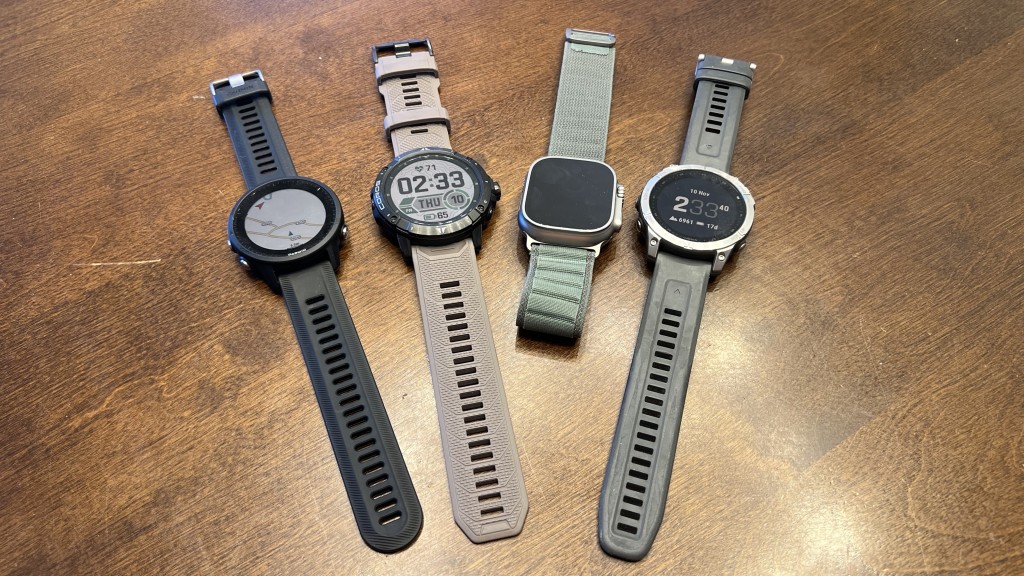
Testing these products head-to-head and side-by-side gives us valuable insight into the pros and cons of each.
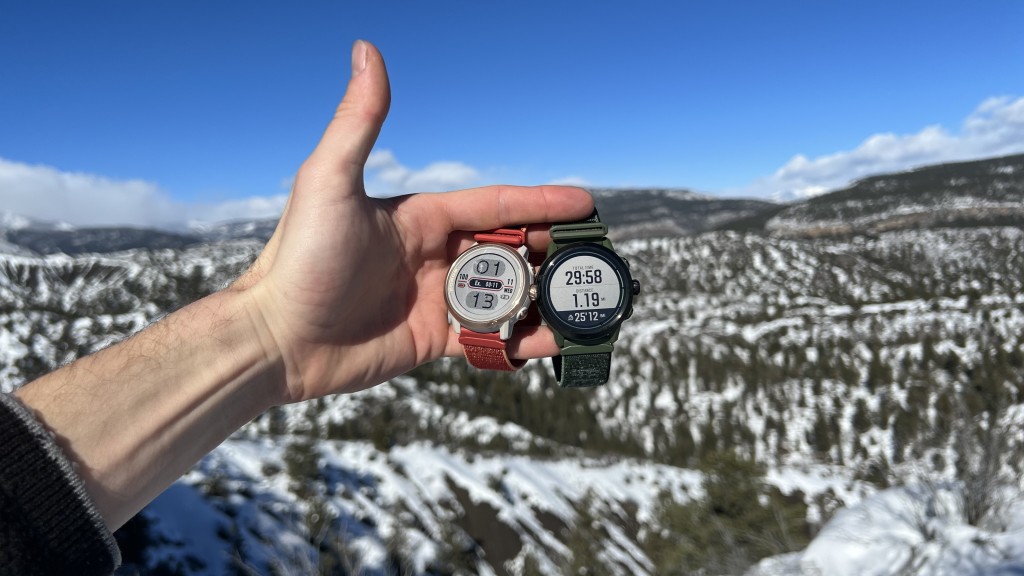
The Coros Apex 2 and Coros Apex Pro 2 are very similar in design besides their size difference (42mm/47mm).
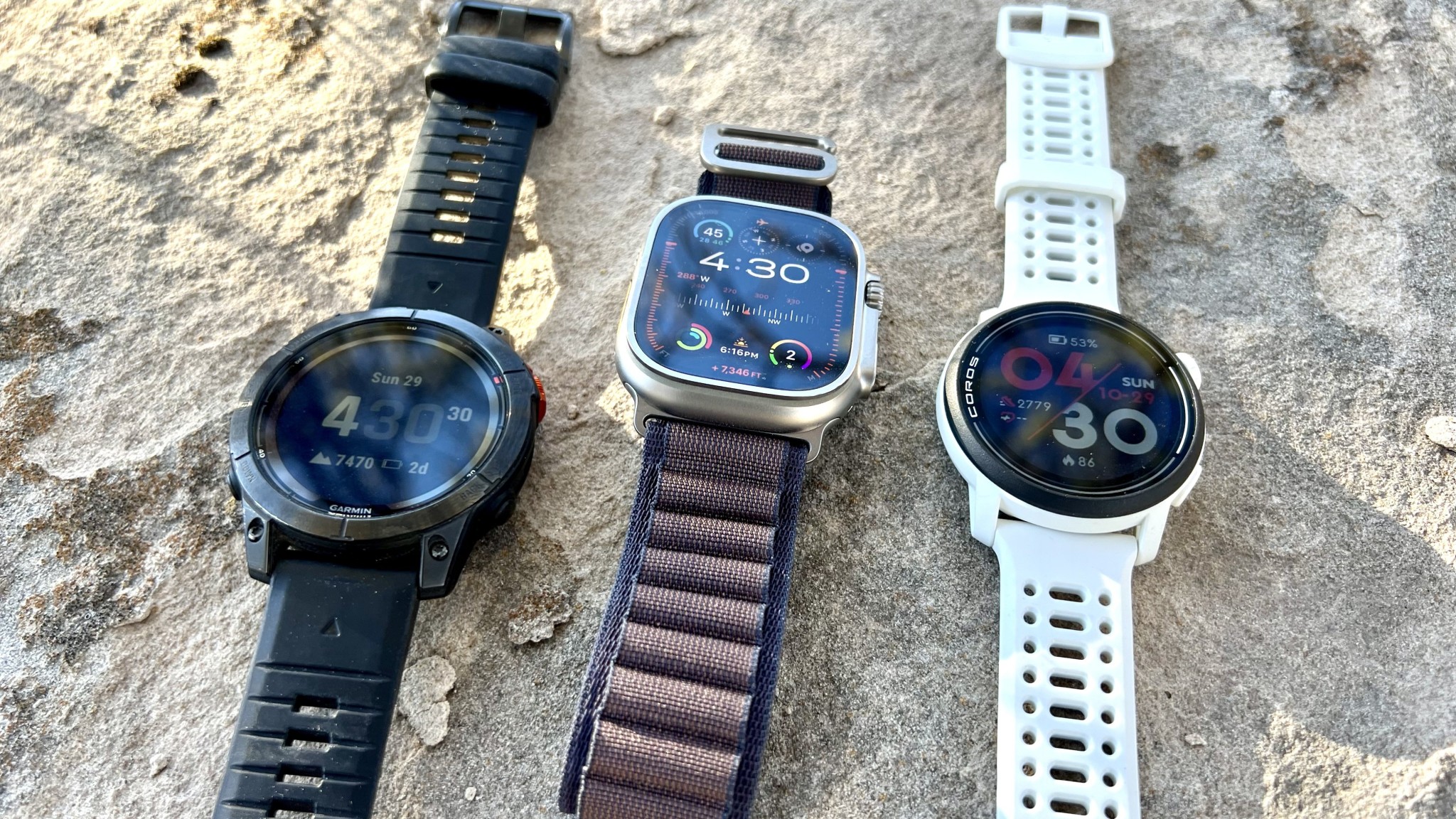
Testing side-by-side gives us unique insight into what models excel for certain applications.
Wait for last season's watch to go on sale. These are typically loaded with many of the same functions, and you can get them for a fraction of the retail cost.
Features
The variety of feature sets in today's market mimics the wide range of pricing. Across all the devices, we tested roughly 1-second interval GPS recording, and a heart rate monitor is a minimum. A higher price tag generally equates to more internal software features. The most advanced watches have features like flashlights, blood oxygen readings, topographic maps, and a suite of smartwatch-enabled features. Some features lend themselves to urban usage, others expeditions into unfamiliar terrain. Keep in mind your usage scenario and try to purchase a watch based on the features you will actually use.
The Apple Watch Ultra 2 and Garmin Fenix 7 Pro Solar received the highest scores in this category, with the Garmin Forerunner 955 nipping at their heels. These models feature advanced GPS tracking (MULTI GNSS), lots of activity profiles, advanced health metric stats, and premium topo maps for navigation.
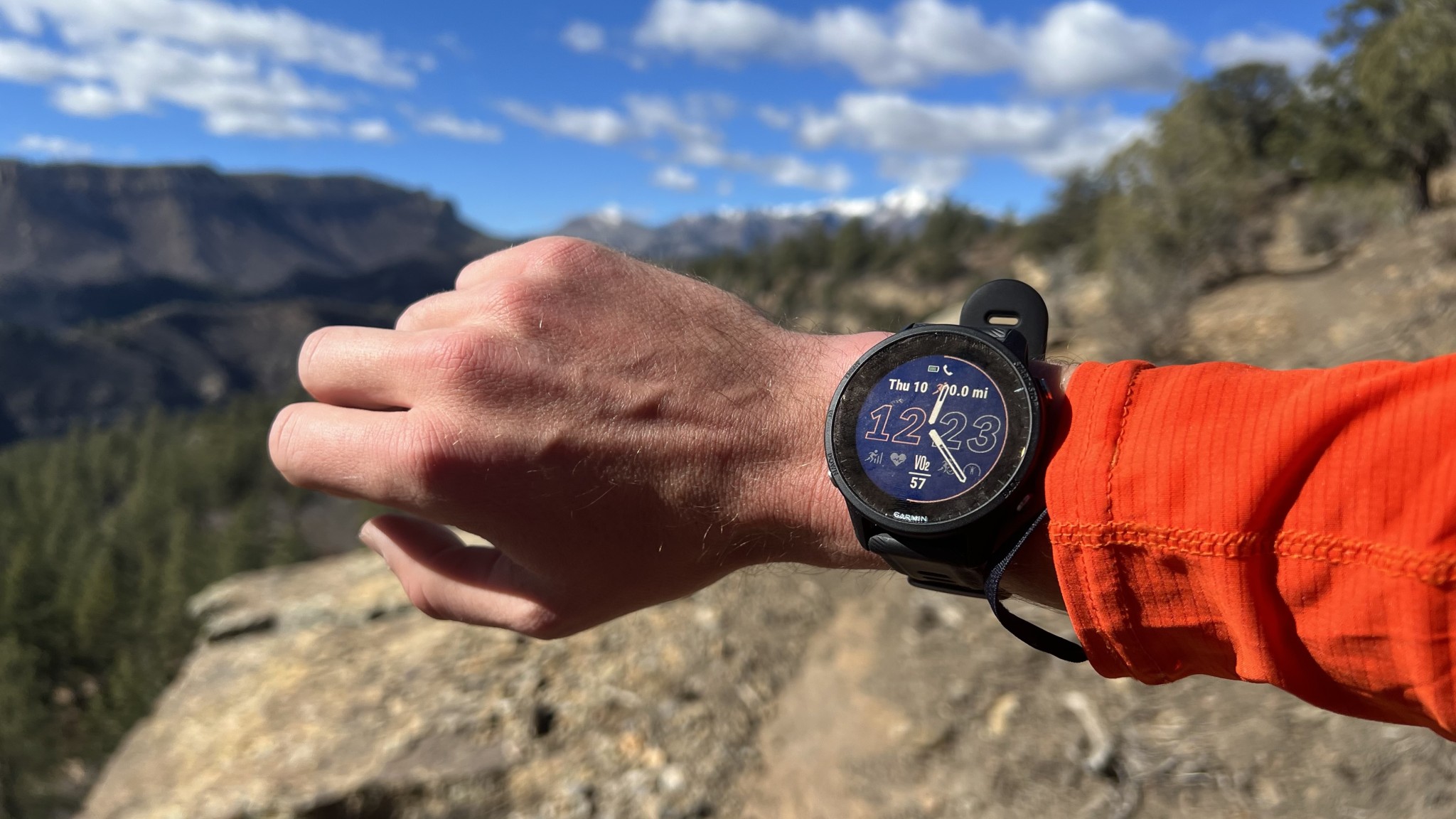
The Garmin Forerunner 955 out in the wild on a trail in Southwestern Colorado. This watch can do it all.
Credit: Matthew Richardson
Some features that are desirable to some people may be useless to others. We suggest checking out the spec sheets via each brand's website to view the most current, up-to-date features and any software updates. The user interfaces found on the brands we tested are similar to a phone ecosystem — each has its own style of operating system (OS). For example, an iPhone model behaves similarly to other iPhones and vice versa for Android. This is the current state of the GPS market when comparing brands.
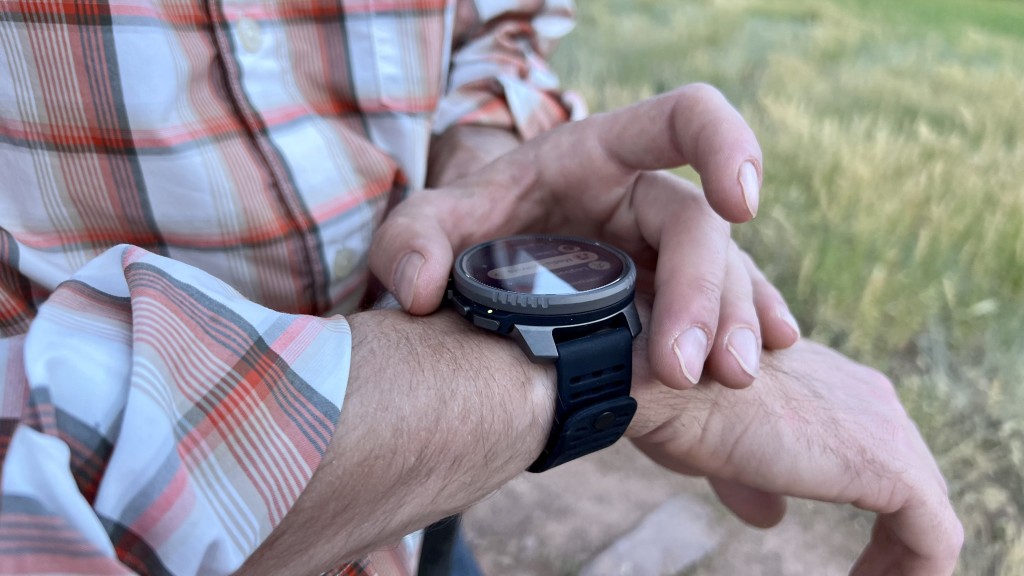
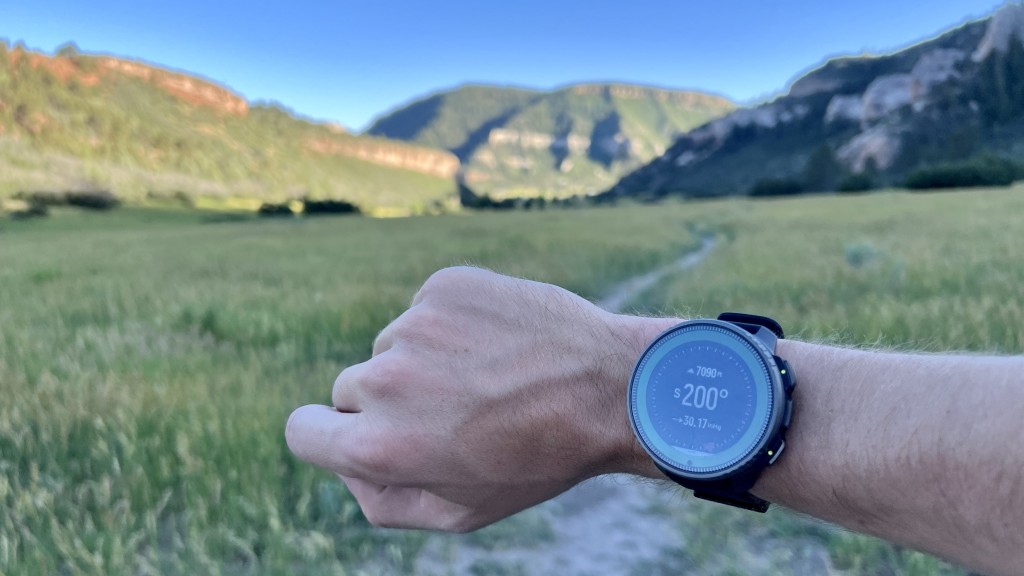
We tested each GPS watch in a variety of conditions here you can see our lead tester Matthew on an evening hike using the navigation features found on the Suunto Vertical Titanium Solar.
Credit: Matthew Richardson
The Apple Watch Ultra has the most features out of all the watches we tested, thanks largely to its great iPhone integration. The ability to not only answer calls (standard on most watches), but also talk via the speaker is super handy. Answering texts via swipe gestures or Siri is also a benefit over other models. This large feature set costs a lot of battery life, and many of these features are disabled if you activate the low-power mode. But if you've been looking for a GPS watch that can be rugged and provide industry-leading UI and phone integration, this is the model for you.
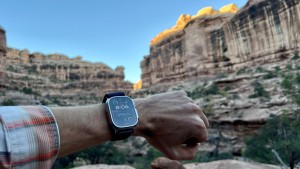
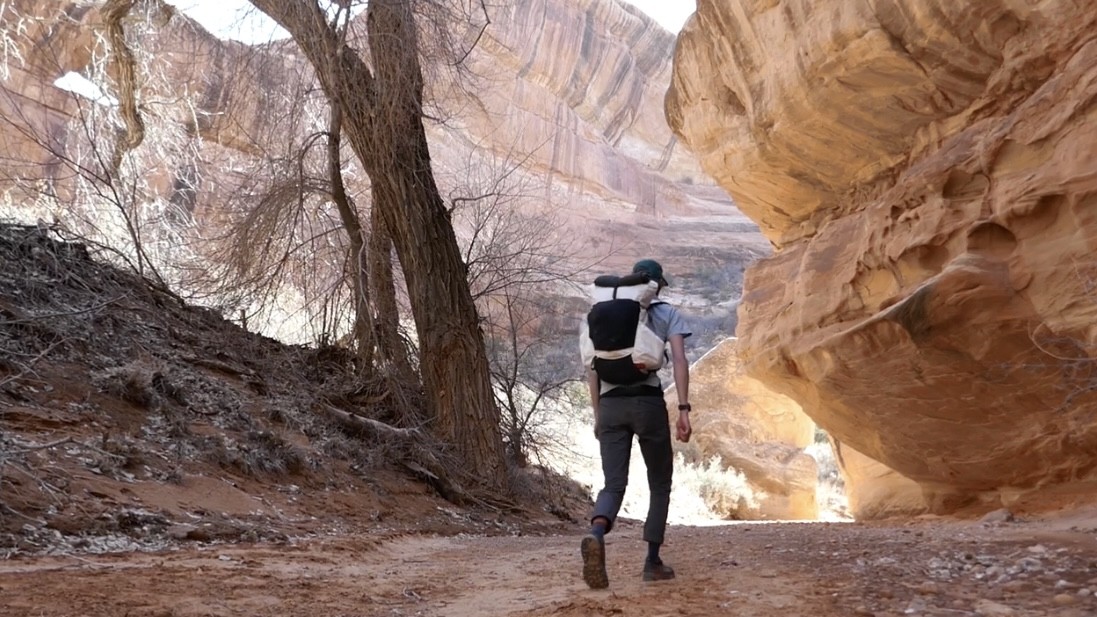
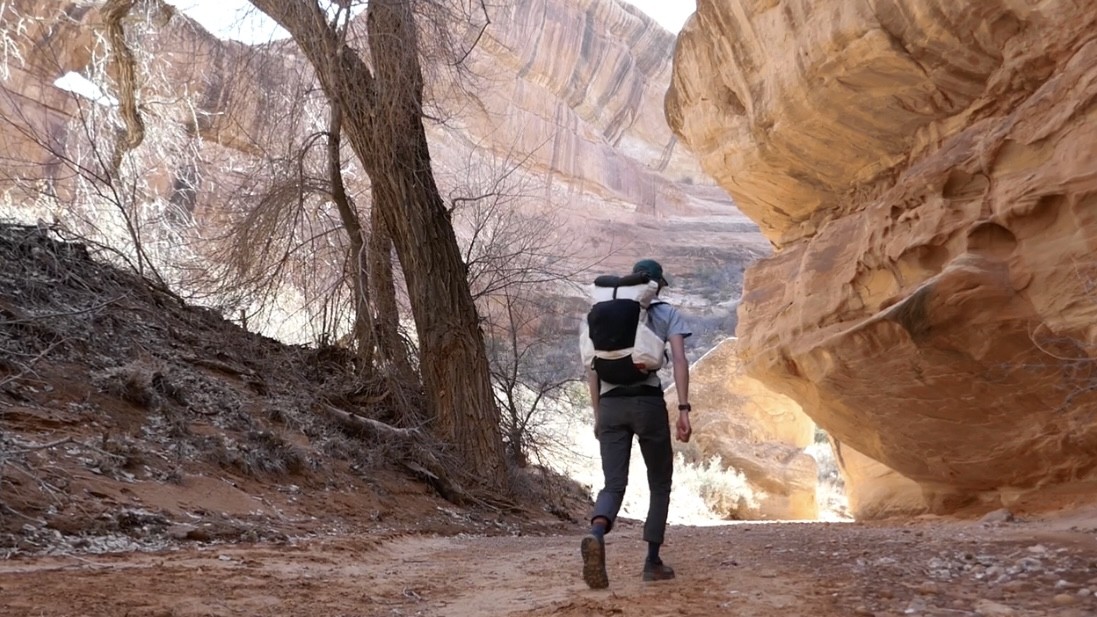
Deep in the canyons of Utah, our lead tester hiked through the riverbed finding the hardest place for satellites to reach.
Credit: Matthew Richardson
Battery Life
For any distance athlete, battery life is probably one of the biggest factors you may consider when buying a watch. Battery life is affected by many things, including your route, GPS signal, coverage, the number of apps you have turned on/off, the battery mode you have set, and how long you run your device. As a result, we appreciate that many of the watches we tested have battery modes and profiles that make it easy to turn on/off various features at once without having to dig through the menus.
We performed many battery tests. The first was a more subjective in-field test where we charged up the battery and used the watch normally day in and day out. We noted how long the watch took to die while incorporating 2-3 activities each week, about 1-3 hours in length. We then compared manufacturers' claims to the actual results that we got.
Getting in some road miles on the Coros Pace before heading home after a long weekend.
Credit: Matthew Richardson
Next, we tested GPS by setting each watch out in the same area under the open sky and running them down until they turned off. We noted the time taken to reach this point and if any went into a battery-saver mode to enhance battery life. We realize this test won't tell you the specific number of hours you'll get during real GPS activity, but it gave us an idea of which watches last longer than others and the quality of the data. In addition, we also took each watch on at least 50 miles of activities, noting the amount of battery used for the time of the activity.
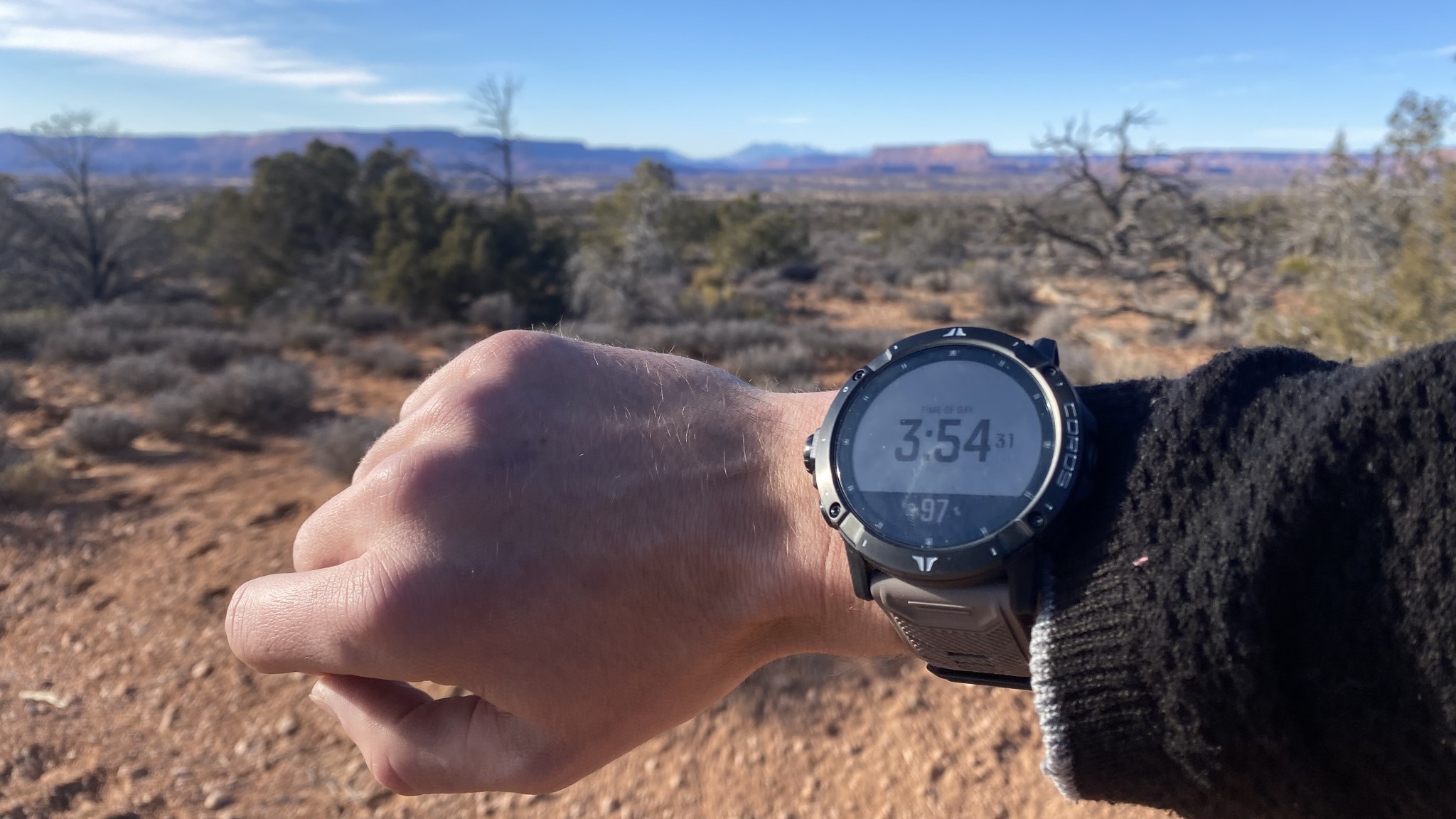
The Coros Vertix 2 has one of the best battery lives out of any of the models we tested and was our favorite for hiking.
Credit: Matthew Richardson
Make sure to consider the types of adventures and the length of time you anticipate using your device. Most of these models can charge while recording, but we would recommend choosing the one that best fits your needs to avoid having to do this. We think 24 hours of GPS tracking is a good place to start for most people and to increase only if you know you'll need more. Realize that a battery is a trade-off in terms of features gained/lost or changes to the case size.
When looking at stats for the watches in our lineup, it's important to remember that there is a rough correlation between case size and battery life. A larger case means a physically larger battery, which, in turn, generally has more capacity. That said, many things factor into this. We chose to score this metric objectively based on the battery life with GPS running. Also keep in mind that our scores are comparative, so a lower score simply means that a product had less battery life compared to others in the lineup - this is not indicative of a faulty or sub-par battery.
If your priority is a smartwatch that seemingly never dies, then you might consider a solar watch, like the Garmin Instinct Solar 2, Suunto Vertical Titanium Solar, or Fenix 7 Pro Solar. You will want to have reliable solar energy available to charge the watch, and minimal percentage gains are made while GPS is running, so you will want to have a power backup if you are planning to use a lot of GPS tracking. This is where a watch, like the Instinct Solar 2, that offers a 'resume later' feature can be beneficial during rest periods out on the trail.
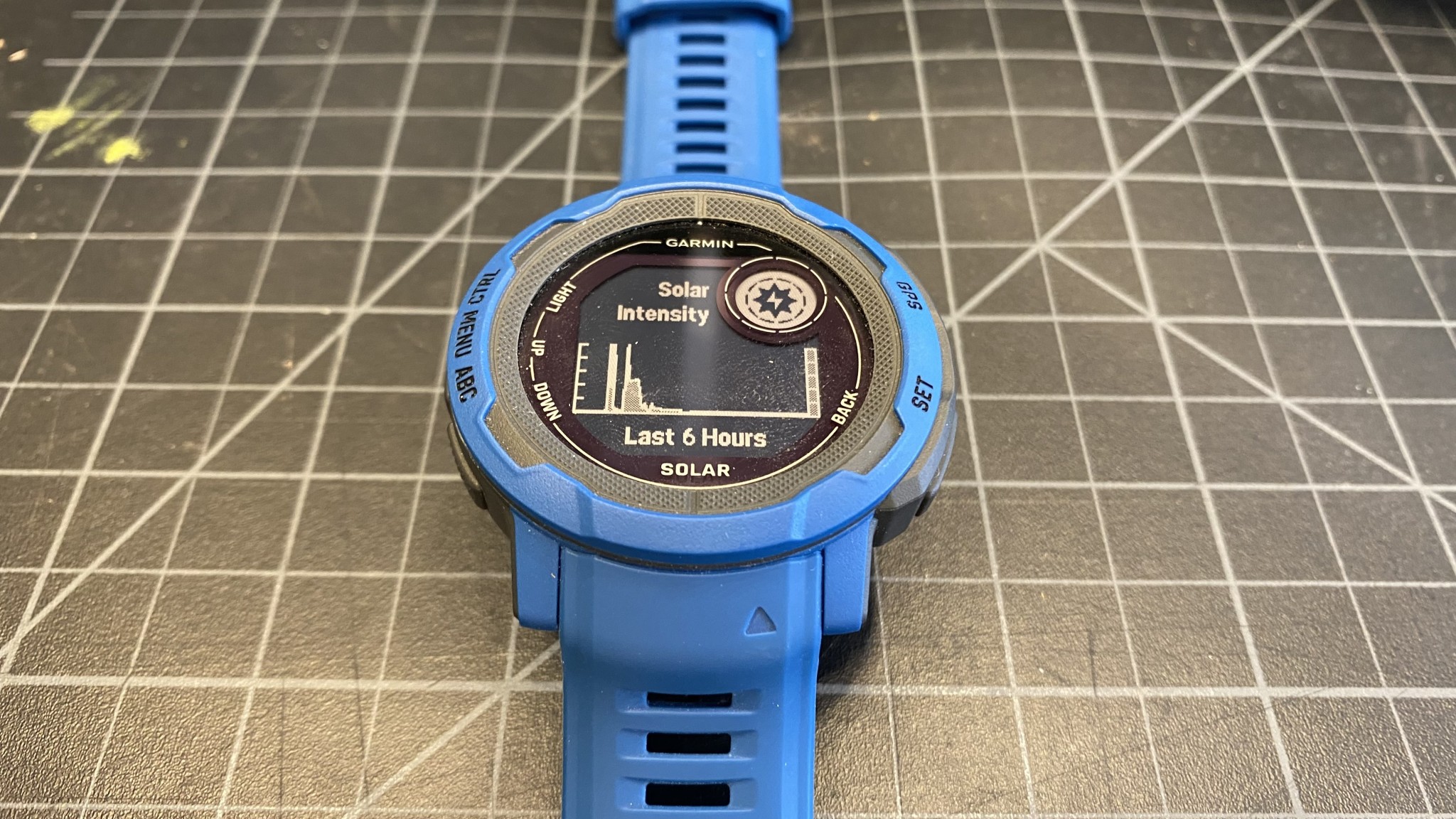
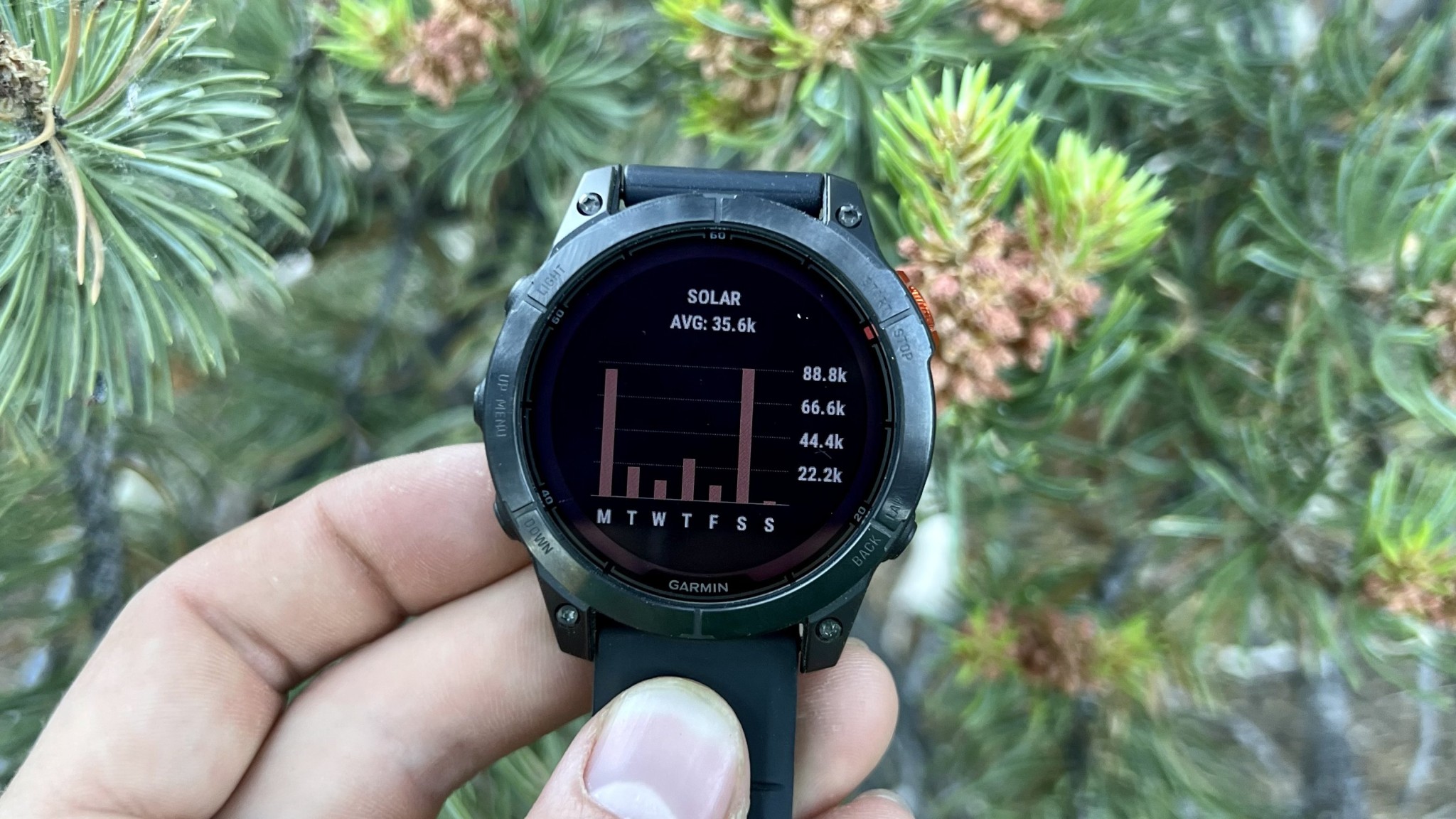
The Instinct 2 Solar has a widget that shows you how much sunlight your screen is getting.
Credit: Matthew Richardson
For maximum battery usage, the Coros models excel across their range. The battery life on the Vertix 2 is insane, with almost 90 hours of MULTI GNSS tracking. Some people could complete the entire Colorado Trail on their bikes without ever charging their watch! Coros products are known for their battery life, and it's clearly a priority throughout their whole range. The Apex Pro 2 is another model that excels by having extended battery life and roughly 75 hours of GPS. The new Suunto Vertical Titanium Solar also excels at battery life, providing roughly 85 hours of GPS recording thanks to the solar screen. Its slightly larger 49mm case size gives it a bump up over the competition of the flagship 47mm size models that Garmin and Coros offer.
We kept everything set to default settings when running our battery tests - in the condition that most people will start using their watches. Turn off notifications and other functions you don't need before your activity to extend battery life.
We appreciate a watch with a good battery-saver options and modes, however, this may be less of a priority for Coros to implement, given their industry-leading battery life. Both the Suunto 9 Peak and Suunto 9 Baro have all-day battery lives at 25 hours for their 'Best' recording mode. The Apple Watch Ultra 2 also scored low in the battery metric due to the always-on display. There is a low power mode, but the battery life still doesn't quite measure up to some other options.
The Forerunner 955 is made for running with its ultra lightweight design.
Credit: Matthew Richardson
Across our entire lineup, there is a GPS watch that fits anyone's battery needs. If your main priority is battery life, the Coros models are the clear winner. Consider the longest time you expect to be out and choose a watch that best matches your needs.
Our main tester got high above Santa Fe testing the Garmin Forerunner 55.
Credit: Matthew Richardson
Ease of Use
Ease of use is important when using a watch both during activity and during your daily life. These products should enhance your life, not make it more difficult. Models which scored highest are those we felt were the easiest to use and provided the best user experience. Integration of mobile apps was also taken into consideration when determining user experience. Keep in mind that a product with a long list of features may take some time to learn the ins and outs of.
Similar to features, there are lots of similarities between brands, with the interface on the cheapest watches mimicking those found on the top-of-the-line models. You will see there isn't as much spread in our rankings for this metric — this is due to the similarities of the interfaces. If you can use the Vertix 2, you will instantly be able to use the Apex 2 — same for the Fenix 7 Pro Solar and Forerunner 955.
All of the Garmin products feature dedicated buttons, with the Forerunner 955 and Fenix models having a touch screen. All of the Coros models feature a scroll wheel, with all new models containing a touch screen that is now accessible throughout all menu systems.
Ultimately it's hard to say which brand is easier to use because they are both different yet similar. Their method of interaction is the biggest difference, and we would suggest deciding on whether you like the idea of a scroll wheel or dedicated buttons. Internally, the menu systems are essentially the same, with a few minor differences.
Our tester found some of the most difficult areas for GPS watches to track to test their abilities.
Credit: Matthew Richardson
The Apple Watch Ultra 2 impressed us with its feature set and how easy it is to use these features. It's really no surprise that Apple was able to incorporate its beloved design into this more rugged model. Setting up and customizing notifications and the layout is a breeze with the watch app. As watch companion apps continue to get better, we are impressed with the amount of customization available with each brand becoming quite good.
The Ultra is a great option for those who desire the great added features of a smartwatch but long for that GPS watch durability.
Credit: Matthew Richardson
The Suunto products all scored a bit lower here as we felt their menu systems were the hardest to learn and use. Even after hours of using their products, the menus still felt unintuitive compared to some of the others. The 9 Baro, 9 Peak, and Vertical Titanium Solar all have very nice touch screens that aid in ease of use, but that didn't make up for the slower, less intuitive interface.
We cannot understand why Suunto did not make their menus a loop. Once you get to the bottom you have to scroll back up to the top. Frustrating.
The 49mm case size is one of our favorites, allowing for increased battery life over the standard 47mm size. The Vertical Titanium Solar offers industry-leading battery life which you can also charge via solar.
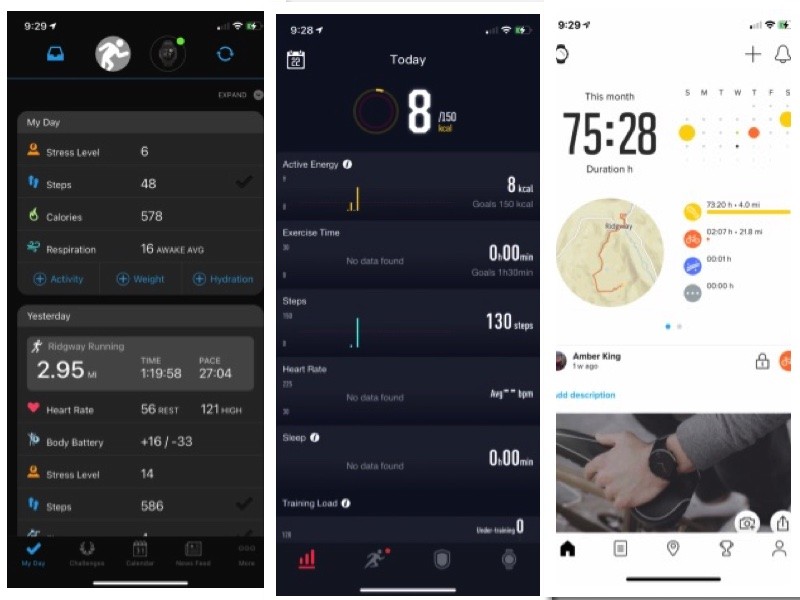
Apps are another consideration in this metric. Of all the manufacturers we reviewed, Garmin Connect has the most features, but the design left a bit to be desired, in our opinion. Suunto, Coros, and Polar have apps that are more stripped-down, less integrated, and overall easier to use. Suunto has a really beautiful layout that integrates photos, which we enjoyed. These apps were easier to figure out compared to Garmin, though none offer the same social ecosystem. Luckily, they all cross over to different ecosystems like Strava. You can also sync your data from these apps to the Apple Health app, which we think provides the best health metric visualization.
A look at the different home screens for each app. Left: Garmin. Middle: Coros. Right: Suunto.
Credit: Amber King
Accuracy
We know that accurate GPS recordings and metrics are important. Nobody wants wonky elevation data or elevated heart rate stats, especially with the cost of today's devices. We've been impressed with the watches in our test group, each performing adequately across the price ranges. Luckily all of the watches we tested now feature multi-band GPS satellite recording, with some even working in multi-frequency. GPS signal strength, satellite location, watch fit, and internal hardware all have a large impact on device accuracy.
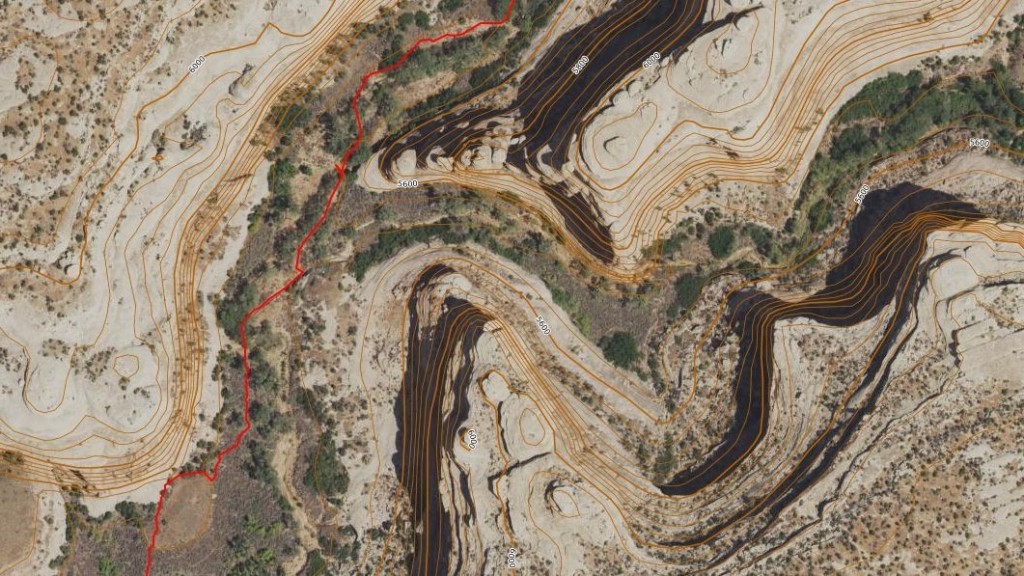
To evaluate the accuracy of each watch, we ran, biked, and hiked known distances to compare our watches and their track metrics. We also tested the watches deep in the canyons of Utah. Canyons are notoriously bad for GPS watches due to the limited open line of sight. All of the GPS watches we tested had good accuracy that we would trust. Most gave us smooth tracks that consistently stayed within 1-3% of the actual measured distance. Multi-band satellites produced the best results; those with dual-frequency performed even better. It's important to keep in mind that these advanced features generally use more battery, but these devices already have sufficient battery life to perform these tasks. With dual frequency becoming more standard, pretty much all of the premium models across the brands have excellent GPS accuracy.
We tested the GPS watches in deep canyons which are normally plagued with a bad line of sight but our top models had no difficulty achieving a satellite connection.
A 3D Google Earth look at the GPS track captured by the Fenix 7.
Heart Rate Monitor Accuracy
Testing heart rate monitors is quite a challenge. We observed heart rate data during runs and compared this to the information we received from a heart monitor chest strap. While most watches can accurately track the relative ups and downs you might experience while exercising, few are as accurate as a chest strap. This is largely due to variable fit on the wrist and a myriad of other factors. None of the heart rate monitors we tested were spot on. If you want precise heart rate readings, be sure to purchase a chest strap. That said, some did better than others, with the Garmin and Apple brands being a touch more accurate than others.
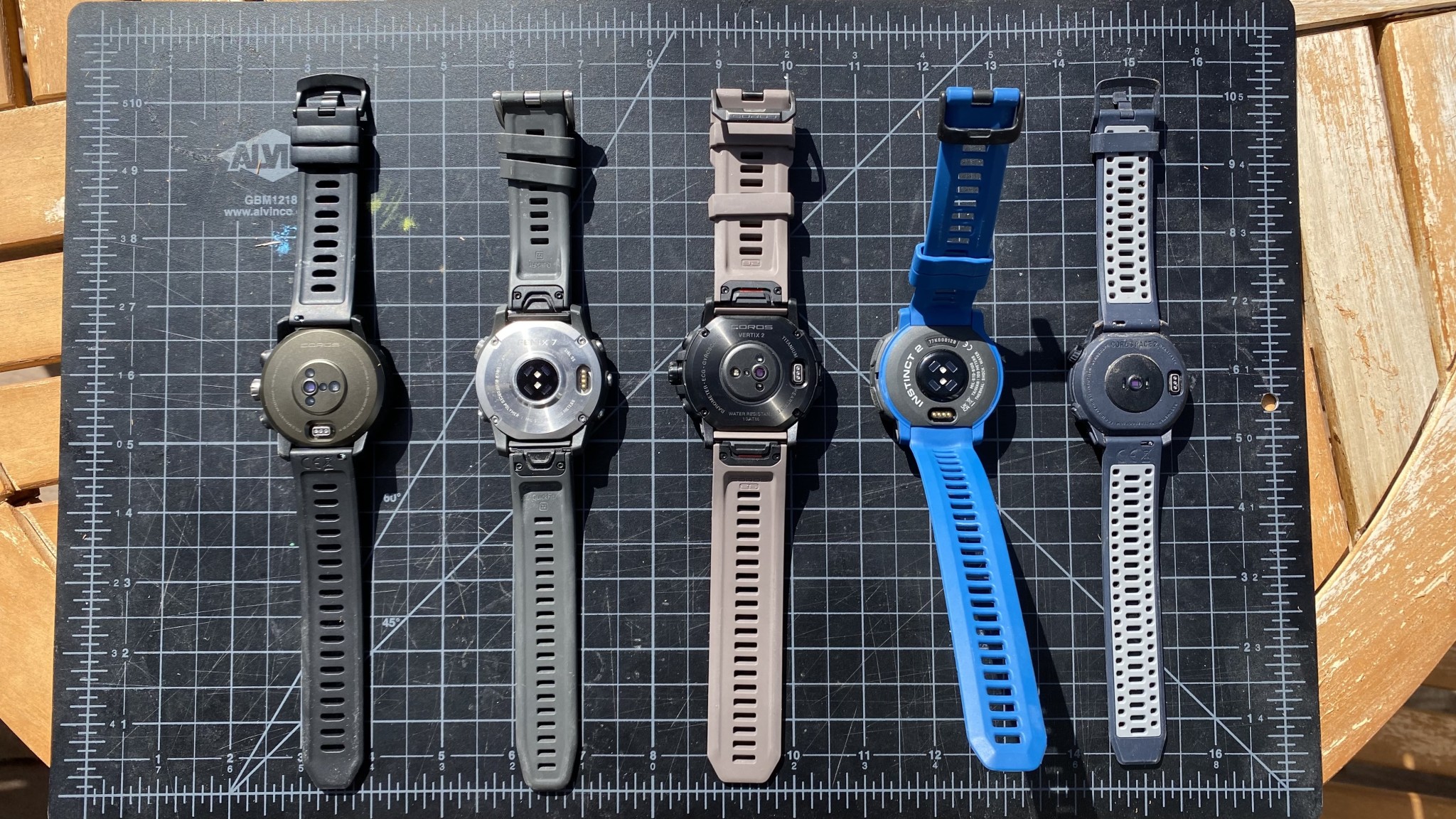
A look at the heart rate monitors across several of our top-scoring watches.
Credit: Matthew Richardson
The Forerunner 955 and Fenix 7 Pro Solar were almost spot on, with a good fit on our wrist and an average variation of just 0-4 beats per minute. The Suunto 9 Baro had variations of 3-5 bpm and 1-7 bpm. It's a larger watch, and we noted that it would lose a heartbeat during exercise more than others. With the updated HR monitor found on the Coros models, they are more accurate than ever before, also coming within a variation of just 2-4 bpm. Apple's unique rectangular design fits well on our wrist, and when paired with their excellent sensor, this matched our leading model, the Fenix 7 Pro Solar.
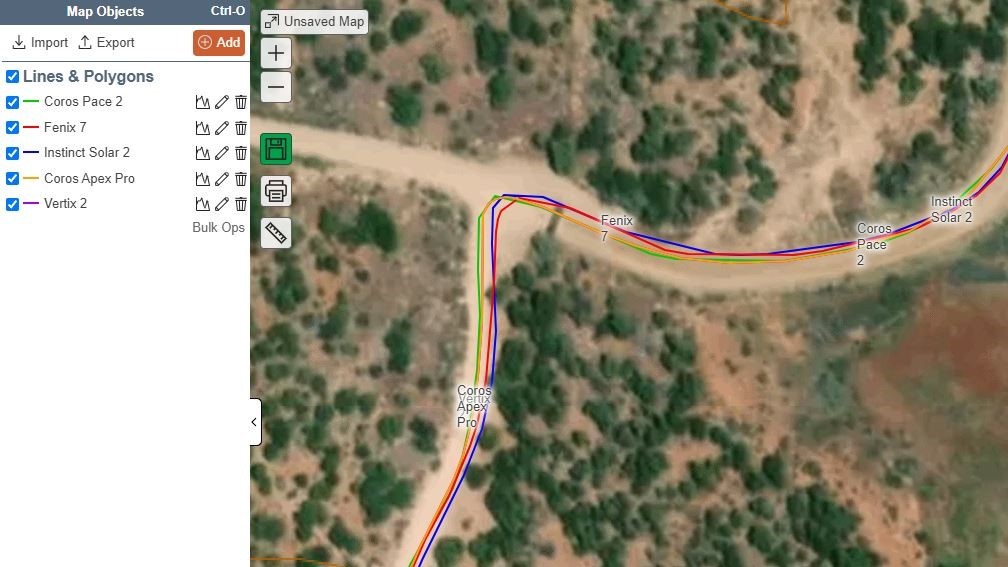
A look at the captured tracks of our top models - as you can see, they all did a great job.
Credit: Matthew Richardson
One important thing to note regarding optical heart rate monitors is that they do not provide quality data for people with dark skin, tattoos, or large amounts of hair or sweat under the monitor. This issue applies to every watch with an optical heart rate monitor because they use photoplethysmography (PPG), where light reflected from your arteries indicates your heart rate. Outside light, bursts of activity, interference from hair, tattoo ink, sweat, etc., can all affect readings.
Design
When considering design, we took a close look at the way each watch fits on the wrist and any notable issues with it during use. This included looking at the size and thickness of the body, using under clothing, accidentally turning buttons on and off, and the clarity of the screen. We also considered aesthetics, which will vary from person to person. Pick the design you like best that fits your budget and see how the externals stack up between each model.
We used these watches for all-day use, and our opinions will reflect that. If you have a dedicated wristwatch that will take priority over your active GPS watch, take that into consideration. We put priority on premium materials and a good design since this is something we wear 24/7 except while charging. The sleekest design and best for small wrists is the Suunto 9 Peak — we are impressed with the amount of technology packed into this unit. The Garmin Forerunner 955 also has a super-thin design that works great for running. Both the new Suunto Vertical Titanium Solar and Suunto Race are standouts in the lineup for design, and they are easily our favorites, offering titanium or stainless steel construction and an excellent bezel.
Suunto does an excellent job of making the Vertical Titanium Solar look great, but the UI and menu systems are slow. Trying to quickly move through the watch isn't an option due to the low refresh rate and lag time between screens.
We appreciate that Apple went against the grain, creating a unique design. The rectangular shape of the Apple Watch Ultra 2 may not be for everyone, but was a favorite of our team. The titanium bezel and ceramic back feel both rugged and premium. The always-on display is vibrant and easy to read under any sun conditions. The standard watch face is awesome-looking, and the adjustable red mode is perfect for a night under the stars. We hope that other brands start to incorporate this level of detail and precision into their units. The Suunto Race also has an excellent AMOLED screen that is similar to Apple's OLED display. For those that want the brightest displays, we'd recommend these two models.
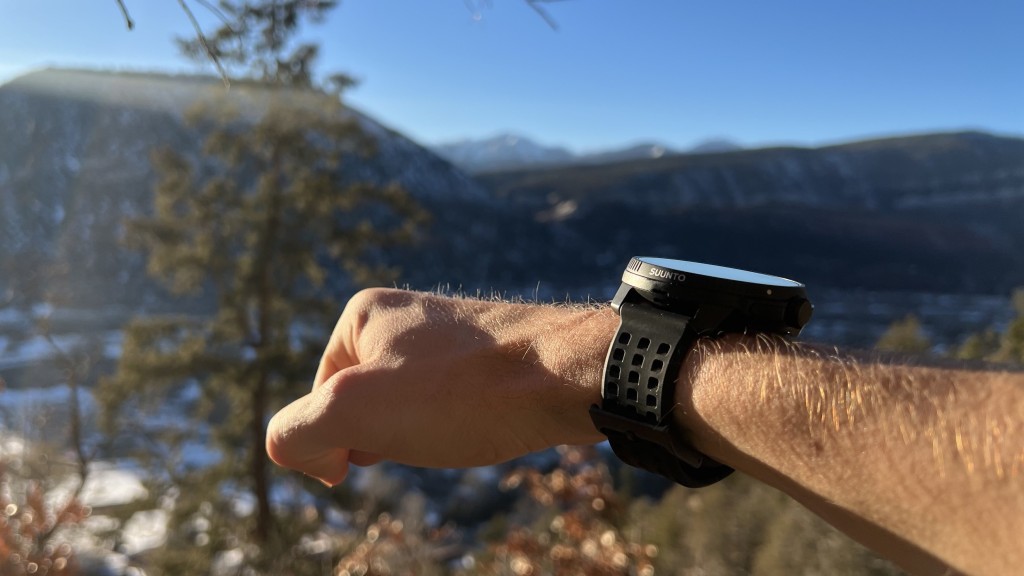
Screen brightness is important, especially when trying to see the screen out in the sunlight.
Credit: Matthew Richardson
We recommend the Fenix 7 Pro Solar or Vertix 2 for those looking for a more rugged design. Both of these watches are made with the most premium materials and are durable enough to withstand years of abuse. The 51mm case size of the Vertix 2 is great for those with a bigger wrist or who like the commanding-looking screen and bezel. If your primary activity is running, we would stick with the 47mm case size of the Garmin Forerunner 955 or Fenix models. The weight difference is noticeable for activities with a lot of arm movement.
Lower temperatures can run a battery down. Impressively, this was not the case with the Coros Pace 3.
Credit: Matthew Richardson
The Fenix 7 Pro Solar has an excellent screen design, with the best contrast and brightness out of any of the screens we tested. The data fields pop and the numbers are bolder than those on the Coros models. We found glancing at the data fields while running technical terrain to be the most fluid and natural. If you aren't doing intense activities, this may be less of a priority for you.
We found biking to provide the best solar charge due to the orientation of your wrist which is stable and easily visible to the sun.
Credit: Matthew Richardson
Similarly important, the dedicated buttons on the Fenix 7 Pro Solar make accessing the data screens easier while under intense activities. The scroll wheel found on the Coros models tends to be bumped accidentally, requiring a lockout mode to be enabled. This is easily disabled, but does create one extra step. We like the action and sureness of dedicated physical buttons, but if you use the swipe touchscreen feature or auto-scroll, this may be less important to you.
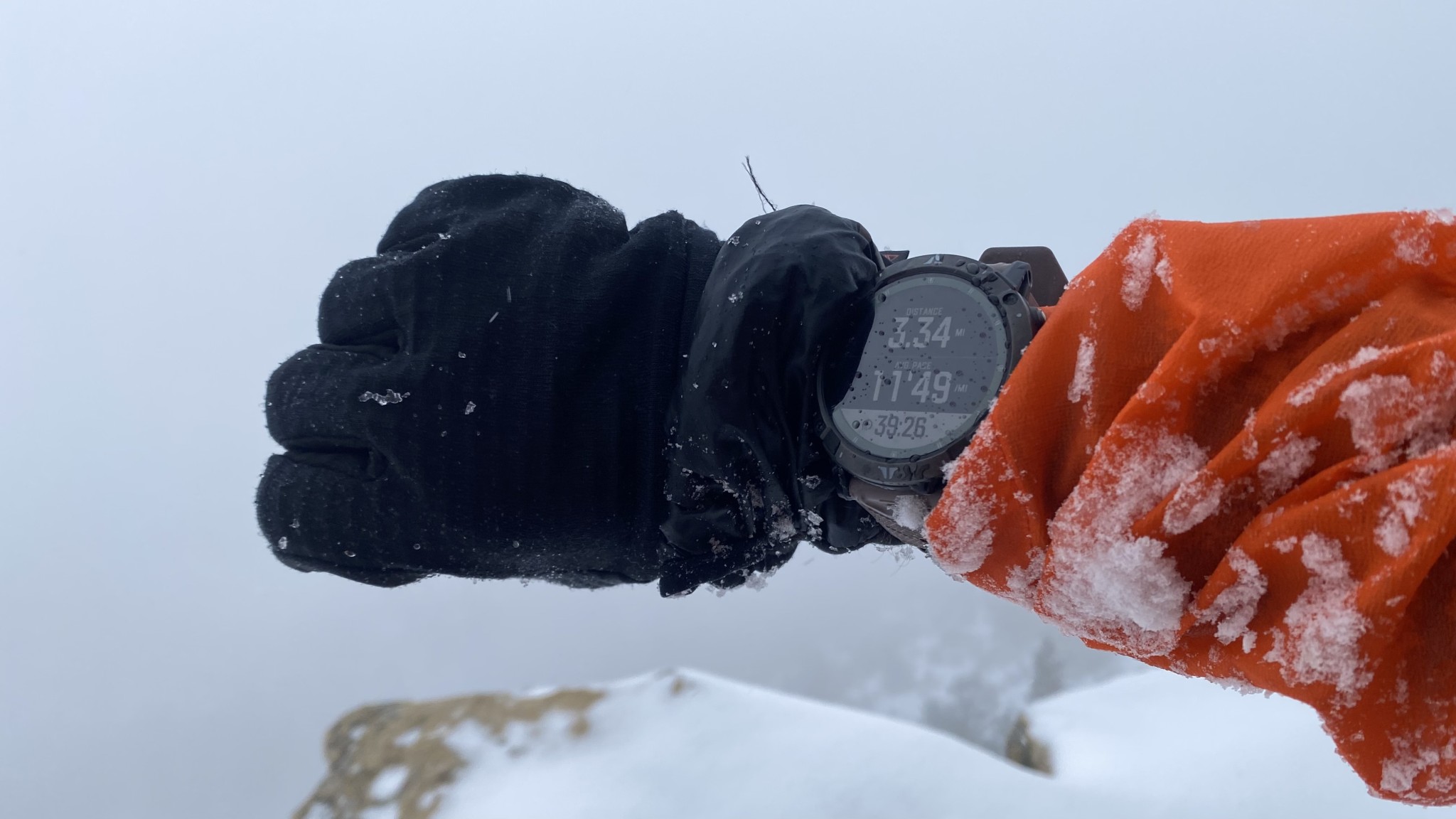
Our lead tester Matthew testing the latest Coros watches running in snowy Colorado.
Credit: Matthew Richardson
Conclusion
Buying a GPS watch is a big decision and a significant investment. You might check out our reviews for a more in-depth look at the various models we tested. You might find yourself researching for weeks or even months before finding the right one at the right price. We hope that our insights and in-depth comparative research have helped you find confidence in taking the plunge into this investment. Take our thoughts and use cases and determine what's most important to you. There is a GPS watch here for everyone, and we hope this makes your decision process a little easier. Have fun out there!