Looking for the best big wall aider? After testing for over a decade, we've researched 25+ different products. In this update, we compare 9 of the latest and greatest options to test side-by-side. On our testing pilgrimage, we've ascended over 100 different big walls from El Capitan in Yosemite to remote places like Baffin Island. We've tested them while top-stepping and free climbing. After months of testing each product thoroughly, we present award winners in three different categories; free-climbing, aid climbing, and budget options. Whether you're a grizzled vet or a green newbie, this review will help you find what you need.
GearLab got its start as the review section of SuperTopo, so you could say that our roots are in testing climbing gear. Our team of experts includes IFMGA guides and some of the best climbers in the world. So whether you're looking into ascenders for your next big wall climb, researching the best rock climbing ropes, dreaming about a new set of cams, or just need to pick up a new locking biner, we have you covered with in-depth reviews of the best gear on the market.Finding the Perfect Big Wall Aiders
We put various aiders to the test from brands like Metolius, Yates, Black Diamond, and more

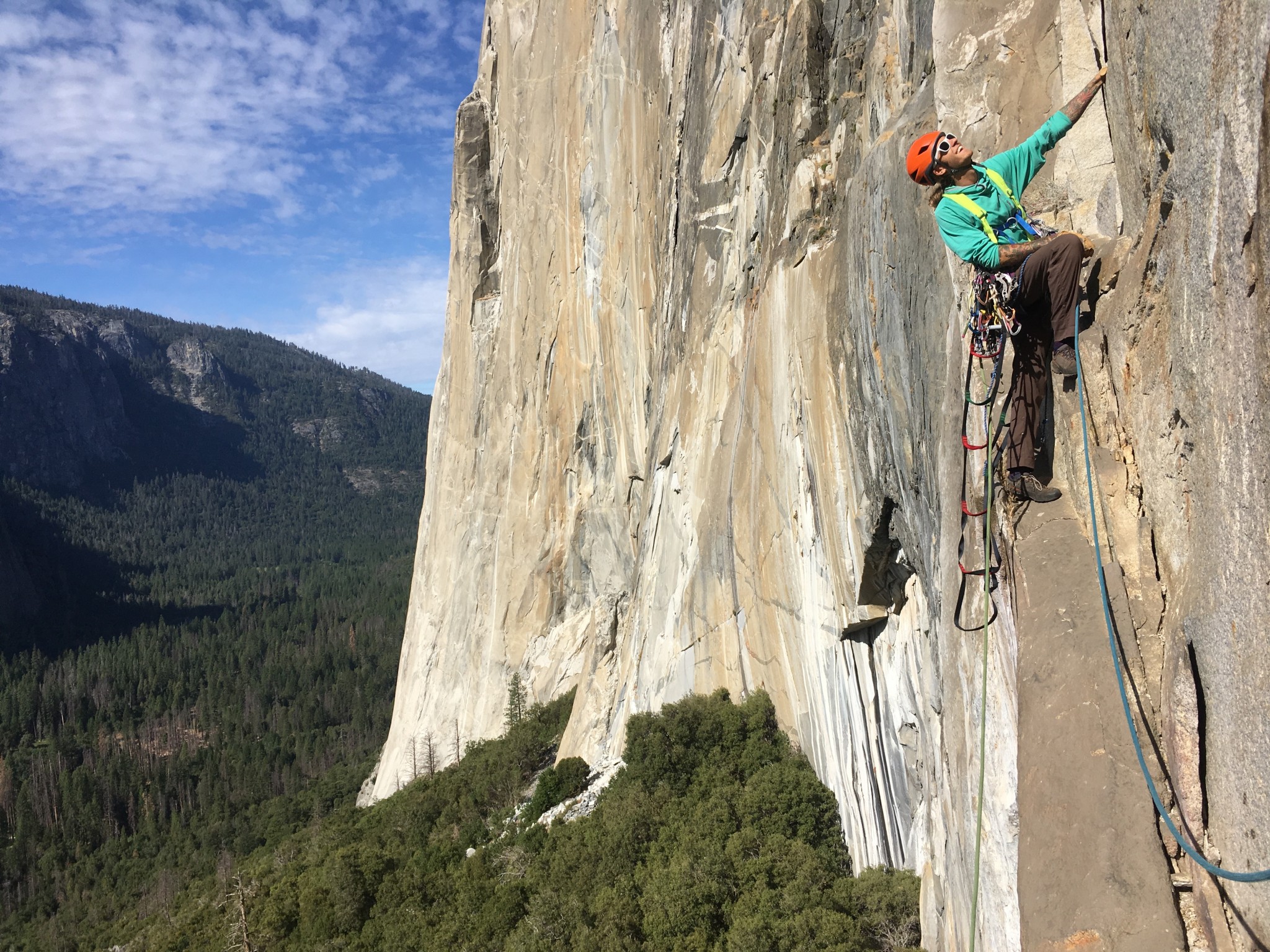
Credit: Steven Tata
By Chris McNamara ⋅ Founder and Editor-in-Chief
Tuesday March 28, 2023
| Awards |  |  |  | ||
|---|---|---|---|---|---|
| Price | $77 List $89.00 at Amazon | $85 List | $60 List $59.95 at Amazon | $50 List $49.95 at Amazon | $30 List $34.95 at Amazon |
Overall Score  |
|||||
| Star Rating | |||||
| Pros | Comfortable, intuitive to use, durable | Comfortable, intuitive to use, durable | Comfortable steps, easy to walk up, big grab loop | Great top-stepping, comfortable, good value | Surprisingly comfortable webbing width, low bulk, good value |
| Cons | Heavy, bulky | Heavy, bulky | No spreader bar | Not as durable | Bottom step flips inside out |
| Bottom Line | The best big wall aiders we have used | One of the best ladders we have used | The best value we know in an aider | ||
| Rating Categories | Yates Big Wall Ladder | Yates Speed Wall La... | Metolius 8 Step Lad... | Metolius 5 Step Aider | Metolius Alpine Aider |
| Comfort (35%) | |||||
| Ease of Walking up (35%) | |||||
| Ease of free Climbing (10%) | |||||
| Top stepping (10%) | |||||
| Durability (10%) | |||||
| Specs | Yates Big Wall Ladder | Yates Speed Wall La... | Metolius 8 Step Lad... | Metolius 5 Step Aider | Metolius Alpine Aider |
| Style | Ladder | Ladder | Ladder | Etrier | Etrier |
| Weight | 15.6 oz | 13.6 oz | 11.8 oz | 11.2 oz | 6.8 oz |
| Step Width | 1.75" | 1" | 1" | 1" | 0.8" |
| Length | 67" | 67" | 75" | 75" | 60" |
| Warranty | 1 year | 1 year | 1 year | 1 year | 1 year |


Show full specification details ▼Hide full specification details ▲
Best for Most Big Wall Applications
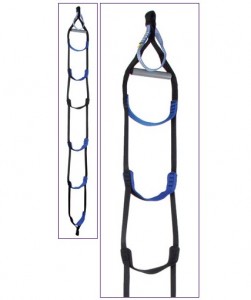
Yates Big Wall Ladder

REASONS TO BUY
Comfortable
Intuitive
Durable
REASONS TO AVOID
Heavy
Bulky
For sustained aid climbing routes and steep terrain, the Yates Big Wall Ladder is our favorite option. It features wide steps that are comfortable to stand in as you ponder your next placement and durable webbing that doesn't wear out quickly. There are six and seven-step options, with the seven-step being ideal for harder aid climbing. The Metolius 8 Step Ladder is another great option if you don't mind it missing the spreader bar. It scored up there with the Yates and is less expensive.
Read more: Yates Big Wall Ladder review

Chris McNamara on Horse Chute, El Capitan using the Yates Big Wall Ladder.
Credit: Ammon McNeely
Best Etrier-Style
Metolius 5 Step Aider

REASONS TO BUY
Great top-stepping
Good value
REASONS TO AVOID
Not as durable
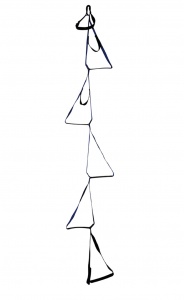
We like the Metolius 5 Step. Chris Mac did most of his El Cap ascents with these and loves them, except for the fact that they blow out after a while. He usually uses the 4 Step but always takes the 5 Step on hard aid such as Reticent Wall. The Metolius is very high scoring while being one of the least expensive products we tested. If you prefer ladder style, the Metolius 8 Step Ladder would be a great option.
Read more: Metolius 5 Step Aider review
Best for Versatility
Yates Speed Wall Ladder

REASONS TO BUY
Intuitive
Comfortable
REASONS TO AVOID
Bulky
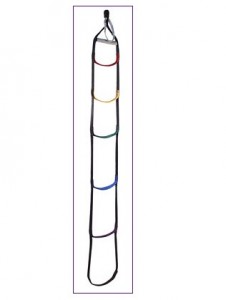
The Yates Speed Wall Ladder is a favorite for setting speed records. It's not as comfortable as the Yates Big Wall, which could be considered this aider's heavier, bigger brother. But cutting out some step width saves a bit of weight, which helps when it comes time to free climb. But this ladder has a bad habit of getting caught in cracks. It's not ideal for free-climb intensive routes like The Nose, but better suited to aid-intensive walls like Zodiac.
Read more: Yates Speed Wall Ladder review
Best for Free Climbing Walls
Metolius Alpine Aider

REASONS TO BUY
Step stiffeners improve comfort
Lightweight
REASONS TO AVOID
Bottom step flips inside out easily
For walls with abundant free climbing, like The Nose, Salathe, or Lurking Fear, lighter models are ideal. We like the Metolius Alpine for routes with minimal aid climbing because they are lightweight and not too bulky when clipped to your harness for free pitches.
Read more: Metolius Alpine Aider review
Best Budget Model
Fish Smart Aider

REASONS TO BUY
Durable
Amazing value
REASONS TO AVOID
Steps easily collapse
For value, you can't beat the Fish Smart at a price per pair that rivals some individual ladders. Chris Mac did his first handful of walls with them and liked them until he started preferring aiders with more reinforced steps and more top-stepping options.
Read more: Fish Smart Aider review

Chris McNamara on pitch 12 “The Grand Traverse” of Lurking Fear, El Capitan. Back when I used 4 aiders. I later learned how much better just two were. The Fish Smart Aiders I am using have last 40+ walls and are still going strong.
Credit: Brian Biega
Compare Products

Aiders are an essential piece of gear for any big wall objective.
Credit: Steven Tata
Analysis and Test Results
First off, let's get terms defined. We call an “aider” any type of webbing ladder used for aid climbing. There are two main styles: aid ladders and etriers. For a brief explanation: etrier-style models have loops on alternate sides of a main support fabric pillar, for your left or right foot, while ladder-style ones have a series of larger loops for either left or right foot with the support structures on either side, not one in the middle.
As Chris McNamara stresses in his How To Wall Climb chapters, it is your efficiency at aid leading that has the biggest effect on big wall success.
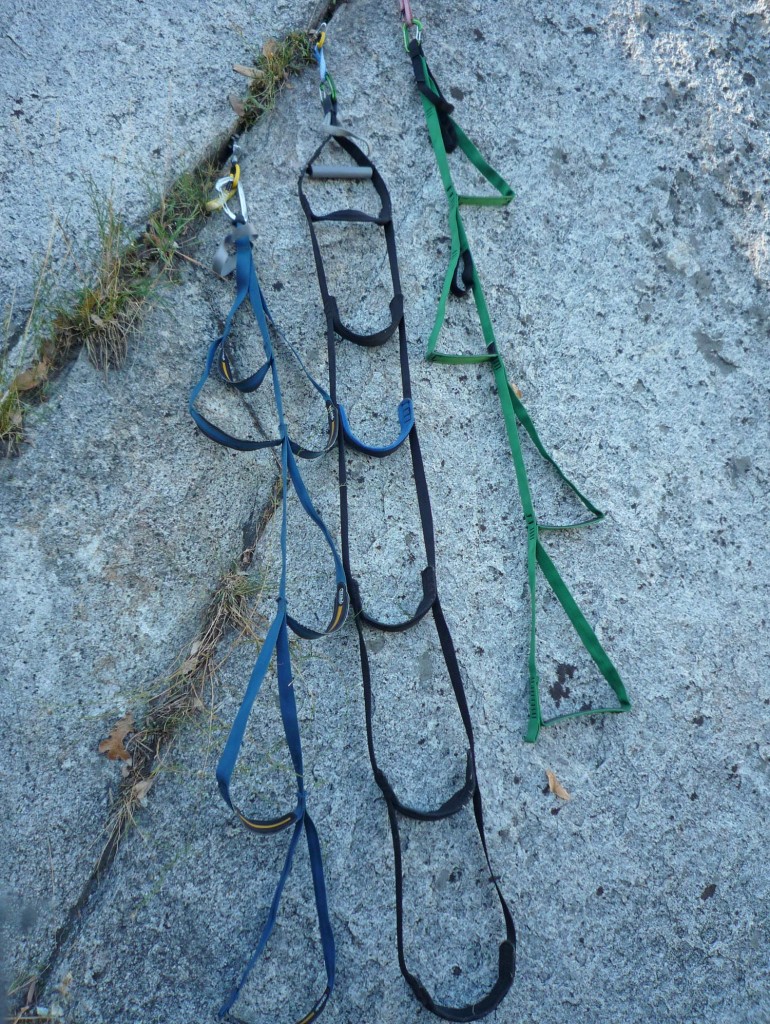
The ladder-style Yates Big Wall Ladder (center) on display between two different etrier-style models.
Credit: Chris McNamara
Value
When choosing climbing gear, it's easy to get sucked into spending way too much money. Here, we help you decipher which contenders will give you the most functionality relative to their price point. We believe the Metolius 5 Step offers the best value for your dollar, as it is high-performing and one of the most affordable products in our review.

The Yates Speed Wall aiders are comfortable for multi-day walls. Here we are leading the final pitch of the North America Wall on El Capitan in them.
Credit: Steven Tata
Comfort
The Yates Aid Ladder with a layer of 1.75" webbing on top of 1" (the widest we tested), combined with a sturdy spreader bar at the top, stood out as the most comfortable to stand in. Second was the Metolius 8 Step Ladder. The most comfortable etrier style model was the Metolius due to the extra Biothane layer in the step, which gives it more structure to stand on while lowering the squeeze on the side of the foot. The Metolius Alpine was surprisingly comfortable for being so small. The Petzl Gradistep was the only truly uncomfortable one to stand in, but that was to be expected for such a lightweight and compact model.
Ease of Walking Up
Overall, the ladder-style models were easier to walk up than etrier-style. Most noticeable was the difference when first stepping in on horizontal pitches. The etrier-style requires that you put your foot in the correctly oriented step, which is not always the step you want at the right height. Again, with its big reinforced steps, the Yates stood out for its ease of walking up. We have noticed it is especially easy for beginning big wall climbers to get the hang of them.
The Metolius 8 Step Ladder is easy to walk up until you get to the top steps, where a lack of a spreader bar makes it a little tricky to get your feet in the top steps. The Metolius 5 Step with its reinforced steps was the easiest etrier-style model to walk up. All the products above also did well in the “fishing with your foot test”, where you see how easy it is to get your foot in it the first time (without using a hand for assistance). Over time, most models without the reinforcement get harder to step into, and the steps want to stay narrower. The lightweight models like the Petzl GradiStep are the hardest to walk up, because the lack of structure makes the steps harder to get your feet into once weighted. We found we often had to use a hand to get our feet in.
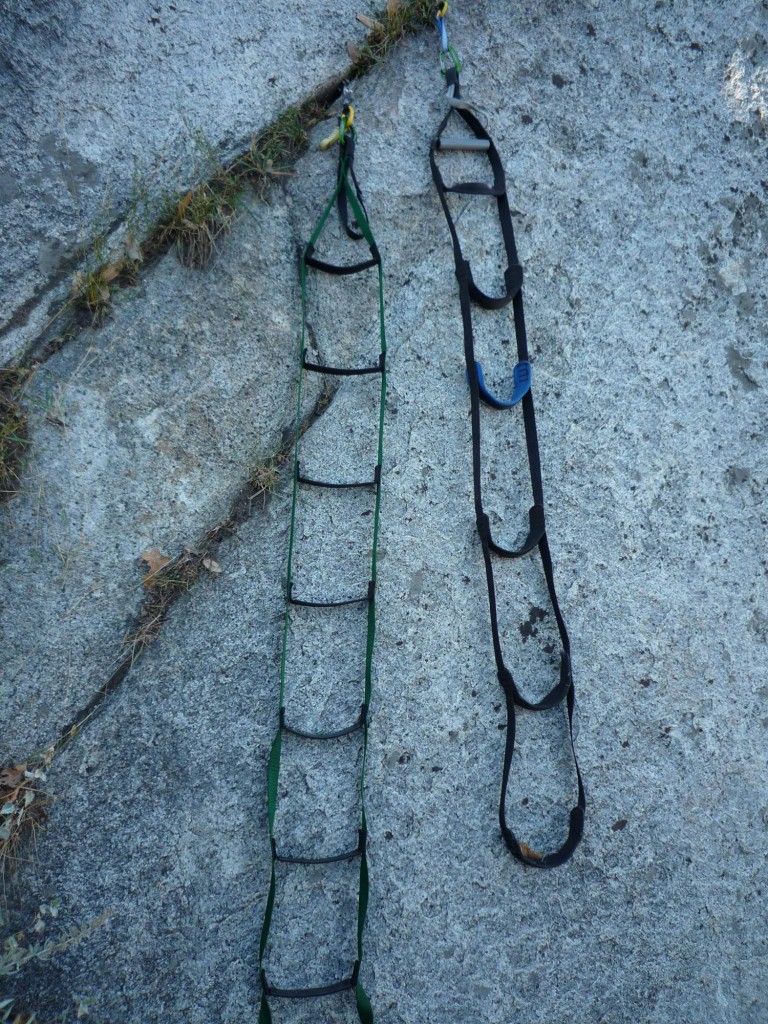
Metolius 8 Step Ladder (left) next to the Yates Big Wall Ladder. You can see the difference between the closeness of the steps: there are more on the Metolius which means its a little easier to rest with one foot a little higher than the other.
Credit: Chris McNamara
Durability
If you only climb a few walls, durability is not a huge issue. All the models we tested held up for at least 10 walls. However, if you are going to climb a ton of walls, you might want to consider how well-reinforced the steps are. Overall, the Fish Smart Aider is the most bomber. After 40-plus walls, it was still going strong. After 20+ walls, the Yates models do not show much sign of wear. After heavy use on 15-plus walls, the Metolius 5 Step blew out (the stitching became abraded, causing the steps to blow out completely). This could be solved with either more bar tacks or an extra piece of webbing sewed over the key stitching point or maybe using PlastiDip. We didn't blow out any other contenders, but we also did not use them as much.
Ease of Use Free Climbing
The Petzl GradiStep is one of the lightest models and folds up into its own incorporated storage bag. It was so low-profile and light that we almost forgot it was clipped to our harness when doing free moves. In contrast, the features that make the Yates Big Wall Ladder so comfortable mean it is very bulky when clipped to your harness, and the reinforced steps easily get caught in cracks. The Metolius 5 Step doesn't get quite as easily stuck in cracks, but the reinforcement that makes it so comfy can get really stuck. The Metolius Alpine was surprisingly comfortable for being so lightweight and not bulky. Aiders without urethane reinforcement, like the Fish Smarts, are less likely to get stuck in cracks when you bust a free move or two and want to let them dangle (as opposed to taking the time to bunch them up and clip them to the side of your harness).
Top-Stepping
Overall, the Metolius 5 Step, with sub-steps in the top two steps, gives you the most options for top-stepping. It also has the highest step, so on low-angle terrain it lets you reach the highest (unless you want to put your foot in the grab loop).
Of the aid ladder style, any model that does not have a spreader bar (like the Metolius 8 Step Ladder) is very hard to get in the top steps if you are only using two in total. The Yates Big Wall Ladder was better for top-stepping, but the Metolius Ladder did have a bigger grab loop so you can get your foot in for the occasional “super top-stepping” move.

Ammon McNeely on Horse Chute, El Capitan using the Yates Speed Aider (lighter version of Yates Big Wall Ladder).
Credit: Chris McNamara
Conclusion
The type of aider you choose will depend on the type of wall climbing you prefer. Just as important to consider is which one would best fit your technique. Almost every product we tested excelled in a certain application or was a great value.
— Chris McNamara
You Might Also Like