Hands-on Gear Review

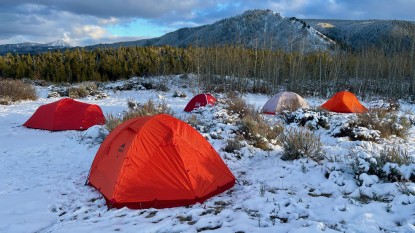
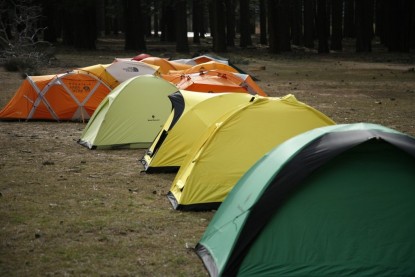
Compare four season tent ratings side-by-side >

MSR Fury Review

   
Best Buy Award

Four Season Tents

  • Currently 4.0/5
Overall avg rating 4.0 of 5 based on 1 review. Most recent review: June 17, 2011
Street Price:   Varies from $460 - $550 | Compare prices at 4 resellers
Pros:  Lightweight, strong zippers, good ventilation, high peak height, lots of pockets.
Cons:  Small vestibule and door, pole structure provides little support for walls, bad stuff sack.
Best Uses:  All-purpose winter use.
User Rating:       (0.0 of 5) based on 0 reviews
Manufacturer:   MSR
Review by: Max Neale ⋅ Review Editor, OutdoorGearLab ⋅ June 17, 2011  
Overview
The MSR Fury is a well-designed, versatile, and reasonably affordable all purpose four-season tent. Three 9mm DAC Featherlite NSL poles create a strong and tall inner tent while a small pole supported vestibule creates a shelter for gear and a space for storm cooking. Four pockets and a generous gear loft provide ample storage options for large and small items. A large and easily adjustable rear vent helps to promote airflow and manage condensation. The Fury is a versatile four-season performer capable of everything from ski mountaineering to high alpine ascents. Our only complaints lie with a lack of support in the rear sidewalls and its heavy and impractical stuff sack. We recommend the Fury over the company’s Asgard ($580, 8 lb. 8 oz.) because it has better ventilation (less condensation and safer for cooking), larger and more varied pockets, and a vestibule that is easier to open and close and better to cook in.

Of the 13 four-season tents we reviewed the Hilleberg Jannu ($735, 6 lb. 6 oz.) is most comparable to the Fury, but way better. The Jannu’s is stronger and faster to set up, the fabrics are stronger and lighter, the interior is more spacious, the vestibule is larger, and the ventilation better. Every detail, even down to the no-stretch Spectra guy lines and camming adjusters, are better on the Jannu. If you need a very high performance tent and can afford the additional $235, or 47 percent, we highly recommend it.

If longer gear laden trips into the most heinous conditions are your style, get either the Hilleberg Tarra ($835, 9 lb.) or the Mountain Hardwear Trango 2.1 ($525, 9lb. 13 oz.).

For a lighter single wall tent that’s nearly as strong as the Fury choose the Mountain Hardwear EV2 ($600, 5 lb. 14 oz.). Or, for the fastest and lightest single wall tent get the Black Diamond Firstlight ($300, 3 lb. 5 oz.).

Compare top rated competitors side-by-side >

  • Photos
Click to enlarge
Click to enlarge
Click to enlarge
Click to enlarge
Click to enlarge
Click to enlarge
Click to enlarge
Click to enlarge
Click to enlarge
Click to enlarge
Click to enlarge
Click to enlarge
Click to enlarge
Click to enlarge
Click to enlarge
Click to enlarge
Click to enlarge
Click to enlarge
Click to enlarge


OutdoorGearLab Editors' Hands-on Review

Likes
The MSR Fury is a well-designed, versatile, two person four-season tent capable of everything from backcountry ski tours to winter mountaineering. Weighing seven pounds, the Fury occupies a small niche between large, super strong double-wall mountaineering tents and lightweight, single wall alpine climbing shelters. The pole structure is unique, somewhat alien looking, but successful. It uses three 9mm DAC Featherlite NSL poles to form a tall dome with four pole intersections. Color-coded stitching and quick plastic clips for the fly make set up faster than larger tents such as the company’s Asgard and the Mountain Hardwear Trango.

For its short height, the Fury’s pole supported vestibule packs quite a punch. This forms a second small dome and serves as the tent’s single entrance. While it’s considerably less in height than other tents tested here, the vestibule is adequate in size (9 sq. ft.) and can provide some storage space while still allowing access to the inner tent. Cooking in it is a bit cramped, but possible. The Fury is the only tent we’ve ever reviewed that has pockets inside the vestibule. A triangular mesh pocket and nylon strap lie in each corner and serve as a door stuff pocket or space for quick access items. The vestibule also has three very large and strong zippers that allow for customized ventilation – this is great. A large metal ring and clip at the base of the vestibule zipper relieve tension from the zipper, too. For how small it is, this is a great vestibule.

The interior provides plenty of space for two, but cannot fit three. The Fury’s unique shape is the second longest (94 in.) of all tents reviewed in this class and also the widest (62 in.) This width, however, is only in the center – the ends taper to about 48 in. Two six foot testers fit very well lengthwise, but the tapered ends require occupants of any height to get cozy (the average width of a sleeping pad is 20in.) leaving you an extra four inches at either end). The bonus space along the sides is great for storing gear and accessories and makes sitting up quite enjoyable. The Fury has the largest peak height of any tent reviewed in this class (45 in., but only in the center).

Click to enlarge
MSR Fury. Notice the reinforced guy points.
Credit: Max Neale
Four reasonable pockets (they’re much better than those of the MSR Asgard, but not as large as the Trango’s) and an excellent gear loft provide ample storage space for weathering a storm. The gear loft (see photos) has a unique design that holds a headlamp like a lantern. This is an excellent feature.

A large mesh panel lines the rear of the tent. This unzips on one side and allows you to close a solid nylon panel and open and close the rear vent. The Fury manages condensation well. When used in warmer climes without the fly, the mesh panels are nice and airy, and provide a good view of the stars.

The Fury is reasonably strong when compared to the other 12 four-season tents reviewed here. It’s burlier than almost all single wall shelters, but likely the weakest of the double walls. This, however, doesn’t mean it’s not capable of handling severe conditions. We endured 60+ mph winds in the Fury (see below for description), and believe it’s more than sufficient for most people and most places.

Dislikes
Our main complaint with the Fury lies with its pole design. While it’s lightweight and strong overall, the poles do not adequately support the walls. There’s only one vertical pole to tension the entire length of the walls. This leaves two large (~4ft.) panels with no support. We found this to be detrimental in the rear of the tent during strong winds because the sides of the tent blew in, radically reducing the amount of interior space and whapping us in the head. Even with all guy lines fully tensioned the walls flap loudly and make sleeping difficult. This is not a problem in tents with more poles or better tensioning systems (Hillberg models, Trango 2, Mountain 25). When selecting a site we recommend orienting the end of the tent into the wind and sleeping head toward the vestibule. The can be tricky if the wind is coming from uphill, but it will make for a better night’s sleep as the panels by the vestibule are more tensioned (and less likely to whap you) than those in the rear.

Click to enlarge
MSR Fury pole structure. Note how the two panels to the left and right of the vertical pole have no support. This is bad in strong winds because the walls blow in.
Credit: Max Neale
The Fury’s single door and smallish vestibule make it better for mobile adventures than for base camping. We recommend a larger and stronger tent for extended mountaineering trips with lots of stuff and the possibility of being tent bound for days at time.

The worst part about the Fury is its stuff sack, which is designed like a rock climbing rope bag (a small flap rolls over the bag’s contents and cinches down). This design has been carried over from the Moss brand. Although it may function well for rock climbing, we much prefer a traditional, simple, and durable stuff sack (with no accessories) for multi-day trips. A traditional sack can easily be filled with rocks, snow or sand, and buried dead-man style as an anchor point. It’s harder to do this with the MSR stuff sacks and they’re heavier, too, so carrying them with you is less than ideal.

Best Application
All purpose four-season use.

Value
The Fury’s versatility (it makes for a great tent in any condition on most adventures) makes it a good value.

Other versions and accessories
A 9 oz. footprint is available for $40.

Click to enlarge
MSR Fury rear vent.
Credit: Max Neale

Max Neale

Compare this product side-by-side to top competitors >

Where to Buy?


Thinking about buying some gear we've reviewed? Help OutdoorGearLab out if you do. Just click on any of the above seller links and if you make any purchase, the seller will contribute a portion of the sale to help support this site. It won't cost you anything extra, and it's a simple way to help us fund our gear reviews. Thanks!

*Most retailers free shipping offers apply only to lower 48 US states using ground/economy shipping. See retailer's website for details.


OutdoorGearLab Member Reviews


Most recent review: June 17, 2011
Summary of All Ratings

OutdoorGearLab Editors' Rating:   
  • 1
  • 2
  • 3
  • 4
  • 5
 (4.0)
Average Customer Rating:     (0.0)
Rating Distribution
1 Total Ratings
5 star: 0%  (0)
4 star: 100%  (1)
3 star: 0%  (0)
2 star: 0%  (0)
1 star: 0%  (0)


Have you used the MSR Fury?
Don't hold back. Share your viewpoint by posting a review with your thoughts...

Write a Review on this Gear
Click to enlarge
MSR Fury
Credit: Max Neale
Where's the Best Price?
Seller Price
Oregon Mountain Community $459.94  -  8% off!
Amazon $463.96  -  7% off!
Backcountry $463.96  -  7% off!
Compare prices at 4 sellers >

*Help support OutdoorGearLab. If you click on one of the seller links and make a purchase, a portion of the sale helps support this site
Related Best-in-Class Review
The Best 4 Season Tent Review

The Best 4 Season Tent Review

We tested thirteen of the best four season tents in a head-to-head winter competition from the High Sierra to Chilean Patagonia to find the very best.
Video video review
Helpful Buying Tips
Get More OutdoorGearLab
Follow us on Twitter, be a fan on Facebook!
Subscribe to our Newsletter
Related Gear Reviews