Hands-on Gear Review

Compare four season tent ratings side-by-side >

Hilleberg Nammatj 3 Review


Four Season Tents

  • Currently 5.0/5
Overall avg rating 5.0 of 5 based on 1 review. Most recent review: December 10, 2012
Street Price:   $650
Pros:  Very strong and comfortable for its weight, sets up from outside, top-tier fabrics and poles, lots of headroom, spectra guylines and camming adjusters, clothesline.
Cons:  Only two pockets, no interior hang loops, metal zipper pulls rattle in wind and are hard to use with gloves.
Best Uses:  Everything: mountaineering, ski touring, backpacking, bike touring.
User Rating:       (0.0 of 5) based on 0 reviews
Manufacturer:   Hilleberg
Review by: Max Neale ⋅ Review Editor, OutdoorGearLab ⋅ December 10, 2012  
Overview
The Hilleberg Nammatj is the most versatile tent we have tested. It's strong enough to cross polar regions and scale tall peaks, yet also light enough to join you on shorter summer backpacking trips, and comfortable enough to live out of for extended periods in campgrounds. The Nammatj is the Swiss Army knife of tents. If were to have one single tent for all types of trips in all places, then the Nammatj would be it. In short: AMAZING.

See how this tent compares to the others tested in our Four Season Tent Review.

Compare top rated competitors side-by-side >

  • Photos
Click to enlarge
Click to enlarge
Click to enlarge
Click to enlarge
Click to enlarge
Click to enlarge
Click to enlarge
Click to enlarge
Click to enlarge
Click to enlarge
Click to enlarge
Click to enlarge
Click to enlarge
Click to enlarge
Click to enlarge
Click to enlarge
Click to enlarge
Click to enlarge
Click to enlarge
Click to enlarge
Click to enlarge
Click to enlarge
Click to enlarge
Click to enlarge


OutdoorGearLab Editors' Hands-on Review

The Nammatj takes versatility to the next level. This is significantly stronger, more comfortable, and slightly heavier than the company's Nallo and lighter and more comfortable, but not as strong as the Jannu. The Nammatj is available in two and three-person versions, each with an extended vestibule option (GT). We tested the Nammatj 3 GT.

Design Overview
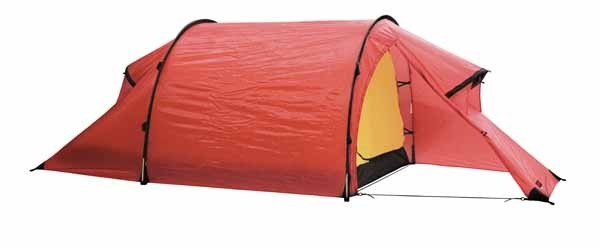
The Nammatj juggles weight, comfort, and strength like a professional. The Nammatj 2 and 3 are supported by two poles; thirds of the tent is enclosed and one third is a vestibule. The GT models have a third pole that creates a gigantic vestibule (25-30 sq ft, depending on the model) that makes storing gear and cooking ridiculously comfortable.

The Hilleberg Nammatj 3 has 17 sq ft of vestibule space.
Credit: Hilleberg
Click to enlarge
The Hilleberg Nammatj 3 GT has 30 sq ft of vestibule space. Note the large door. The vestibule extends from the middle pole to the right pole. Sleep with your feet to the left. Joshua Tree National Park, California.
Credit: Max Neale
Strength and Durability
The tent uses 10.2mm DAC Featherlite NSL Green poles, the best found in any mountaineering tent we've tested, and a super strong silicone coated nylon that breaks at 40 pounds (that's up to five times stronger than many backpacking tent fabrics and roughly twice as strong as the average fabric in the winter tents we've tested). Result: if the fabric gets punctured it it will be less likely to tear.

The Nammatj's low profile, aerodynamic design slices through wind like a hot knife cuts into butter. Our testers used it on Mt. Rainer, Denali (Mt. Mckinley, Alaska), basecamping in the Mohave desert (where there are often high winds), and for various other trips across the Western United States. Other people have used the Nammatj on record-setting polar expeditions.

The Nammatj is not a self-supporting dome tent meant for basecamping in terrible conditions where you leave the tent for extended periods. In general, tunnel tents are best for mobile winter trips where you move camp everyday. Without the threat of snowloading, the Nammatj will stand strong unattended in the worst summer storms.

Like the company's Keron, the Nammatj is loaded with small features that make it extremely strong and durable. Ground and door straps help to keep the poles at the proper angle, which makes it stronger in high winds. The zipper closures have clips to relieve stress and ground level guy points have metal rings that stand the test of time. Self-equalizing spectra guylines and camming adjusters allow you to easily pitch the tent alone in high winds. These and many more features give the Nammatj best-in-class strength and durability. Browse the photos above for more details on specific strength and durability related features.

Click to enlarge
Rear view of the Hilleberg Nammatj. Note the four ground level guy points and the self-equalizing vent guyline. These make the tent capable of withstanding severe winds.
Credit: Max Neale
Click to enlarge
Hilleberg Nammatj 3 GT in Alaska.
Credit: Brad Miller
Comfort
Tunnel tents offer the ultimate blend of comfort and strength. The Nammatj has steep walls, lots of head room, and is more comfortable than most dome tents that have low angle walls. For example, the Nammatj is much more comfortable than the the company's Jannu. Three people can easily sit up, which makes cooking more comfortable and is a huge benefit for extended stays in the tent. When comparing this to the Jannu, the primary differences are strength and comfort. The Nammatj reduces strength slightly and increases comfort. Both tents weigh the same. We believe the Jannu's strength is unnecessary for the vast majority of applications, and therefore we the recommend the Nammartj to most people. We took it up Denali and others have crossed Antarctica with it!

We've found that many people own one backpacking tent and one winter tent. If you're in this camp, you might further benefit from the three-person version, which will offer more comfort for car camping. Our testers choose the Nammatj over backpacking tents for car camping. In addition to being more comfortable, the Nammatj's solid nylon walls prevent sand from blowing inside.

The Nammatj has one pocket on each side wall, instead of tons of pockets found on dome tents. This reinforces the fact that this is a mobile tent that aims to save weight, rather than a basecamping tent that aims to provide all of the comforts of home. The photo and video below show the interior and vestibule.

Click to enlarge
Lots of space for sitting up and stretching inside the Hilleberg Nammatj. Note the clothes line.
Credit: Brad Miller
Versatility
All Hilleberg tents have removable inner tents. You can pitch the outer tent, a.k.a. rain fly, to save weight any time of the year, or use the tent for cooking and hanging out on group winter trips. This is a critical feature missing on winter tents from other companies. Big mountain guide services use the Nammatj GT and Keron GT for cook tents. They dig deep into the snow so you can stand up and sit down on benches. This is a much lighter alternative to colossal dome-shaped group tents.

The Nammatj 2 weighs 6 lb 6 oz and the Nammatj 3 weighs 7 lb. This is extremely light when compared to other winter tents. For example, the Mountain Hardwear Trango 3 weighs 11 lb 8 oz. Although these tents aren't technically in the same category (the Trango has greater static strength for basecamping) they are often used in the exact same conditions on the same big mountains. Saving 3.5 pounds is tremendous!

Limitations
The Nammatj has been refined nearly to perfection. We would prefer cords for zipper pulls because they are easier to grab with gloves on and rattle less in the wind. The way the inner tent is suspended from the outer tent limits the ability to create strong interior attachment points - there are none, which can be a drawback for extended living.

Tunnel tents take more skill to pitch than dome tents. Be sure to practice at home and go on a few smaller trips before venturing into terrible conditions.

Best Application
If you like to do bold things in the winter and also want a tent that can join you on summer trips of all types, we believe this is the single best model to get. It's the do everything tent.

Which Model to Get
We believe the standard three-person version offers the greatest versatility. It adds 6 sq. ft. of interior space for six additional ounces and $40 more. This extra space makes it more comfortable to sleep a third person or provides more interior storage space. For many people, the extra space will be worth the extra weight. Add 3 sq. ft. per person for the weight of one energy bar. The tent is available in three colors, another bonus.

Value
$610 for the Nammatj 2
$650 for the Nammatj 3
$795 for the Nammatj 3 GT

We believe the Nammatj 3 is the best value of these model. At $735, the Jannu is considerably more expensive. See the photo below for specific details on the different Nammatj models.

Click to enlarge
Hilleberg Nammatj details
Credit: Hilleberg

Max Neale

Compare this product side-by-side to top competitors >

OutdoorGearLab Member Reviews


Most recent review: December 10, 2012
Summary of All Ratings

OutdoorGearLab Editors' Rating:   
  • 1
  • 2
  • 3
  • 4
  • 5
 (5.0)
Average Customer Rating:     (0.0)
Rating Distribution
1 Total Ratings
5 star: 100%  (1)
4 star: 0%  (0)
3 star: 0%  (0)
2 star: 0%  (0)
1 star: 0%  (0)


Have you used the Hilleberg Nammatj 3?
Don't hold back. Share your viewpoint by posting a review with your thoughts...

Write a Review on this Gear
Click to enlarge
The Hilleberg Nammatj 3 has 17 sq ft of vestibule space.
Credit: Hilleberg
Related Best-in-Class Review
The Best 4 Season Tent Review

The Best 4 Season Tent Review

We tested thirteen of the best four season tents in a head-to-head winter competition from the High Sierra to Chilean Patagonia to find the very best.
Video video review
Helpful Buying Tips
Get More OutdoorGearLab
Follow us on Twitter, be a fan on Facebook!
Subscribe to our Newsletter
Related Gear Reviews