We buy all the products we test — no freebies from companies. If you purchase through our links, we may earn a commission, which helps support our testing.
Our outdoor experts have tested close to 50 of the best four-season tents over the last 13 years. This review features 15 of the market's most tried and true models, tested by our team, including internationally certified guides, weekend warriors, and recreational expeditionists. We've tested across the globe, in all seasons, enduring conditions of sandy deserts, windswept ridges, frigid lows, and hot highs. After field testing, we meticulously assessed key features and noted which tents were best for particular niche conditions. All of this research is done to help you find the best tent, no matter your budget.
Editor's Note: Our 4 season tent review was updated on April 17, 2024, to include information on our testing process and recommendations for alternative picks for each award winner.
Measured Weight: 6.87 lbs | Floor Dimensions (L x W): 93 x 57 in
REASONS TO BUY
Very stormworthy
Highly resistant to snow loading
Pitches quickly from outside
Great ventilation
Multiple setup configurations
REASONS TO AVOID
Small zippers are slightly harder to grab
Less headroom than other models
A bit heavy
Expensive
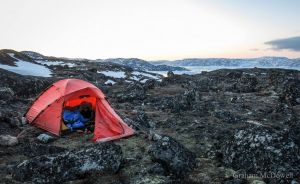
The Hilleberg Jannu is a versatile shelter for mountaineering and alpine climbing. It strikes a nice balance between something that is expedition-worthy but is still light enough to take into your local mountain range. Our testers love the ease of setup, bombproof storm protection, and respectable weight, making this our highest-rated overall tent for good reason.
Made for high-altitude climbing and mountaineering, the Jannu does have a few disadvantages; it's considerably less comfortable to hang out in than other full-blown expedition-focused tents, and it's expensive. Also, while not nearly as heavy as full-blown expedition models, it is still a bit heavier than most lighter-duty 4-season models. But if you're looking for a time-tested stormproof shelter that's a breeze to set up and cost and/or weight savings aren't as critical, you won't be disappointed with this tent's performance. If you like the idea of this tent but need to save a few bucks, The North Face Mountain 25 is a totally decent alternative.
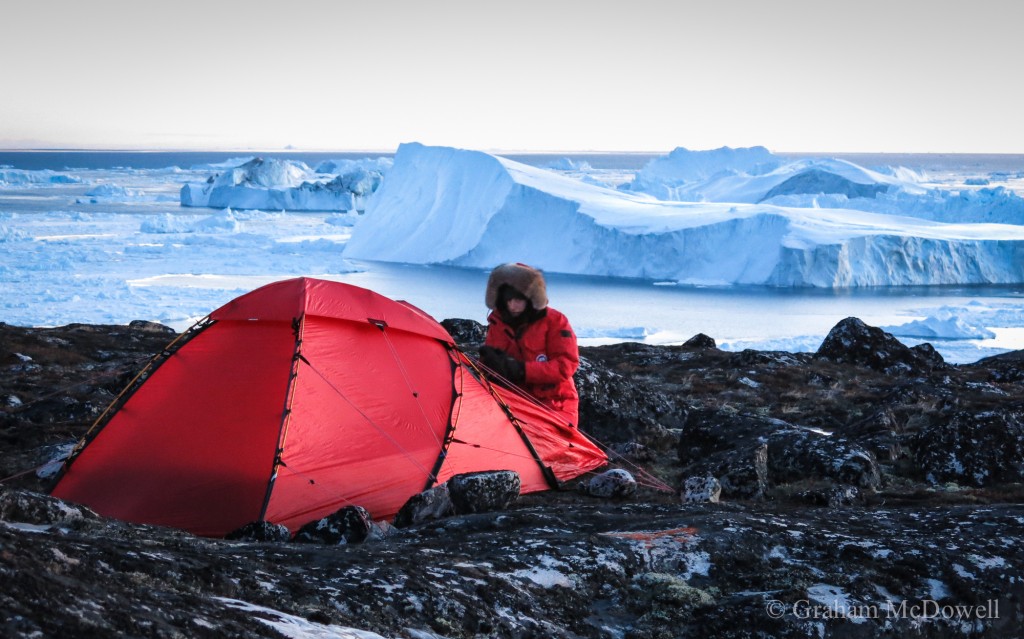
On extended expeditions, especially in harsh, remote destinations, the livability of your tent becomes more important than weight. Vanessa Kiss prepares for a cold night in the Jannu in western Greenland.
Measured Weight: 3.61 lbs (w/o vestibule) | Floor Dimensions (L x W): 87 x 43 in
REASONS TO BUY
Waterproof single wall
Good condensation management
Lightweight and small
High-tech materials and quality construction
Easy to set up and break down
Optional vestibule available
REASONS TO AVOID
Less roomy than other models
Poles catch on sleeves during setup
Expensive
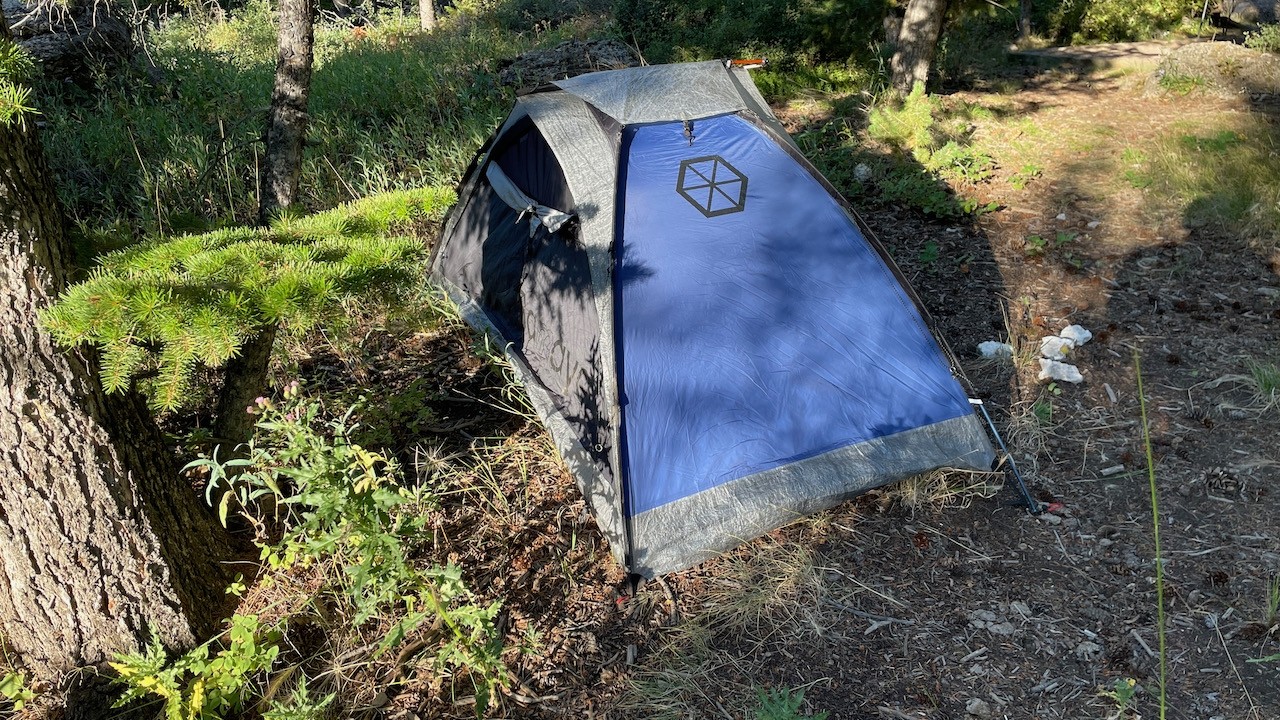
The Samaya2.0 is one of the market's lightest, truly waterproof 4-season tent options, and it is setting a new standard for high-level alpinism internationally. Traditionally, single-wall shelters were compact and saved weight, but they performed poorly in the rain. Advances in materials technology have spawned the next generation of single-wall tents, and Samaya is leading the charge.
The Samaya2.0 performed exceptionally well during an intense late autumn storm in the Tetons that began with rain and transitioned to sub-freezing temps followed by heavy snow. Not a drop of moisture entered this cozy shelter. While it is a bit tight for two, it's also just the right size for that high-alpine bivy site that won't accommodate a larger footprint. If you're ready to step up your single-wall tent game, the Samaya is a game changer. We also like the lightweight and minimalist Hyperlite Mountain Gear Ultamid 2, but many of its components are sold separately.
Measured Weight: 8.50 lbs | Floor Dimensions (L x W): 86 x 54 in
REASONS TO BUY
Great price point
Strong and livable design
Above average versatility
REASONS TO AVOID
Not as light as other double-wall tents
Pole sleeves aren't as quick to set up
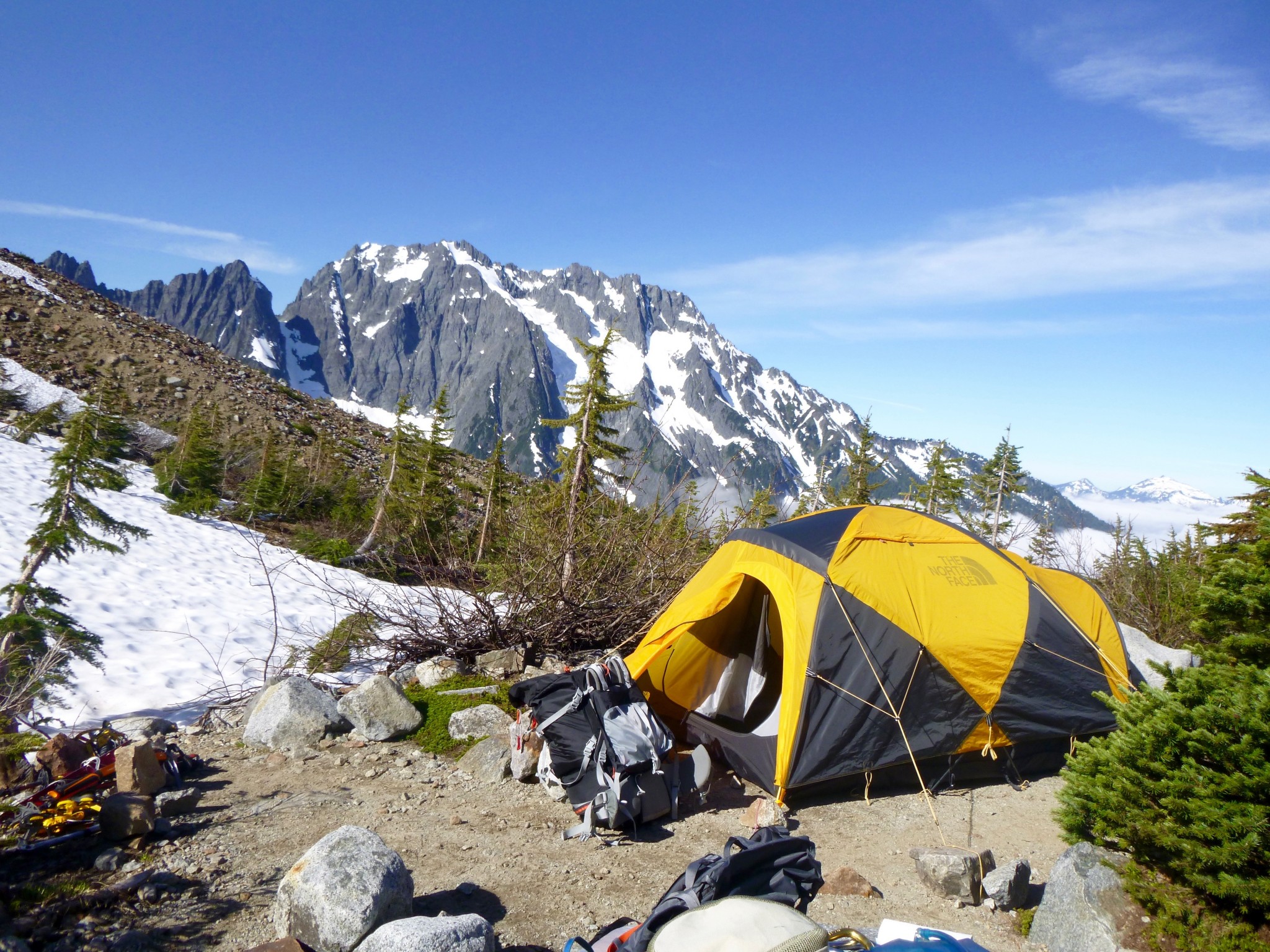
The The North Face Mountain 25 is a great expedition and winter camping tent with a robust design. For the price, it's hard to find something as spacious and livable that's also well-made and easy to use. Its niches include general and high-altitude mountaineering, winter camping, and base camping.
The Mountain 25 performs superbly in inclement weather conditions. Heavier than many double-wall 4-season tents, the low cost and stormworthy construction make this tent a favorite for many mountaineers and guide services. If you want something you can climb with but that's also a little more comfortable for winter camping, and you have greater mountain range ambitions, we recommend this tent. In the same price range, the SlingFin CrossBow 2 is a decent option and much lighter weight, but it's more complex to pitch.
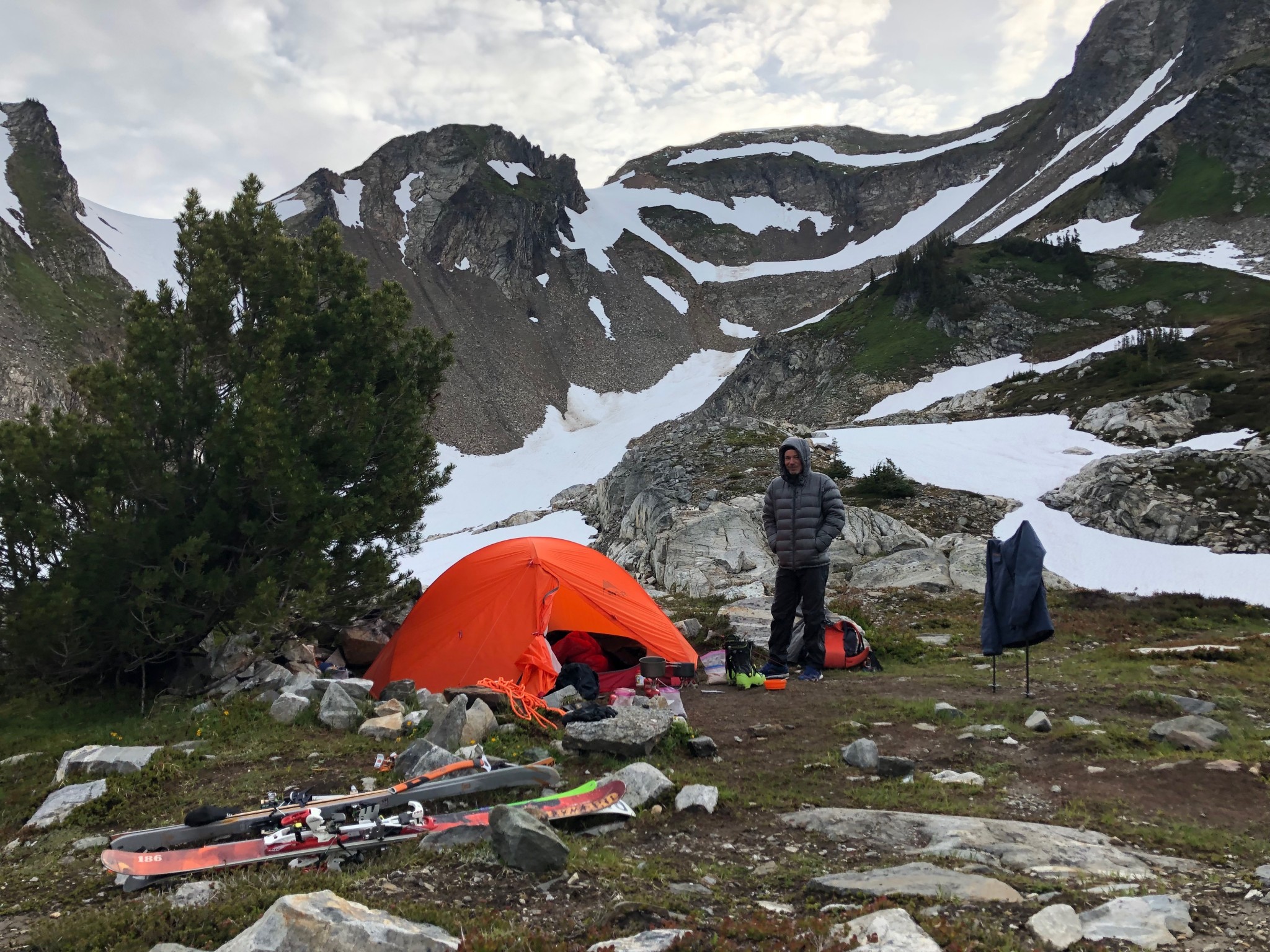
If extended trips, extreme conditions, or expedition use are in your plans for the future, a sturdier tent with more poles and pole crossings will easily be worth their weight. The North Face Mountain 25 on an early season trip in the North Cascades.
Measured Weight: 1.49 lbs (w/o insert, stakes, or pole)| Floor Dimensions (L x W): 83 x 107 in
REASONS TO BUY
Very lightweight
Good at managing condensation
Waterproof
Packs down small
Excellent quality and design
REASONS TO AVOID
Stakes, insert, and pole are sold separately
Time-consuming setup
Must be anchored very well to withstand strong winds
The Hyperlite Mountain Gear UltaMid 2 is extremely lightweight, especially if you use your own trekking poles strapped together to create its central support. It is also highly waterproof, with not a drop of water or flake of snow getting inside during our testing in a multi-day rain and snow storm. On top of that, it is very roomy for two people and their gear. It's not cheap, and many aspects are sold separately (like a bug net insert and floor), but for the right user, the customizable nature will be appealing, and the high-quality materials ensure you'll get years, if not decades, of use.
The UltaMid 2 performs well in the wind, but only if you spend a fair amount of time anchoring it. While it comes with plenty of cord for that purpose, it does not come with other accessories, like stakes, an insert or tent body, or a central pole — typical for a mid or “pyramid tarp.” Those are available for purchase separately, but it would be nice if at least stakes were included. If you know you'll be camping somewhere with pesky insects, you'll want to purchase an insert with bug netting. The UltaMid2 is a niche option, but for those who need to travel ultralight and fast, it's excellent. We also love the Samaya2.0 for going ultralight, but it'll cost a bit more.
Measured Weight: 7.13 lbs | Floor Dimensions (L x W): 87 x 55 in
REASONS TO BUY
Spacious floor area and headroom
Quick to set up and break down
Two side entry doors with nice vestibules
Colorful ambiance
REASONS TO AVOID
Doesn't come with enough stakes or cord
Tedious rainfly attachment
Mesh storage is too big and loose
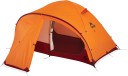
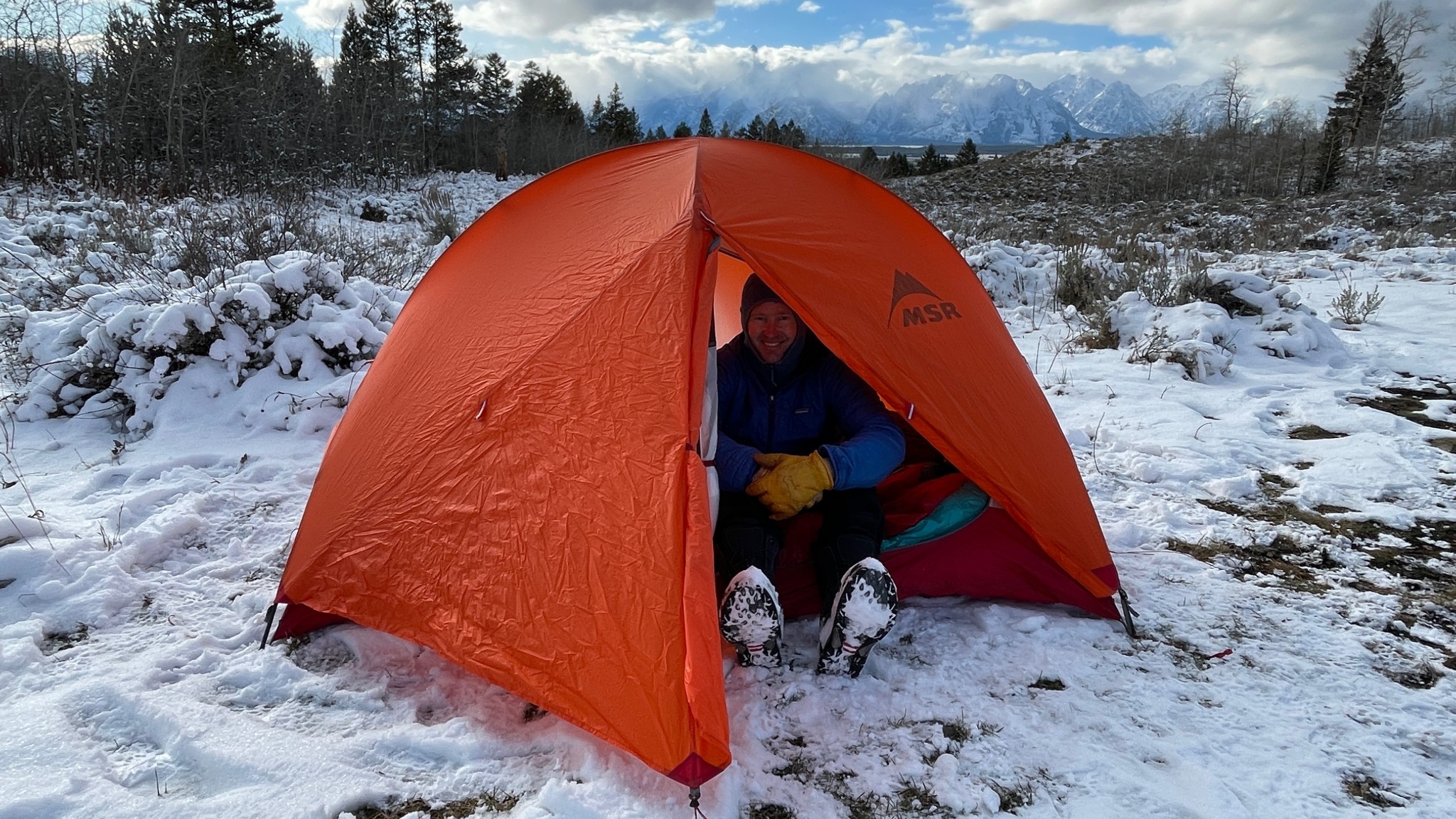
The MSR Remote 2 is one of the most comfortable tents in our lineup. It strikes a nice balance between an ultralight single-wall tent and a full-on expedition tent, which tends to be heavier and bulkier. The best feature of the Remote 2 is how spacious it is. It was plenty long enough for our 5'10" tester, with room to spare from head to toe, and the shape and height of the ceiling make it easy to sit up and adjust your clothing layers. Double-sided doors and vestibules offer two people their own storage space and entrance, and the amber-hued indoor ambiance is quite relaxing.
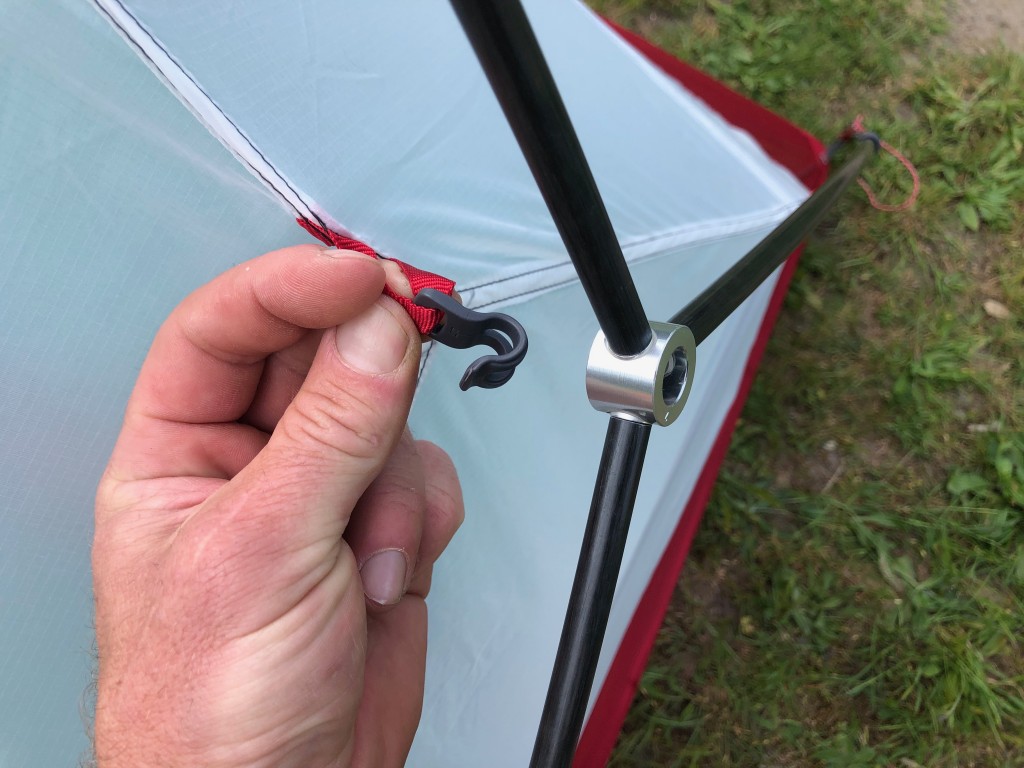
While the Remote 2 is faster than most to set up and break down, the rain fly attachment system isn't the slickest. It consists of grommets that hook onto the pole ends, and, without a pull tab, we had to remove our gloves to attach and disassemble the rainfly. On the other hand, the tent stakes are awesome, with a round loop of cord woven through a hole in the end, making them some of the easiest stakes we've ever pulled out of the ground. Unfortunately, MSR doesn't include enough of them, or enough cord, to sufficiently anchor the tent in high winds. That said, the condensation issue of past models of the Remote has been addressed with an effective venting system. Overall, if you're looking for a really great all-around tent that performs well while base camping, ski touring, river running, or general mountaineering, this is certainly one of our favorites. However, our favorite double-wall expedition tent is the Hilleberg Jannu, which earns a few extra points for its storm resistance, construction quality, and versatility.
Measured Weight: 9.09 lbs | Floor Dimensions (L x W): 85 x 64 in
REASONS TO BUY
Strong and proven in the world's most extreme places
Incredibly spacious
Great pockets
Easy to pitch in higher winds
Big vestibule
REASONS TO AVOID
Not the best headroom despite roomy dimensions
Heavy
Okay condensation performance
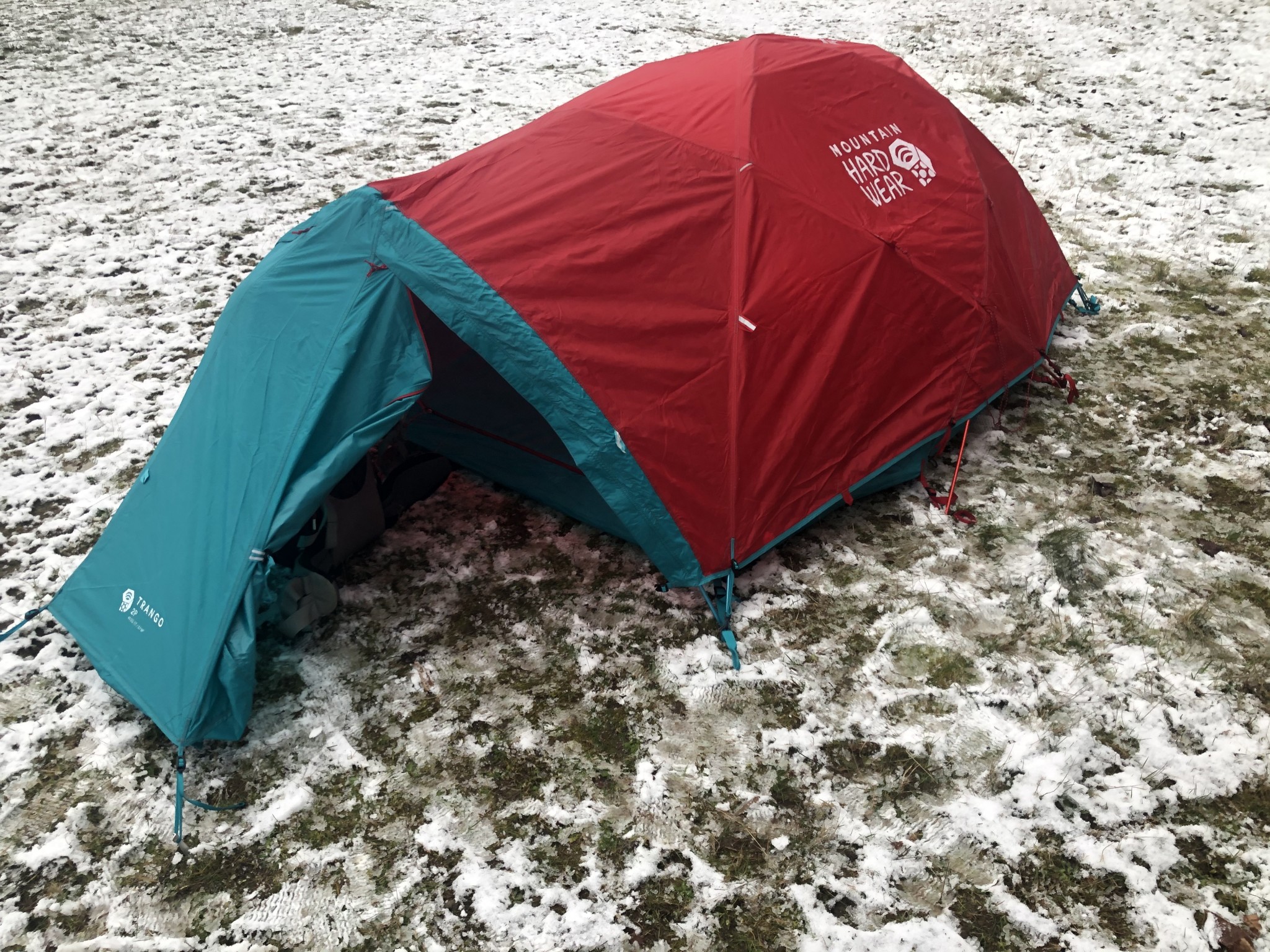
The Mountain Hardwear Trango 2 is one of the most expedition-worthy 4-season tents ever built. It's perfect for harsh weather or extended base camp adventures. It has been from Antarctica to Mt. Everest to the North Pole and has accompanied people on some of the most remote expeditions to the ends of the earth. While it's overkill for more modest summertime mountaineering, it's worth every bit of weight when the conditions turn gnarly. With its 4-pole design (not including the 5th hooped vestibule pole), the Trango 2 is easily one of the strongest shelters on the market and is as easy as it gets to pitch in high winds. It's also the roomiest two-person shelter in our review, and the spacious vestibule will store plenty of gear or provide a place to cook when you can't hang outside any longer.
The Trango is 100% designed for expedition use, and these attributes make it great for nuclear wind or dumping snow; however, it's a little on the heavy side for multi-day ski touring or summertime mountaineering. If your excursions lean more towards modest alpine objectives, you should choose a lighter and more packable tent like the Samaya2.0 or the more affordable Mountain Hardwear AC 2. But for those looking to shelter from high winds and heavy snowfall, the Trango is a tank of a tent that acts as an excellent home away from home in the world's most extreme environments.
The Trango 2 is built with expeditions, long-term living, and some of the world's fiercest weather in mind. It's perfect for extended trips where strength and livability trump weight in importance.
Credit: Ian Nicholson
Compare Products
Where will your 4-season tent take you?
Credit: Ian Nicholson
How We Test 4 Season Tents
Our review process starts with combining our expertise with thorough research into the market. Once we decide on our lineup, we purchase each tent at full cost, and create a test plan determined by the most important factors in the functionality of a 4-season tent. With years of ongoing testing for many tent models and various sources of information, we gain valuable insight into things like ease of use and quality of construction and can assess which models fare better or worse in a diverse range of weather conditions. The tents in this review have seen high winds and countless snowy, rainy, stormy, and sunny days. We weigh each model and examine their construction quality, and we time how long they take to set up. We also consider how difficult each tent is to set up in challenging conditions like blowing wind, rain, or blizzard conditions. We've been testing tents continuously for over a decade in various locations, like Alberta and British Columbia, Alaska, Patagonia, Antarctica, Peru, Bolivia, Aconcagua, and other locations worldwide. For more on our testing procedures, check out our How We Test article.
Our testing of 4-season tents is divided across five rating metrics:
Weather and Storm Resistance (30% weighting)
Ease of Use (30% weighting)
Weight (20% weighting)
Quality of Construction (10% weighting)
Versatility (10% weighting)
There are many good four-season contenders, and they each excel at different things. Some are stronger, some lighter, some more adaptable. Therefore, it is essential to figure out your needs and what types of trips you plan to use your tent for. Here, we're testing on the East Ridge of Eldorado, North Cascades, WA.
Credit: Ian Nicholson
Why You Should Trust Us
This review has been crafted by long-time GearLab contributors and professional mountain guides Brian Smith and Ian Nicholson. Brian is an internationally licensed IFMGA/UIAGM mountain guide who has guided and lived in tents in Alaska, Peru, Canada, Europe, and throughout the United States, including the Tetons, the Winds, the Cascades, the Sierras, and the desert southwest. Living in a tent throughout such a wide range of environments and spending time camping in all four seasons over more than 30 years has given Brian a wealth of experiential knowledge to help you find the right tent for your objectives.
Ian is also an IFMGA/UIAGM guide who has spent almost 2,000 nights sleeping in a tent over the last two decades. He is also a member of the AMGA (American Mountain Guides Association) and an AIARE National Instructor, teaching professional-level courses for both professional training bodies. Ian has guided ten Denali expeditions and completed five more trips to other areas of Alaska ranges in addition to first ascents in Patagonia, the Waddington Range, the North Cascades, and more than 30 week-plus long ski traverses around the world. As a result, few people can offer the level of expertise and insight he can regarding 4-season shelters.
We compared each oneand how they stood up to rain, snow, and wind as well as each model's weight, livability, adaptability, and versatility,
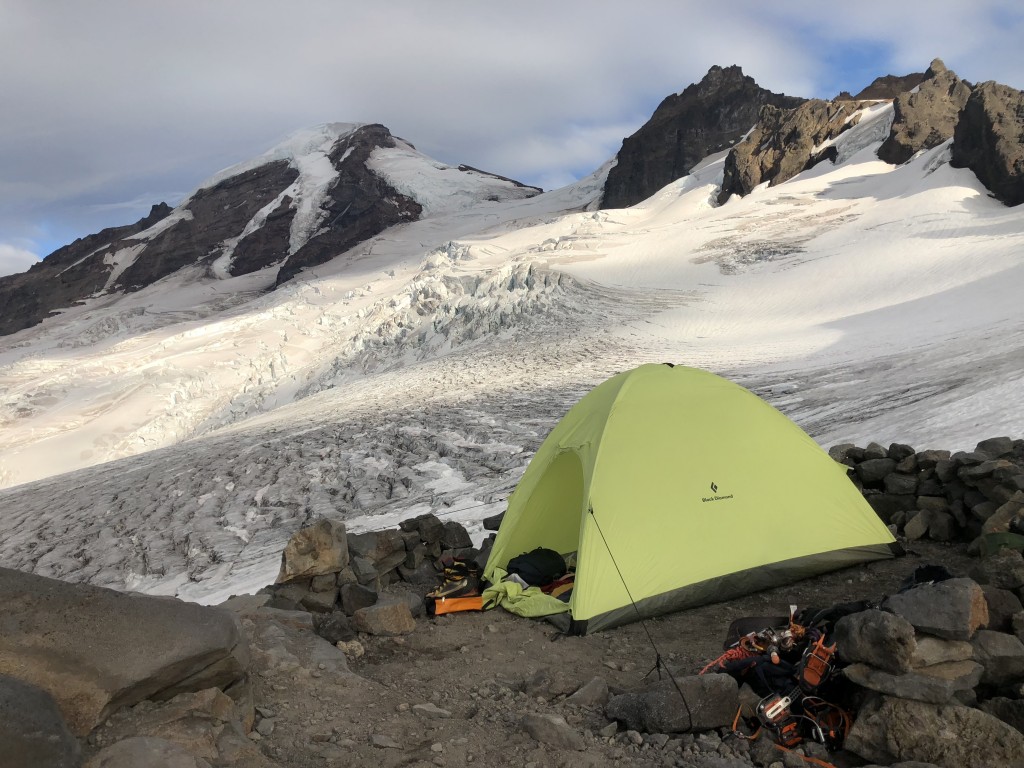
To make sure we got an extremely well-rounded comparison we made sure to draw on the experience of over a dozen mountain guides, professional climbers, and guide services. Here a Black Diamond Firstlight is pitched above the Coleman Glacier with Mt. Baker looming above.
Analysis and Test Results
We've selected a wide variety of 4-season tents for this review. We test super lightweight to heavy and mega stormworthy. All the options in this review can withstand a host of environments, from super sunny conditions to cutting winds. Each is scored against all the others in every metric to help you filter out [buying advice|which tent buying considerations] are most important to you and your objective.
Value
If you've been searching for a 4-season tent, you know they generally aren't cheap. But we're here to help you assess these shelters without overpaying for your needs. Standing out among the rest for value is The North Face Mountain 25. It's a solid double-wall tent at a reasonable price and performed at the top of the pack. The Hyperlite UltaMid 2 has an initial price lower than many, but keep in mind that many components are not included (stakes, floor, bug net/insert, etc.). That said, for the ultralight aficionado, it could be perfect.
The North Face Mountain 25's four-pole design, plus an additional pole for the hooped vestibule, is the most common pole design among 4-season shelters (they maximize strength and pole crossings for the given weight).
Credit: Ryan O'Connell
The Alps Mountaineering Tasmanian 2 is an outlier in our lineup, ringing up for hundreds of dollars less than anything else. It's got great weather resistance and is spacious, but the overall quality just isn't in the same ballpark. But if you want to dip your toes in four-season camping and won't be out a ton or abusing your gear, it's a viable entry point. On the flip side, if you know you want something that is built to last, the Hilleberg Jannu is expensive but a great long-term investment.
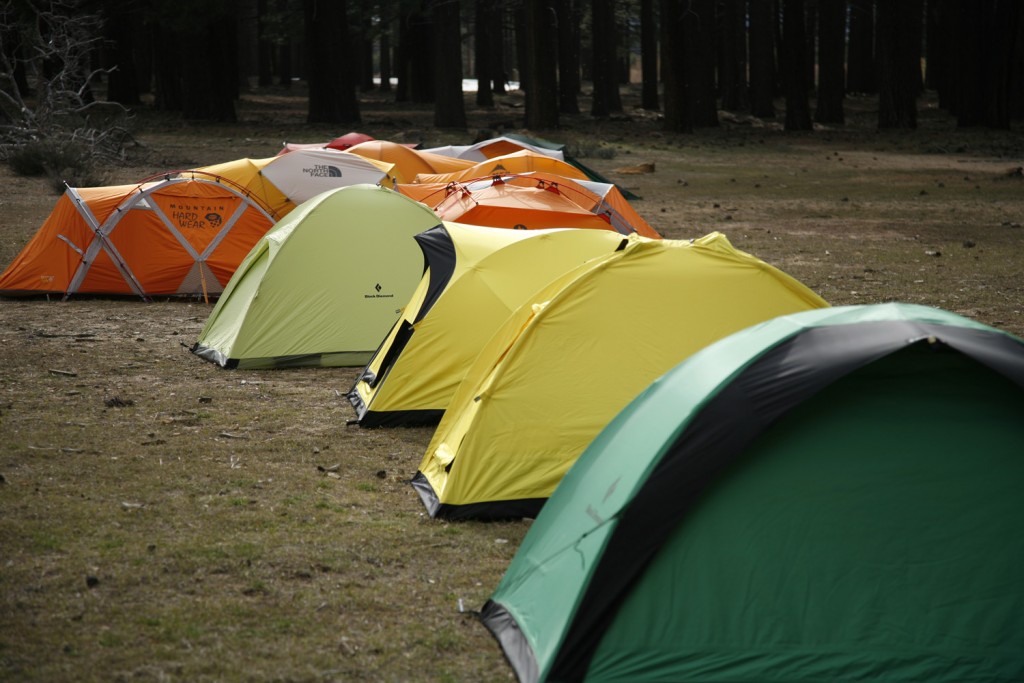
Some of our test tents from a testing session over 10 years ago. We've been doign this for a long time!
Credit: Max Neale
Weather and Storm Resistance
This is the most important metric for a 4-season shelter. We assessed each tent's ability to protect its occupants from the elements and the outside environment. The best models will keep you dry without bending, changing shape, or excessively flapping in high winds.
We pitched each model on breezy, exposed ridges and in driving snow and rain. Once pitched, we compared each one and assessed how well they kept us dry. We looked at pole design and construction, double-wall and single-wall fabrics, vestibules, tie-down systems, and other features that affect each shelter's strength. Some of the largest contributing factors include the number of pole intersections, the number of pole points, and the mechanism for attaching the inner tent to the poles, along with the number of points and mechanisms for attaching the rainfly. Finally, we looked at the number, location, and quality of guy points. We learned from our testing that pole design and quality are the most significant factors influencing wind resistance and overall strength.
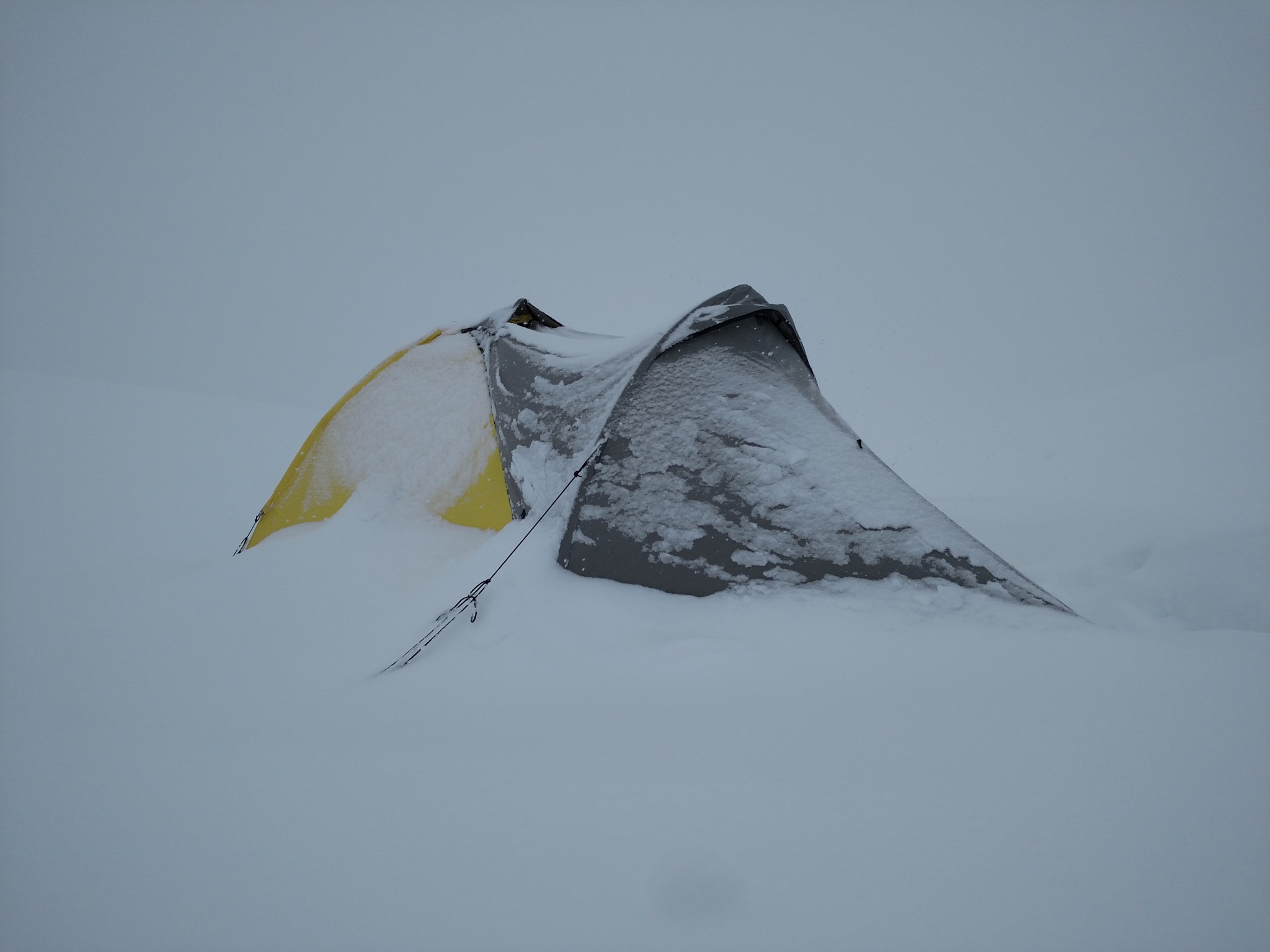
These tents were put to the test in snowstorms, rain, and high winds.
Credit: John Miner
The most significant factors contributing to a tent's strength are the number of poles, their layout/design, and the number of pole crossings relative to the tent's size and external height. More full-length poles and more crossings equate to more strength. How strong do you need your tent to be? All the models we reviewed are robust enough for use in at least moderate four season conditions. These tents should withstand strong winds greater than 35 mph with little protection and modest snowfall. Every tent we reviewed also works above treeline for summertime mountaineering objectives, multi-day ski touring adventures, and modest mid-winter use.
All the tents in our review are suitable for 4-season conditions, but some can't quite handle the harsher end of the spectrum. This photo shows 60+ mph winds ripping over the upper West Buttress on Denali.
Credit: Ian Nicholson
While all the shelters we tested qualify as 4-season tents, not every tent can handle all 4-season conditions. Some of them won't excel in the “Great Ranges,” like the Alaska Range, Antarctica, the Karakoram, or extended time above treeline in strong winds and/or with heavy snow loads. If you are going into serious conditions, choose one of the more robust models with more poles and pole crossings. Tent poles used in the tents we tested range from 8mm to 13mm in diameter. Except for a few exceptions, the thicker the pole, the stronger it is. DAC Featherlite NSL Green poles are some of the best aluminum poles and are found on some of the top contenders in this metric, like the Jannu, Mountain 25, and Samaya2.0. We also like Easton's new Syclone composite pole used on all the MSR tents, as they can flex much further before breaking.
With one quick shake, this freshly fallen snow peeled away from the multi-layered waterproof/breathable fabric of the Samaya2.0. Inside, the tent is completely dry.
Credit: Brian Smith
Fabrics range from light and robust silicone-coated nylon, found on the Hilleberg Nammatj 2 and Hilleberg Jannu to air-permeable materials similar to what you might find on a waterproof jacket in the case of The North Face Assault 2 Futurelight to specialized and robust Nanovent 3-layer fabric with a Dyneema composite floor and removable roof cover found in the single-wall Samaya2.0. We break down each tent's specific fabric in their reviews. There is a difference between a tent covered on both sides with silicone, called silnylon, and fabric coated on the outside with silicone and the inside with polyurethane (PU). The latter is cheaper but not as durable and strong. The most robust fly fabric used on a 4-season tent is the Hilleberg Kerlon 1800, which has a breaking strength of 40 pounds.
The Hilleberg Jannu uses Kerlon 1800 silnyon, which, despite its slippery feel, has a breaking strength of 40 pounds and will hold up longer overtime to UV and water damage. Why doesn't every company coat both sides with silicone? Because it's a fair bit more expensive and some companies claim it's overkill. However, we have yet to find anyone that debates that it isn't better long term.
Credit: Graham McDowell
The Mountain Hardwear Trango 2 and North Face Mountain 25 offer some of the greatest strength and weather resistance in our lineup. They are very popular on expeditions to Vinson, Everest, and Denali. These tents have a 4-pole design, plus an additional pole for the vestibule, and are the most common pole design among four-season shelters because they maximize strength and pole crossings for the given weight.
The 4-pole design of the Trango is tried and true.
Credit: Brian Smith
Among non-4-pole designs, the Hilleberg Jannu checked in as the strongest amongst 3-pole designs. All of these models are worthy of being taken to big remote ranges like the Alaska Range or the Himalayas. If you're looking for a Denali stormworthy model or something equivalent, we recommend looking specifically at the double-wall contenders that scored at the top, namely the Jannu, Trango, Mountain 25, and The North Face VE 25. The Alps Mountaineering Tasmanian 2 got an excellent score in this metric as well, but it's not as high-quality overall.
The Alps Mountaineering Tasmanian is an excellent design for weathering storms and inclement weather.
Credit: Brian Smith
Tents like the Samaya2.0 and The North Face Assault 2 Futurelight have 2.5 poles and are not as sturdy. The half-length pole creates more headroom but doesn't add strength. At times, the awning created by this third pole can actually act as a sail and further stress the poles. These models offer respectably strong 4-season shelter but aren't models we'd take to Denali or any place we'd expect really fierce winds.
Weight is an important consideration since your tent often lives on your back during the day. The shorter the trip, the more we'd lean towards going lighter and more compressible. The longer the trip, we'd opt for tents with more floor space and features, aiming to make them more versatile and comfortable. Here we test the MSR Advance Pro 2 on the Forbidden Glacier after nearly 6,000ft of elevation gain and a couple of rappels. Lighter models excel on outings like this, and offer a significant advantage.
Credit: Ian Nicholson
Ease of Use
This metric includes livability as well as ease of setup and breakdown. We assess how pleasant (or, in some cases, just tolerable) spending time in each tent was. We looked at interior space, headroom, door and vestibule design, zipper quality, the number of pockets, peak height, and vestibule space. From there, we assessed the overall vibe of how pleasant it was to share each model with another person. Was it dark and gloomy or bright and cheerful? Did the tent get wet when someone entered while it rained or snowed? Do the pockets hold what you want them to hold? How well do two full-sized pads fit? Can you sit up, face your partner, and play cards?
A key “livability” spec is the number of square feet of interior space. These tents ranged from 24-48 square feet, not including the vestibules, which ranged from non-existent to 22 additional square feet. As a reference, the average sleeping pad is 20 x 72 inches or 10 square feet. Tents that are 24-27 square feet feel a little tight since two full-length pads barely fit. Tents with 28-34 square feet feel comfortable for most people, and 35-40 square foot tents feel spacious and could borderline fit an average-sized third person.
How much liveability and floor space you want depends on the types of trips you'll be going on. For shorter trips, during times of generally stable weather, we prefer a lighter and smaller tent. Hopefully, we won't be hanging out in it much and it's lighter and more compact in our packs. Getting cozy here in The North Face Assault 2.
Credit: Ian Nicholson
The most livable tents in our current lineup are the Trango 2, Jannu, Mountain 25, and Remote 2. All of these offer two doors, pleasant interior height, and a fair amount of square footage.
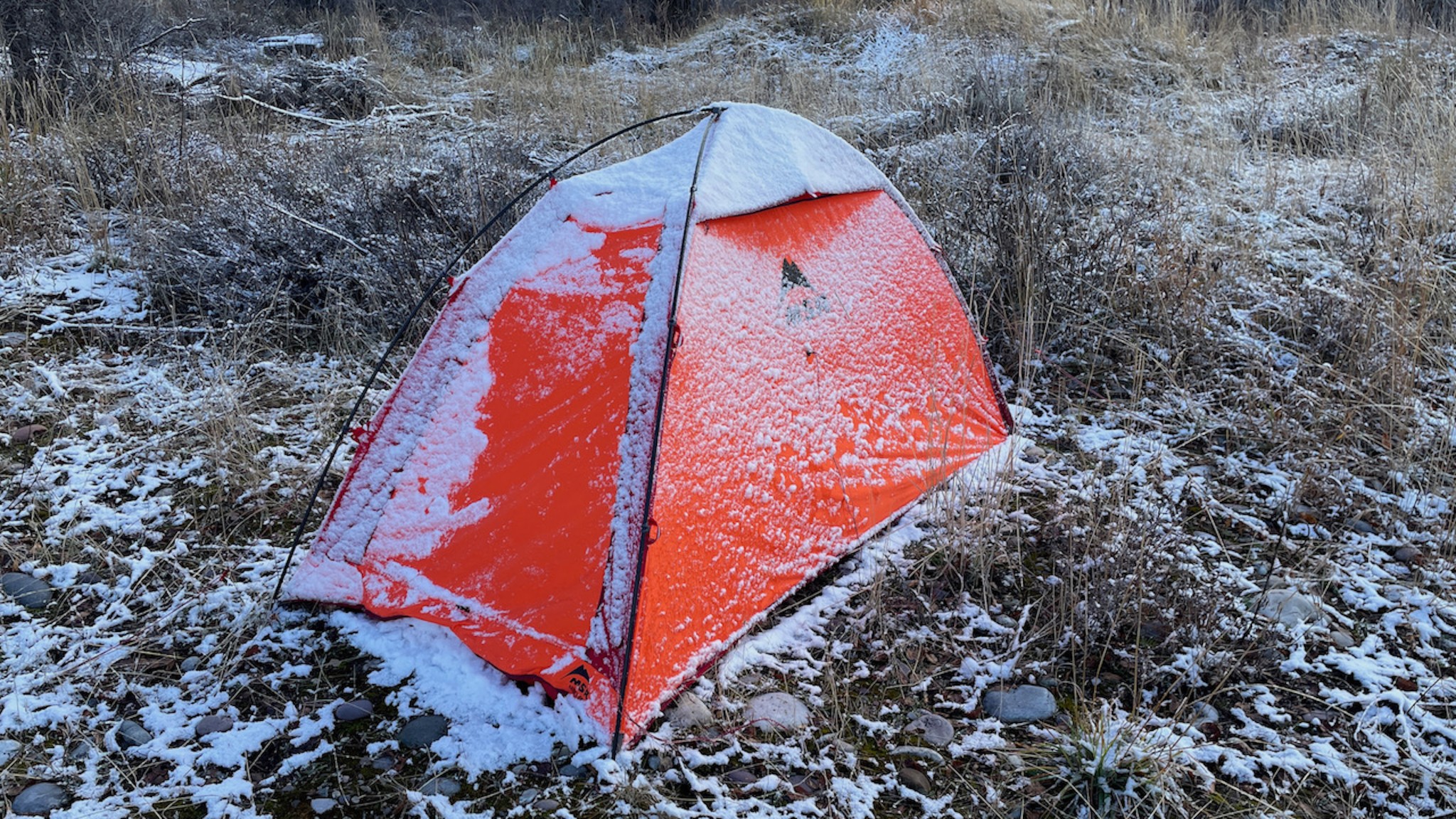
The colorful MSR Remote 2 is inviting in cold, snowy environments
Credit: Brian Smith
When we consider ease of setup and breakdown, we look at whether or not the tent uses pole clips, sleeves, or internal poles. We also evaluate the time and how easy each is to set up or break down in poor weather conditions. Pole clips are the quickest and easiest way to set up a tent. On double-wall tents, they let moisture move and prevent condensation. The disadvantage of clips is that they are heavier and don't spread the force of wind or snow as evenly along the pole's length compared with pole sleeves. Pole sleeves are more supportive than clips, as they spread the weight evenly across a wider area. However, they are challenging to use when it's windy. In a gust, the tent acts like a kite until setup is complete. Clips are slightly faster to set up.
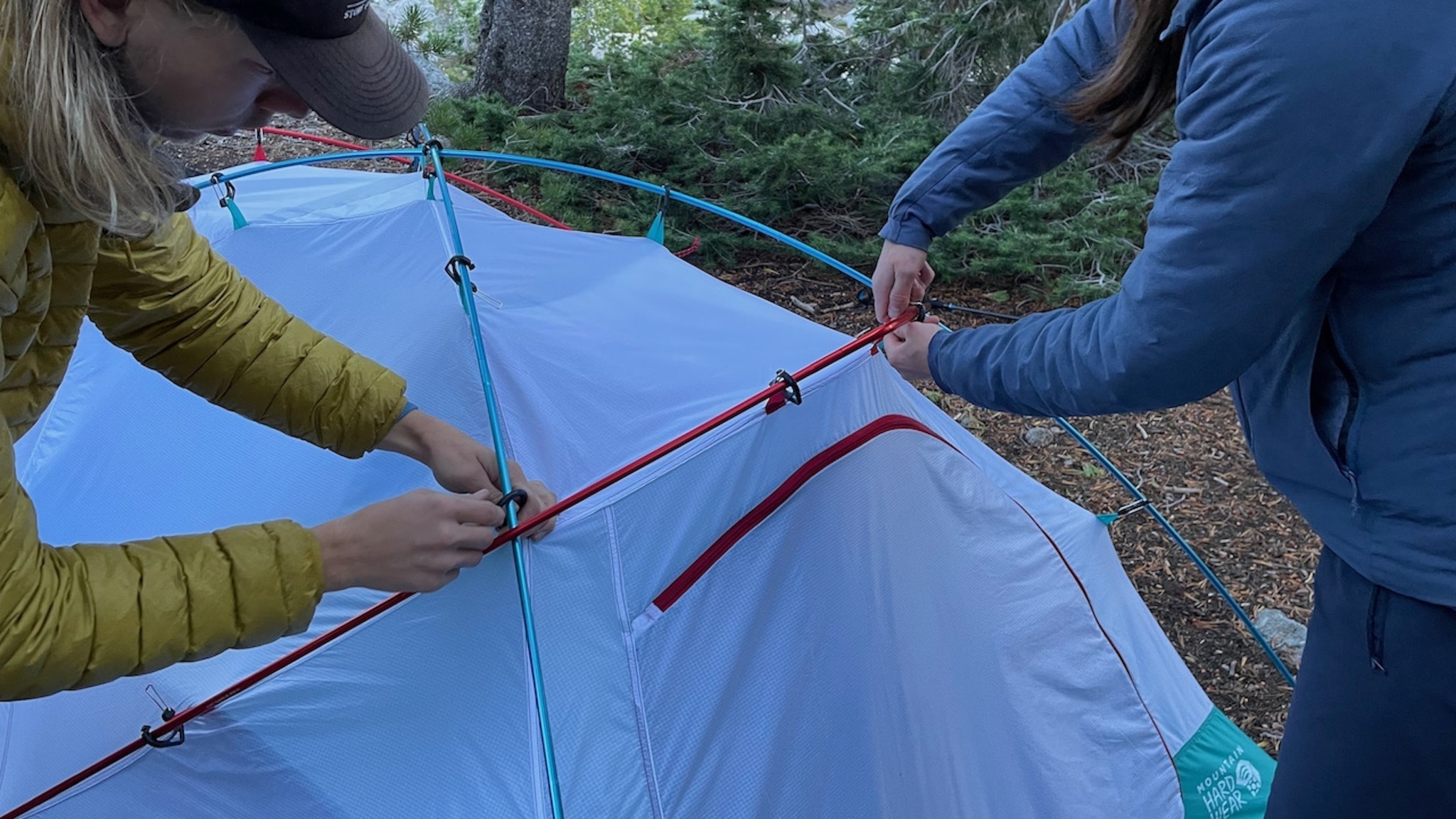
Karen Bockel sets up the Mountain Hardwear AC 2 tent. While sleeves add strength, they can turn a tent into a sail during high winds. Poles also catch more easily on sleeves, but this makes for a lighter setup.
Pole clips are much faster and easier to set up than sleeves.
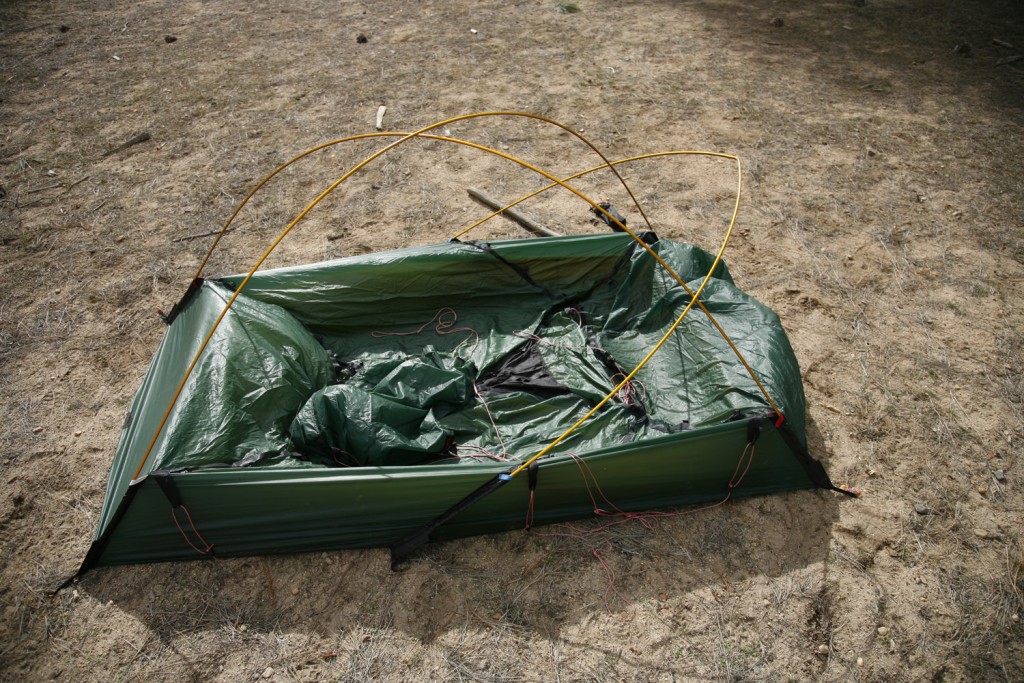
Lighter-weight 4-season tents use internal poles, and you typically have to set them up from the inside. This is the lightest design because the tent's body supports the poles, and no real clips or sleeves are needed. Some designs use small pieces of velcro or twist-tie features to keep the poles in place. The weight shavings from forgoing clips and extra materials mean that internal pole tents are often lighter. Internal pole design is also as strong or even stronger than models that use sleeves with a similar pole structure. The primary disadvantage is that internal pole setups are the most challenging and time-consuming to pitch. If it's windy, it's an even bigger pain, as you have to crawl inside to set them up. The North Face Assault 2 Futurelight has this internal pole design. The learning curve is hardly extreme, but it is worth setting up in a park or backyard a few times before dealing with it on a trip. A tip: stand and start from the back corners, working towards the door.
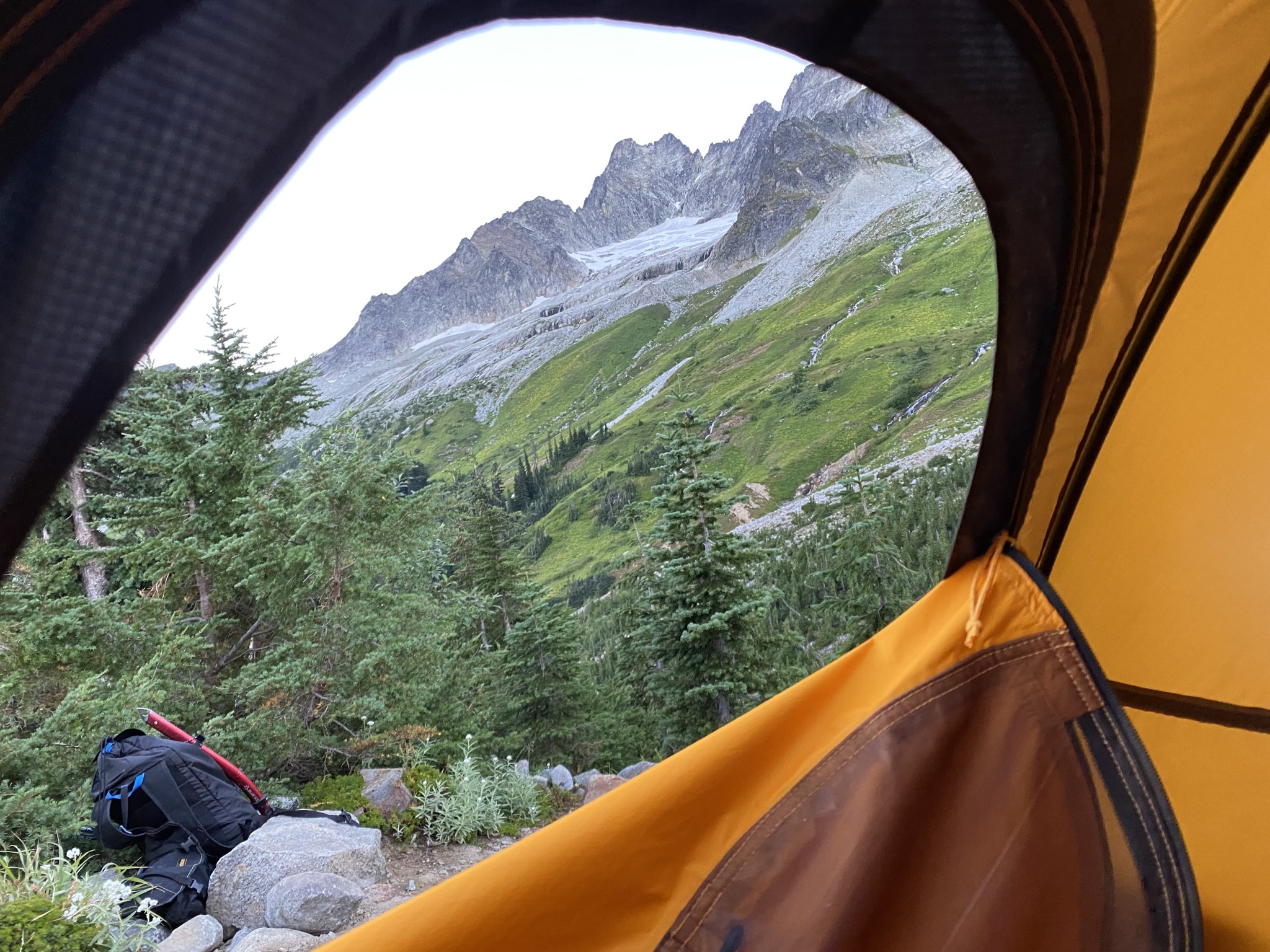
Looking out the front door of the Assault.
Credit: Ian Nicholson
The MSR Advance Pro and the Mountain Hardwear AC 2 use exterior sleeves with one closed end. Since you can assemble these while standing outside of the tent, these are much easier to pitch than tents with interior poles.
Tents that pitch from the outside, like the MSR Advance Pro, are the easiest and quickest to set up.
Credit: Brian Smith
Among double-wall models, the Hilleberg models were by far the easiest to pitch. Unlike most double-wall tents, where you pitch the body with the poles and then throw the fly over the top of everything, the Hilleberg tents are suspended from the fly, and you erect the entire thing from the outside. This minimizes the amount of time your tent could become damaged by the wind or filled with snow. For more traditional double-wall designs, we found the MSR Remote 2 was easier and faster than others.
We found the Jannu's pole structure easy to configure, even solo in high winds and when wearing gloves. Simply stake the base of the tent out and insert the poles into partial pole sleeves.
Credit: Max Neale
Weight
We weighed each tent ourselves, and we also measured both the minimum and “packed weight” for comparison and used these measurements to compare each model accurately. The minimum weight is the tent, fly, and poles; no guylines, poles, stuff sacks, etc. The measured weight is the weight of each tent where it is usable, which is generally everything included in the minimum weight, plus guylines, poles, stuff sack, and an appropriate number of stakes. The measured weight is the primary number we used for our comparison. A lightweight tent is one of the best ways to minimize weight in your pack (or on your horse, bicycle, canoe, or burro). The tents we tested have a huge weight range from a pound and a half to over 12 pounds.
The Hyperlite Mountain Gear UltaMid 2 is the lightest tent we tested, with a measured weight of just 1.49 pounds. However, since this tent is a “mid” (short for a pyramid tarp), that weight does not include an optional pole. The lightest way to go is to simply strap your poles together to create the central pole support. Hyperlite also offers a carbon fiber tent pole that weighs an additional .57 pounds. The MSR Advance Pro 2 is also quite light, at 3.31 pounds, though it achieves this low weight by having no bug mesh (a deal breaker if camping below treeline), the smallest interior space, and the least breathable fabric. For just a little more weight, the 3.97-pound Mountain Hardwear AC 2 has a bug mesh door and is more waterproof than the Advance Pro.
Enjoying the roomy and ultralight UltaMid 2 in a snowy Absoroka Range, Wyoming.
Credit: Brian Smith
The Samaya2.0 weighs in at 3.61 pounds, is waterproof, has a removable mesh door and window, and an optional vestibule. You can go even lighter by bringing only the tent and poles—leaving the mesh, stakes, and stuff sacks behind—which brings its weight down to only 2.94 pounds.
The svelte Samaya2.0 is ultralight, waterproof, and even has a removable mesh door and window. Yep, it's expensive too.
Credit: Brian Smith
We also like the MSR Access 2, SlingFin CrossBow 2, and the Hilleberg Nallo 2. They weigh just over 4 to just over 5 pounds and are significantly more versatile and comfortable than tents that weigh a pound or two less. For most people, these hit a sweet spot of weight, comfort, strength, and livability.
The MSR Access 2 is a great tent - it keeps the weight reasonable without sacrificing all creature comforts.
Credit: Brian Smith
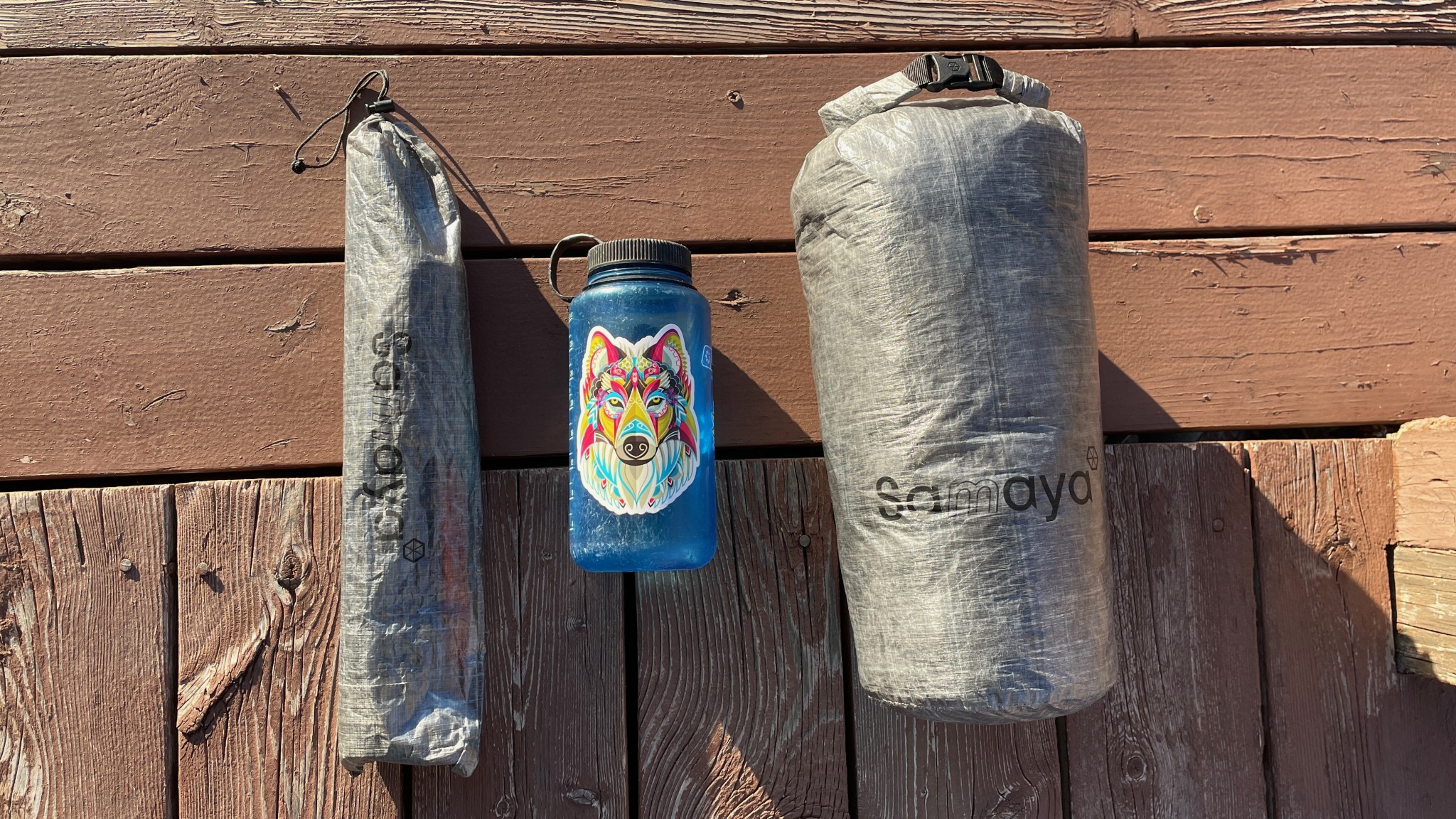
Regarding packed size, some of the most compact models we tested are the Samaya2.0 and the Hyperlite UltaMid 2, both of which compress down to approximately 6 x 8 inches, or slightly larger than a 1-liter water bottle. The next most packable models were as much as 40-50% bigger, though they do provide more comfort and versatility. Comparably, the least packable models offer more interior space and greater strength but are roughly 2-3 times the size of other tents in our lineup.
The Samaya2.0 is a very lightweight 4-season tent that doesn't take up much room in a pack.
Credit: Brian Smith
Quality of Construction
We assessed construction quality by looking at the type of fabric used for the tent body and fly, the quality of the poles, attachment points, anchoring systems, and even the design of the stuff sacks. Silnylon is the fabric of choice for double-wall tents. Most PU formulations used on fly fabric coatings are more prone to hydrolysis (chemical breakup) than silnylon. They can wear out faster, particularly in wet environments, and aren't as resistant to UV degradation.
Tent floors have high-grade PU formulations that resist hydrolysis — the breakdown of materials and their coatings. A handful of the double-wall tents in our lineup tested have a tough 70-denier floor, though the Hilleberg Nammatj uses a 100-denier fabric that is burly. Single-wall tents often use lighter floor materials that aren't as durable. However, the Samaya2.0 uses a Dyneema composite fabric that is quite tough — and thusly expensive.
The Nammatj 2 at Automated Geophysical Observatory 1, Antarctica. This tent is popular among scientists and support personnel in field camps throughout Antarctica.
Credit: Tressa Gibbard
Specific features can also have a significant impact on construction quality. The big three here are zippers, clips, and webbing adjustments. More prominent zippers last longer and can handle expeditions because they continue to work even when exposed to lots of dust and grit. The most durable double-wall tent we tested is the Hilleberg Jannu, which features mega high-quality poles and fabric.
Hilleberg makes some of the best 4 season tents on the market, and the Jannu strikes an excellent balance of comfort and low weight. It's pitched here on a trip to Western Greenland.
Credit: Graham McDowell
Versatility
A tent's versatility refers to its performance across various conditions and climates. All 4-season tent options are designed with stormy conditions in mind, but we also compared them across the spectrum of common uses, such as alpine climbing, bivy tent climbing, snow camping, multi-day ski-touring, expedition climbing, and just regular old camping in the forest. We also compared how well each model performed in the rain and in warmer three-season travel and desert climates.
More versatile tents are generally a better value. As a whole, most double-wall tents scored better than single-wall tents because they performed better in warmer conditions with and without moisture.
Unless you're able to purchase multiple tents, versatility is going to be an important factor. We've used TNF's Mountain 25 tent on three continents, ranging from summer alpine climbing trips to week-long sea kayaking excursions.
Credit: Ian Nicholson
A tent scored higher in this category when it had features that allowed us to use it differently. For example, a removable inner tent allows you to use and pitch your tent in different ways. We also appreciate models like The North Face Assault 2 Futurelight, which have a removable vestibule, adding to its versatility.
The Access 2 is one of our go-to choices for multi-season camping.
Credit: Ian Nicholson
All the Hilleberg tents have removable inner tents that give you a lighter, floorless shelter for summer backpacking and fast and light winter trips. The floorless option is excellent for mountaineering because you can dig into the snow to create a cooking area. The Hyperlite UltaMid comes floorless, and you can add a floor and insert/bug net supplementally.
Inside the Hilleberg Nammatj 2 without the inner tent. Going floorless saves 30.9 oz. for three-season backpacking or fast and light winter travel. The walls seal fairly well with the ground and even minimizes the number of flying insects from entering. Setting up with only the fly and poles is possible with nearly all Hilleberg designs.
Credit: Max Neale
Ventilation can have a dramatic influence on a tent's versatility and livability. Double-wall tents often have better air circulation and less condensation than single-wall options. The Hilleberg tents and The North Face Mountain 25 have some of the best ventilation and moisture management of all the double-wall tents we tested. The top vents on dome tents are useful in moving air around and mitigating the “it's snowing inside” effect when moisture vapor from your breath freezes, hits the roof, and then falls back on you.
Unlike most 3-season models, not all 4-season tents have a bug screen. A bug screen is essential if you are not on an expedition-style climb. It lets you leave the door open for ventilation and defends against mosquitos or flies.
We tested our favorite four season tents in a variety of locations, from expedition climbing in the Alaska Range and the Andes to summer alpine climbing in the Cascades, Sierra, and Tetons. We also went on multi-day ski tours and took them winter camping. Here we test while camped at White Rocks Lake on Day 3 of a six-day journey across the North Cascades' Ptarmigan Traverse, with Spire Point and the Elephant's head looming above the Dana Glacier.
Credit: Ian Nicholson
Conclusion
We understand that the 4-season tent market is vast, and the investment is large. We hope that our experiences of exploring, sleeping, and living in each tent helps you find the best option for your next adventure.